India Has Nearly Recouped, Recovery Relatively Quick, Says Economic Survey
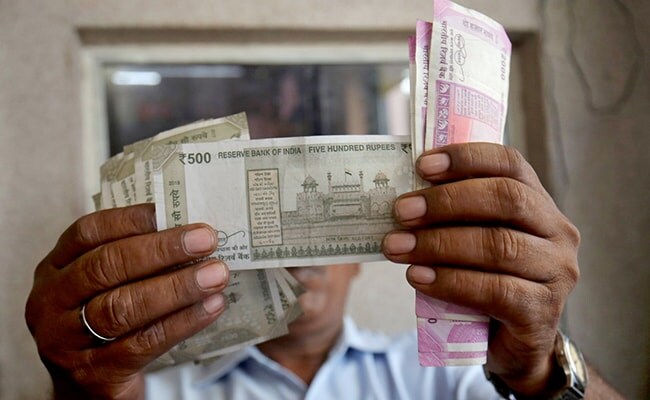
Finance Minister Nirmala Sitharaman on Tuesday tabled the economic survey in Parliament, a day before presenting the Union Budget 2023. In the survey, which is a review of how the economy fared in the past year, the government said that India has nearly "recouped" what was lost, "renewed" what had paused, and "re-energised" what had slowed during the pandemic. The annual pre-Budget survey also forecast India's economy to grow at 6.5 per cent in fiscal 2024.
The economic survey further said that India's recovery from the COVID-19 pandemic was relatively quick, and growth in the upcoming year will be supported by solid domestic demand and a pickup in capital investment.
It also talked about the "multiple structural changes" that have been implemented over the past few years and added that the private sector was repairing balance sheets.
The survey presented the reasons for India's economic resilience - a relatively higher growth forecast among major economies, projected retail inflation only slightly higher than the tolerance limit, an estimated current account deficit financeable with normal capital inflows and forex reserves large enough to finance close to a year's imports.
In the section on India's inclusive growth, the economic survey said that the country is the third-largest economy in the world in terms of purchasing power parity (PPP) - a tool used to determine the exchange rate of currencies while comparing the cost of living and wealth across nations worldwide.
However, talking about the rupee, the survey said it may remain under depreciation pressure on account of plateauing of exports and subsequent widening of the current account deficit.
India's economy has rebounded since the COVID-19 pandemic, but the Russia-Ukraine conflict has triggered inflationary pressures and prompted central banks, including India's, to reverse the ultra-loose monetary policy they adopted during the pandemic.

-
High US Salaries, No Green Card Certainty: The Financial Calculation Facing Indian H-1B Families

The suspension of PERM processing at eight technology employers does not cancel existing H-1B visas. What it does is force a question many Indian families have been avoiding: is the US salary worth tying your career and family plans to one employer?
-
Swiggy vs Eternal: Food Delivery's Two Rivals Are No Longer In The Same Race
Eternal is building a private AI assistant, dark.ai. Swiggy is still working out how to make Instamart pay, with an operating loss of Rs 895 crore in the July-September quarter while Blinkit stayed profitable.
-
Where You Live Shapes How You Get To Work | The Reason Why
Two-wheelers are the most popular way to get to work in India, accounting for nearly 43% of workplace commutes.
-
Unhedged Position: Can India See An Indonesia-Style Time Correction?
The Nifty is trading below levels it first clocked in 2024. Is there, then, as I have suggested in the headline, potential that the current time correction drags on painfully for the next three-five, even ten years?
-
Navigating Friction And Energy Realities: An Analysis Of Marco Rubio's October Visit To India
Occurring at a critical juncture marked by stalled trade negotiations and escalating geopolitical pressures over global energy supplies, the visit offers a profound window into modern US-India relations.
-
India Exports Capital. Why Not Export Trusteeship?
The big question, then, is whether India can build an institution that global borrowers, investors, banks, and lawyers can trust, even without an Indian connection.
-
France's Economy & Politics Are In Crisis | The Reason Why
Let's look at how the French economy and politics evolved under Nicolas Sarkozy, Franois Hollande and Emmanuel Macron.
-
You May Inherit The Business. You Must Earn Its Credibility.
Succession tests the founder's ability to share authority as much as it tests the next generation's readiness to assume it.
-
Signing Deals Is One Thing; Making Them Work Is Another | The Week In Whys
Sometimes, things don't turn out as planned. Indian companies have lost some bids to rivals, some projects won't produce until 2030.
-
FOMC Wall, PERM Suspension, Hospital Stocks | Talking Points This Week
A PERM suspension would directly affect green-card sponsorship rather than H-1B visas, so the near-term earnings impact could remain relatively limited. The key question is whether this marks a new phase in US scrutiny of Indian IT.









