ECB Maintains Stimulus As Growth Picks Up Speed
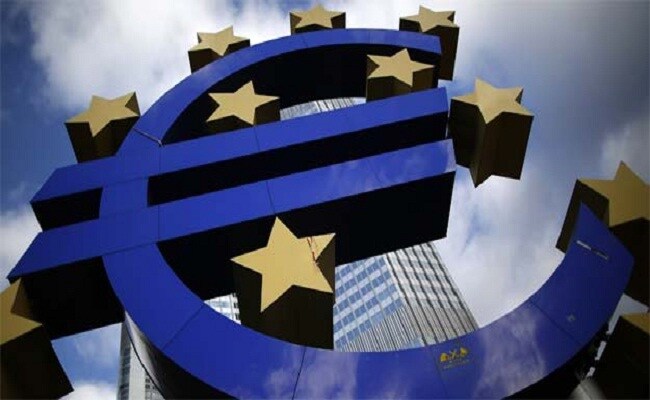
Frankfurt: The European Central Bank kept its super-easy monetary policy unchanged as expected on Thursday, maintaining extraordinary stimulus to aid a tepid recovery in growth after nearly a decade in the doldrums.
With growth slowly picking up pace, the ECB kept rates deep in negative territory and asset buys at a record pace, likely arguing that the recovery is not yet self sustaining and underlying inflation is still too low.
Repeating its standard guidance, the bank said rates would stay at their current or lower levels for an extended period and it was also ready to increase or extend it bond purchases if the outlook worsens.
"If the outlook becomes less favourable, or if financial conditions become inconsistent with further progress towards a sustained adjustment in the path of inflation, the Governing Council stands ready to increase the programme in terms of size and/or duration," the ECB said in a statement.
Attention now turns to ECB President Mario Draghi's news conference at 1330 GMT (7:00 p.m. in India), where he is expected to acknowledge that the growth outlook has improved but will highlight ample risks and argue that turning down the taps now is inappropriate.
The recovery still relies heavily on ECB stimulus and markets could become more volatile as the Federal Reserve gradually raises rates, underscoring diverging policy paths between Europe and the US.
"Draghi seems to be comfortable to allow inflation to drift higher before declaring full victory over deflation," David Kohl, an economist at Swiss private bank Julius Baer, said before the decision.
On the face of it, Mr Draghi should be relaxed. Inflation hit a three year high last month, manufacturing activity is accelerating and confidence indicators are firming, all pointing to solid growth at the end of last year.
Indeed, Eurozone business growth was the fastest in more than five years in December, order books are surging on export demand, and consumption is holding up, despite rising energy costs, all pointing to the sort of resilience not seen since before the bloc's debt crisis.
The underlying picture is mixed, however, giving Mr Draghi plenty of arguments to bat back criticism, particularly from Germany, the bloc's biggest economy and the ECB's top policy foe.
Inflation is still just half of the bank's two per cent target and the jump is mostly down to higher oil prices while underlying price growth remains dangerously weak.
The market euphoria after Donald Trump's surprising US election win is also yet to be backed up concrete policy action and the threat of more protectionist policies from the United States and possibly Britain could reverse market sentiment.
German angst
The ECB last month agreed to cut its asset buys by a quarter from April but extended the 2.3 trillion euro scheme, known as quantitative easing, until the end of the year, promising substantial accommodation and extended market presence.
The extension threatens to reignite tensions between the bank and Berlin, particularly as Germany heads towards an election in the fall and with Finance Minister Wolfgang Schaeuble often pointing the finger at the ECB for problems.
Berlin argues that super cheap borrowing costs negate pressure on inefficient Eurozone members to reform but unduly punish frugal German savers, who have seen the return on their savings evaporate.
Indeed, with German inflation rates above the Eurozone average and government bond yields in negative territory across much of the yield curve, real rates are negative for many savers, pushing some voters towards the rightist Alternative for Germany party.
Still, cutting back stimulus may be a double edged sword, even for Germany, which is struggling with a bloated and inefficient bank sector. Higher ECB rates would not only cost the budget billions of euros in extra spending but would risk thwarting a still fledgling lending growth.
"The lending channel is no longer clogged up, but it is not completely free either and progress has only been possible thanks to massive measures by the ECB," Commerzbank said before the decision.
"If monetary policy were to be tightened again, and the burdens from existing loans were to increase once more, the lending channel would close and the economic picture would worsen considerably again," Commerzbank added.

-
Blue Wave Will Derail the AI Trade but Won't Dismantle the AI Era | Unhedged Position

The Democrats' sweep of the US Congress will see politics collide with economic forces both over the long and short term.
-
It's Time To Take The GST Council's Bet On Trust Global
Payment records can prove India's services exports, and clear, proportionate rules can bring foreign digital sellers into the tax net.
-
Opinion | India at 38: From Innovation Overperformer to Innovation Powerhouse
India now has 453 VC-backed deep science startups, 18 of them late-stage, after 117 percent growth since 2020. Laurus Labs, at USD 9.3 billion, is the most valuable deep science company in any middle-income economy outside China.
-
Navigating Energy Crossroads: S Jaishankar's Call For Diversified Supply Chains At G20 Ministerial Meeting
As geopolitical fault lines continue to test maritime trade routes and commodity flows, Jaishankar's message remains pertinent: true economic resilience requires open markets, protected transit lines, and a genuine commitment to multilateral cooperation rather than coercion.
-
Indians Are Travelling, But Not Every Journey Is A Holiday | The Week In Whys
Pilgrims, patients and working women are the real travellers, and the system hasn't quite caught up with them.
-
Getting To Work Costs Women More | The Reason Why
It is not just about women paying more than men. It is about women paying much more in cities than in villages.
-
AI Bias In Investing Cannot Be Eliminated, But It Can Be Governed
Framing is a particularly important example as identical financial information presented in terms of gains rather than losses can lead an LLM to reach a different assessment.
-
Joining The Dots | Dark Skies, Steady Diya: Why Hope Holds This Diwali
With war, a weak rupee and foreign outflows weighing on sentiment, policymakers at the NDTV World Summit and market veterans at NDTV Profit Ignite: Diwali Edition offered the same advice: stay invested and filter out the noise.
-
The Curious Case of Equitas Small Finance Bank And A CEO Who Quit For Stock
PN Vasudevan believes persistent investor concerns over a perceived conflict of interest had become a governance overhang on Equitas Small Finance Bank's stock, even as the lender improved profitability and asset quality.










