ECB Enters 2017 In Battle To Hold Steady Course
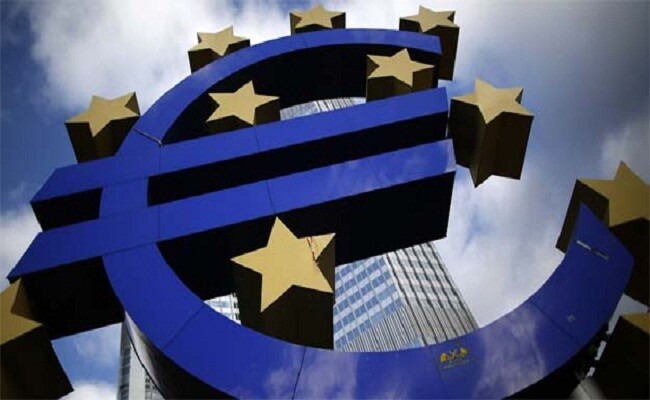
Frankfurt: The European Central Bank will not deviate from its ultra-loose monetary policy at its first 2017 meeting today, analysts predicted, in the face of calls to tighten from critics alarmed by rising inflation.
Policymakers at the Frankfurt institution chose in December to keep interest rates at historic lows and extend mass bond-buying from March to December this year, albeit slowing the purchases from 80 to 60 billion euros ($85 to $64 billion) per month from April.
"Uncertainty prevails everywhere," ECB president Mario Draghi said at his December 8 press conference.
The economic consequences of Brexit and the election of Donald Trump for the 19-nation eurozone are as yet unclear and a series of elections are on the agenda in France, Germany, the Netherlands, and possibly Italy.
"What central banks can do is to keep a steady hand, namely to continue with the monetary accommodation that is necessary to achieve their objective," Draghi went on.
The ECB's low interest rates, mass asset purchases, and cheap loans to banks are all intended to pump cash into the economy in a bid to power growth and push inflation towards the central bank's target of close to, but below 2.0 per cent.
Since the Governing Council's last meeting, when the most recent figures for November showed average inflation of 0.6 per cent across the eurozone, the picture has shifted.
Figures for December showed inflation in the single currency area stood at 1.1 per cent on average and at 1.7 per cent in its largest member economy, Germany.
Prominent economists and politicians in Germany -- where savers fear their cash piles shrinking as inflation outstrips interest -- responded by clamouring for a rate rise.
But one month of data will not be enough to convince Draghi it is time to change tack, said analyst Jesus Castillo of Natixis bank.
"Short term developments suggest that inflation is back," he noted -- but added that rising energy prices, rather than the economic recovery gathering pace, are driving the increases.
High average inflation also conceals sharp disparities across the eurozone, with the indicator still anaemic in Greece and Italy.
"It is absolutely premature today to claim victory over a weak economy," ECB board member Yves Mersch -- one of the more hawkish voices at the top of the bank -- said earlier this month.
Policymakers have made clear that as well as headline inflation, they keep a close eye on the core figure, which excludes more volatile food, alcohol, tobacco, and energy prices.
(This story has not been edited by NDTV staff and is auto-generated from a syndicated feed.)

-
Blue Wave Will Derail the AI Trade but Won't Dismantle the AI Era | Unhedged Position

The Democrats' sweep of the US Congress will see politics collide with economic forces both over the long and short term.
-
It's Time To Take The GST Council's Bet On Trust Global
Payment records can prove India's services exports, and clear, proportionate rules can bring foreign digital sellers into the tax net.
-
Opinion | India at 38: From Innovation Overperformer to Innovation Powerhouse
India now has 453 VC-backed deep science startups, 18 of them late-stage, after 117 percent growth since 2020. Laurus Labs, at USD 9.3 billion, is the most valuable deep science company in any middle-income economy outside China.
-
Navigating Energy Crossroads: S Jaishankar's Call For Diversified Supply Chains At G20 Ministerial Meeting
As geopolitical fault lines continue to test maritime trade routes and commodity flows, Jaishankar's message remains pertinent: true economic resilience requires open markets, protected transit lines, and a genuine commitment to multilateral cooperation rather than coercion.
-
Indians Are Travelling, But Not Every Journey Is A Holiday | The Week In Whys
Pilgrims, patients and working women are the real travellers, and the system hasn't quite caught up with them.
-
Getting To Work Costs Women More | The Reason Why
It is not just about women paying more than men. It is about women paying much more in cities than in villages.
-
AI Bias In Investing Cannot Be Eliminated, But It Can Be Governed
Framing is a particularly important example as identical financial information presented in terms of gains rather than losses can lead an LLM to reach a different assessment.
-
Joining The Dots | Dark Skies, Steady Diya: Why Hope Holds This Diwali
With war, a weak rupee and foreign outflows weighing on sentiment, policymakers at the NDTV World Summit and market veterans at NDTV Profit Ignite: Diwali Edition offered the same advice: stay invested and filter out the noise.
-
The Curious Case of Equitas Small Finance Bank And A CEO Who Quit For Stock
PN Vasudevan believes persistent investor concerns over a perceived conflict of interest had become a governance overhang on Equitas Small Finance Bank's stock, even as the lender improved profitability and asset quality.










