(Bloomberg) -- India received the lowest August rains since at least 1901, raising concerns about weaker crop output and the potential for more export restrictions following the South Asian nation's curbs on rice.
The country received 162.7 millimeters (6.4 inches) of rainfall this month, 36% lower than normal, according to the India Meteorological Department. Total rainfall during June-August was 10% below average, the figures show.
Monsoon rains irrigate about half of India's farmland and are crucial for crops such as sugar and soybeans. Erratic weather has hurt some harvests since last year, forcing the nation to restrict exports of wheat and rice to cool domestic retail inflation that surged to a 15-month high in July. The government has also imposed stockpile limits on some crops.
Also Read | Layoffs Are Rising In Tech, But These Skills Are Helping People Unlock Better Pay
September rains will be crucial to make up the shortfall as the monsoon nears its end, especially given the onset of El Niño, which can bring drier conditions. Some main rice-growing regions in the nation's east have had poor rainfall, hurting prospects of the biggest monsoon-sown food grain crop in the area, according to the weather office. The cane areas in the western and southern parts have also seen lower rainfall, it said.
Although precipitation in September is forecast to be normal, the four-month monsoon season may end up being below-average, Mrutyunjay Mohapatra, director general of the meteorological department, said at a briefing on Thursday.
Any decline in production of wheat, rice and sugar in the world's second-biggest grower could put more stress on global food supplies and boost prices of major commodities. Rice prices in Asia are hovering near a 15-year high and sugar prices in New York are up more than 25% this year.
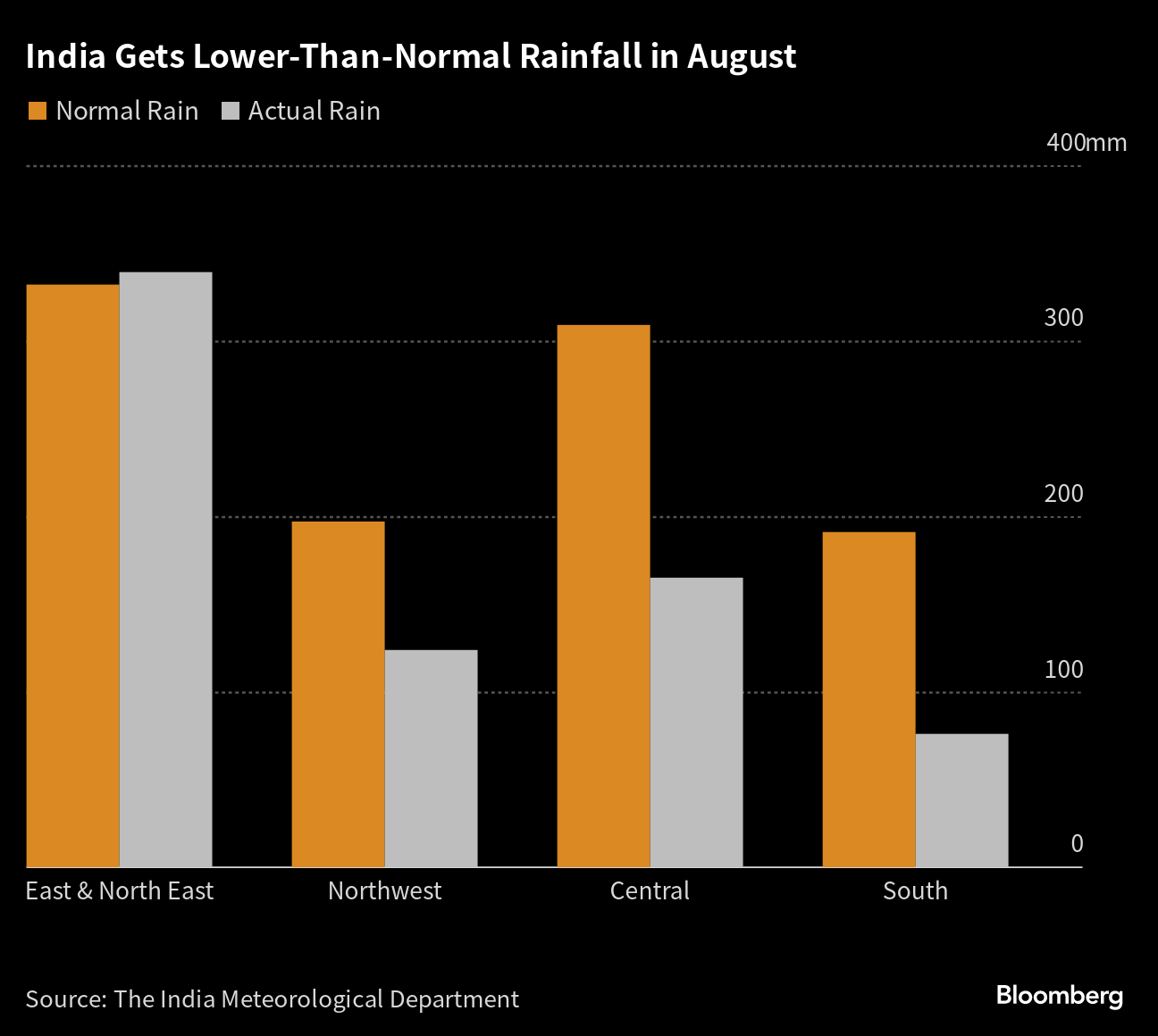
Rainfall in India's southern parts was 60% below normal in August, the central region received about 47% below average showers, while the northwest witnessed a deficit of about 37%, according to the weather office.
Normal to above-normal rains are expected over many areas of the country's northeast and adjoining eastern regions next month, Mohapatra said. The foothills of the Himalayas and some areas of the southern region may also get ample rainfall, he said. The maximum average temperature in August was the highest since 1901 across the county, he added.
Monsoon rains typically commence at the start of June and reach the whole of the country by July 8, before extending through the end of September. They arrived on June 8 this year.
(An earlier version of this story was corrected to change August rainfall data.)
--With assistance from Abhay Singh.
(Updates to add weather official's comment in fifth paragraph)
More stories like this are available on bloomberg.com
©2023 Bloomberg L.P.
Essential Business Intelligence, Sharp Market Insights, Practical Personal Finance Advice, Daily Fuel, Gold and Silver Prices and Latest Stories — On NDTV Profit.