Dream Job: The Japanese Man Who Gets Paid To Do Nothing
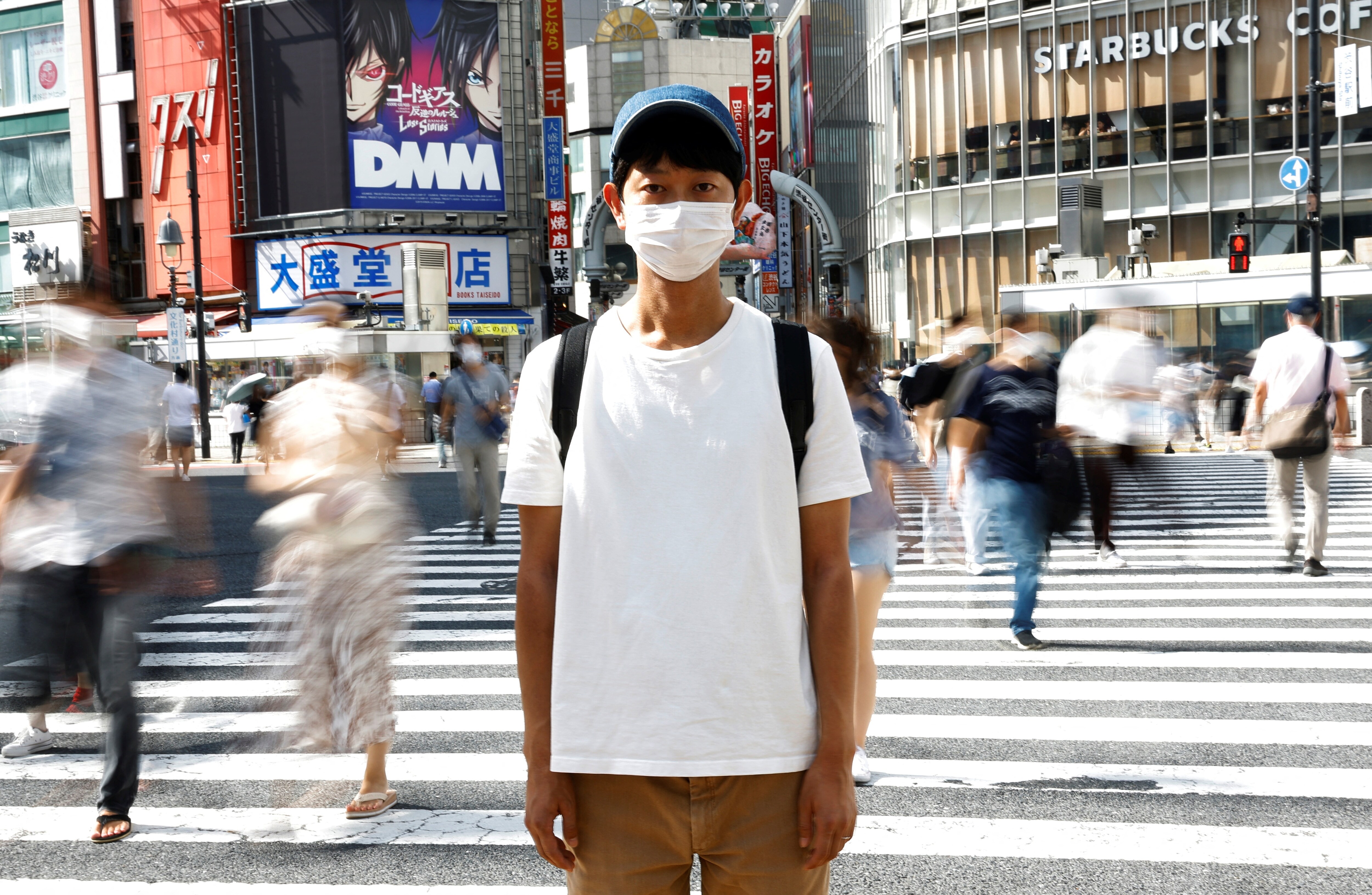
Shoji Morimoto has what some would see as a dream job: he gets paid to do pretty much nothing.
The 38-year-old Tokyo resident charges 10,000 yen ($71) an hour to accompany clients and simply exist as a companion.
"Basically, I rent myself out. My job is to be wherever my clients want me to be and to do nothing in particular," Morimoto told Reuters, adding that he had handled some 4,000 sessions in the past four years.
With a lanky build and average looks, Morimoto now boasts nearly a quarter of a million followers on Twitter, where he finds most of his clients. Roughly a quarter of them are repeat customers, including one who has hired him 270 times.
His job has taken him to a park with a person who wanted to play on a see-saw. He has also beamed and waved through a train window at a complete stranger who wanted a send-off.
Doing nothing doesn't mean Morimoto will do anything. He has turned down offers to move a fridge and go to Cambodia, and doesn't take any requests of a sexual nature.
Last week, Morimoto sat opposite Aruna Chida, a 27-year-old data analyst clad in a sari, having a sparse conversation over tea and cakes.
Chida wanted to wear the Indian garment out in public but was worried it might embarrass her friends. So she turned to Morimoto for companionship.
"With my friends I feel I have to entertain them, but with the rental-guy (Morimoto) I don't feel the need to be chatty," she said.
Before Morimoto found his true calling, he worked at a publishing company and was often chided for "doing nothing".
"I started wondering what would happen if I provided my ability to 'do nothing' as a service to clients," he said.
The companionship business is now Morimoto's sole source of income, with which he supports his wife and child. Although he declined to disclose how much he makes, he said he sees about one or two clients a day. Before the pandemic, it was three or four a day.
As he spent a Wednesday doing nothing of note in Tokyo, Morimoto reflected on the bizarre nature of his job and appeared to question a society that values productivity and derides uselessness.
"People tend to think that my 'doing nothing' is valuable because it is useful (for others) ... But it's fine to really not do anything. People do not have to be useful in any specific way," he said.
($1 = 140.25 yen)

-
Navigating Friction And Energy Realities: An Analysis Of Marco Rubio's October Visit To India

Occurring at a critical juncture marked by stalled trade negotiations and escalating geopolitical pressures over global energy supplies, the visit offers a profound window into modern US-India relations.
-
India Exports Capital. Why Not Export Trusteeship?
The big question, then, is whether India can build an institution that global borrowers, investors, banks, and lawyers can trust, even without an Indian connection.
-
France's Economy & Politics Are In Crisis | The Reason Why
Let's look at how the French economy and politics evolved under Nicolas Sarkozy, Franois Hollande and Emmanuel Macron.
-
You May Inherit The Business. You Must Earn Its Credibility.
Succession tests the founder's ability to share authority as much as it tests the next generation's readiness to assume it.
-
Signing Deals Is One Thing; Making Them Work Is Another | The Week In Whys
Sometimes, things don't turn out as planned. Indian companies have lost some bids to rivals, some projects won't produce until 2030.
-
FOMC Wall, PERM Suspension, Hospital Stocks | Talking Points This Week
A PERM suspension would directly affect green-card sponsorship rather than H-1B visas, so the near-term earnings impact could remain relatively limited. The key question is whether this marks a new phase in US scrutiny of Indian IT.
-
Everything, Everywhere, All At Once: Dalal Street's Week To Forget | Joining The Dots
Visa curbs, a Starlink spat and cancer drug caps: what connects this week's shocks for Indian markets
-
India Is Going Abroad For Critical Minerals. But It May Take Years To Pay Off | The Reason Why
Although India's steps are in the right direction, they remain modest compared with India's growing dependence.
-
When Everyone Has AI, What Gives You An Edge?
India's young workforce is entering an uncertain world of work where powerful AI tools are becoming widely accessible. The advantage will belong to those who combine deep expertise with digital fluency, and the distinctly human capabilities that technology cannot manufacture.
-
Wrong Labels, High Pesticide Residues Holding Back Agri Exports | The Reason Why
India needs stronger domestic food-safety and labelling standards, with best practices becoming part of everyday business for farmers, traders and food companies.










