Don’t Let ‘I’ Be Removed From Environment
It's a dilemma like none before. During the lockdown, Indians rediscovered nature. Looking outwards towards trees and wildlife caused people to look inwards, finding succour in the bird in the balcony. At the same time, environmental governance faced an unforeseen challenge – the lockdown was used to clear kilometres of forests, announce the auction of new coal mining in forests after an initial impetus on renewable energy, and the pushing of new laws to govern environmental clearances.
The Environment Impact Assessment Notification is being changed, and the new draft gives sops to projects, without corresponding safeguards for the environment. It is perhaps the closeness people felt to nature during the lockdown that has led them to voice their concerns in hundreds. Actors, citizens, stand-up comedians, and students have raised their voices against the new draft EIA norms. The Delhi High Court extended the public consultation period to August 11 after a citizen sought time beyond the June 30 deadline (from an initial deadline at the end of May). I can't remember the last time so many citizens voiced concerns against an environmental law.
Perhaps it all started with the bird on the balcony, and a re-establishment of the idea that nature is an integral part of life. Across the world, people have started talking about a freer, truer form of nature – bears ambling through towns, deer sitting near road dividers, peacocks lining the highway in Rajasthan, the emergence of the assumed-extinct Malabar civet on the road (which turned out to be a more common kind of civet), and a celebration of bluer, less clogged skies. In India, the lockdown coincided with spring, one of the loveliest times of the year.

Like many others, I spent the lockdown in varying degrees of stasis and frustration – in that odd limbo when you want to move, but cannot. You feel gripped by fear but can't do much to quell it. The last three months have also been a time in which our relationship with nature has been stretched to extremes- North and West India suffered locust swarms, Kolkata and Odisha were swept by cyclone Amphan, and 57 people died in pre-monsoon rains in Assam. Yet, nature also provided comfort and an intimate, felt meaning.
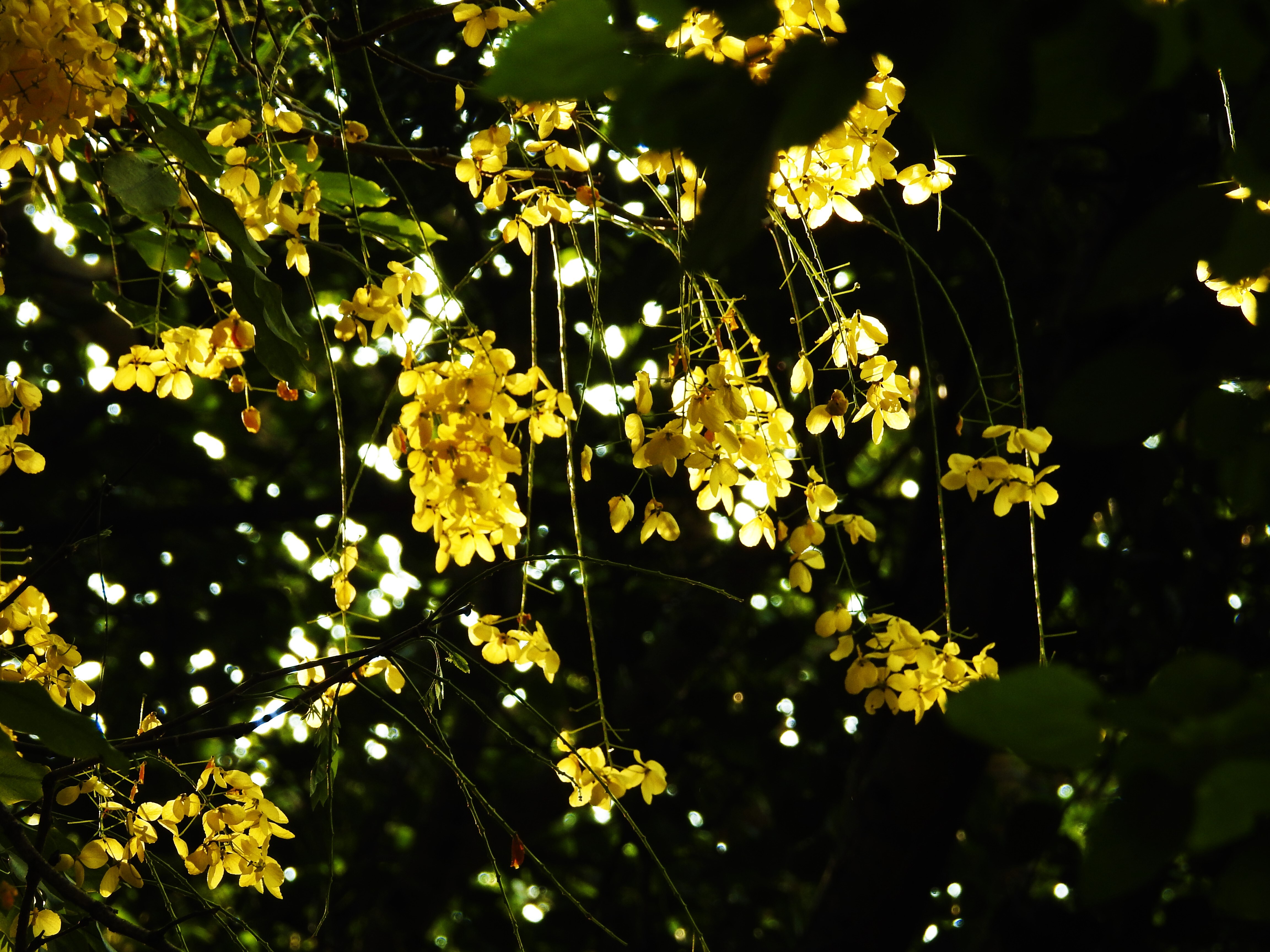
Spring and pre-monsoon is the time when many Indian birds are nesting. From my balcony and terrace, I watched Brahminy Mynas adopt a nest box and raise a brood of chicks. Peaceable looking Collared doves and the Yellow-footed green pigeons gathered nesting material by twisting branches off trees. Flowers on Indian trees like Amaltas blossomed and fell, turning to seed, snatched up by birds as food or to line nests.

‘Balcony birders' have formed. Citizens are asking if nature has ‘rebounded' or taken ‘back' its place. Policy planners are mooting a new world post-COVID, a ‘sustainable development plus' world that rebounds the economy but equally addresses environmental concerns with urgent vigour. We seem to be looking at the environment with a new eye.
Yet, decks are moving to take the ‘I' out of the environment.
At least two provisions of the Draft EIA Notification 2020 propose to remove the citizen from environmental regulation.
The right to life, Article 21 of the Indian Constitution, is interpreted as the right to a healthy environment. The purpose of the EIA is to appraise projects for their impacts on the environment, thus resulting in informed decision-making if the project can come up in its specific location. The question about environmental considerations are not just about size or scope of projects, but also location.

For instance, citizens of Assam have raised concerns over the clearance given for oil exploration in Dibru Saikhowa National Park. This area is protected for its sheer uniqueness, which many would call priceless, and worth more than their price in oil. The area is part of a biodiversity ‘hotspot', located in a river island—where the confluence of smaller rivers joins the Brahmaputra. The species found here belong to restricted ranges – orchids, the critically endangered White-bellied heron, the rare White winged-duck—creatures of tropical, evergreen forest and clear streams. There may be many oil rigs, but the unique interaction of freshwater, swamp, grassland and forest ecosystems means there are dolphins in the water, tigers on the prowl and only one kind of Dibru-Saikhowa. Thus, digging for oil in this location has far-reaching impacts on severely endangered species and ecosystems found nowhere else in the same intensity.
As people protested the clearances, an oil rig in Baghjan, Tinsukia, not far from Dibru-Saikhowa, exploded and caught fire. Burned carcasses of Ganges river dolphin, birds and other animals emerged. for days, OIL could not put out the fire or plug the spill. People continued to agitate, but the new EIA draft, on paper, looks to lessen this role.

The 2006 EIA norms gave people 30 days for furnishing their responses to a new project; the new draft cuts it down to twenty. This is likely to diminish the capacity of people to fully understand how their lives may change, when say, a mine or a factory or an oil rig comes up near them. Impacts can range from air and light pollution, slurry discharge and an altered quality of life.
Finally, the draft EIA norms allow only government representatives and the project proponent to report violations of the rules. This may lead to oil spreading and a fire raging but no one putting this on paper as a violation. In the case of the Baghjan oil spill, the Assam Pollution Control Board said the oil rig was operating without consent to operate from the Pollution Control Board. A closure order was served and then withdrawn.
As people get more interested in having a say in the kind of environment they want to live in, and how decisions for natural areas are taken, the ‘I' in the environment gets more pronounced. Certainly, in a post-Covid world an eye for the environment needs more emphasis. We now need stronger laws for the environment, rather than a stronger confrontation with it.
Neha Sinha works with the Bombay Natural History Society. Views expressed are personal.
The views expressed here are those of the author and do not necessarily represent the views of BloombergQuint or its editorial team.

-
Opinion | India at 38: From Innovation Overperformer to Innovation Powerhouse

India now has 453 VC-backed deep science startups, 18 of them late-stage, after 117 percent growth since 2020. Laurus Labs, at USD 9.3 billion, is the most valuable deep science company in any middle-income economy outside China.
-
Navigating Energy Crossroads: S Jaishankar's Call For Diversified Supply Chains At G20 Ministerial Meeting
As geopolitical fault lines continue to test maritime trade routes and commodity flows, Jaishankar's message remains pertinent: true economic resilience requires open markets, protected transit lines, and a genuine commitment to multilateral cooperation rather than coercion.
-
Indians Are Travelling, But Not Every Journey Is A Holiday | The Week In Whys
Pilgrims, patients and working women are the real travellers, and the system hasn't quite caught up with them.
-
Getting To Work Costs Women More | The Reason Why
It is not just about women paying more than men. It is about women paying much more in cities than in villages.
-
AI Bias In Investing Cannot Be Eliminated, But It Can Be Governed
Framing is a particularly important example as identical financial information presented in terms of gains rather than losses can lead an LLM to reach a different assessment.
-
Joining The Dots | Dark Skies, Steady Diya: Why Hope Holds This Diwali
With war, a weak rupee and foreign outflows weighing on sentiment, policymakers at the NDTV World Summit and market veterans at NDTV Profit Ignite: Diwali Edition offered the same advice: stay invested and filter out the noise.
-
The Curious Case of Equitas Small Finance Bank And A CEO Who Quit For Stock
PN Vasudevan believes persistent investor concerns over a perceived conflict of interest had become a governance overhang on Equitas Small Finance Bank's stock, even as the lender improved profitability and asset quality.
-
Talking Points This Week: AI Cash Burn, A Tiger Comeback And An India That Still Finds Its Own Path
India is not immune to higher oil or tighter global liquidity, yet its earnings base is broader, its domestic policy levers are still available.
-
Foreign Investors Own Half Of HDFC Bank and ICICI Bank. An LTCG Cut Could Matter Most Here
Foreign portfolio investors have US$115 billion parked in HDFC Bank, ICICI Bank. If the government cuts long-term capital gains tax, Jefferies says returning foreign money could land here first.










