Dow Plunges as Multiple Worries Vex Investors
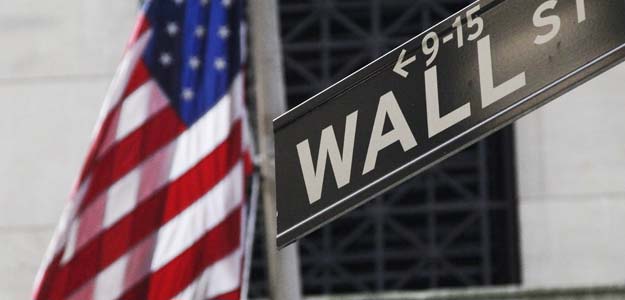
For stock investors, the red flags were everywhere on Thursday.
There were weak corporate results, the looming end of stimulus from the Federal Reserve and tensions between the West and Russia. On top of that, some investors feared that stocks have become too pricey after three years without a significant downturn.
The confluence of worries sent the Dow Jones industrial average tumbling more than 300 points, its worst one-day drop since February. The plunge snapped a string of five straight monthly gains, and pushed the blue-chip index to a slight loss for the year.
But it wasn't just stocks that suffered. Oil fell to its lowest level since March, gold dropped and even Treasurys edged lower.
The stock market fell in early trading after a dose of bad earnings news, and the losses accelerated throughout the day. Whole Foods Market and Exxon Mobil sparked the selling after their quarterly results late Wednesday disappointed investors. Yum Brands, the owner of KFC and Pizza Hut, slumped after it said that its earnings would be crimped by a food safety scandal in China that involved repacked meat.
Also driving the downturn were concerns that the Fed could raise short-term interests faster than expected because of a rebound in US growth during the spring.
The stock market has climbed nearly 200 percent since March 2009, with the most recent leg of that surge pushing the Standard & Poor's 500 index to an all-time high a week ago. The S&P 500 hasn't suffered a sell-off severe enough to qualify as a correction, Wall Street parlance for a fall of 10 percent or more from a peak, since October 2011.
"We've been on a strong run," said Jerry Braakman, chief investment officer at First American Trust. "There's just more concern that stock valuations are rich compared to historical norms."
The S&P 500 dropped 39.40 points, or 2 per cent, to 1,930.67, its biggest loss since April 10. The drop pushed the index to its first monthly loss since January.
The Dow Jones industrial average plunged 317.06 points, or 1.9 per cent, to 16,563.30. The drop was the biggest since Feb. 3 and the index is now 13.36 points lower for the year. The Nasdaq composite fell 93.13 points, or 2.1 per cent, to 4,369.77.
Exxon Mobil stock fell $4.31, or 4.2 per cent, to $98.94 after the energy company said that oil and gas production slipped 6 percent in the second quarter, disappointing analysts. The decline was driven by the expiration of rights to a field in Abu Dhabi and natural field declines. Whole Foods Market fell 88 cents, or 2.3 percent, to $38.23 after reporting quarterly sales that fell shy of expectations. The upscale grocer also lowered its sales forecast for the year.
Stock market valuations have climbed steadily for almost three years. Investors have become more optimistic about the outlook for earnings as economic growth has improved. The price-earnings ratio for S&P 500 stocks rose as high 15.9 earlier this month from 10.5 in September 2011.
Investors are also concerned about a range of geopolitical issues that could ultimately harm global growth.
In Europe, tensions are escalating between the European Union and Russia after the downing of a passenger plane over Ukraine. The European Union on Thursday revealed the details of broad economic sanctions against Russia. Argentina's debt default Wednesday was also added to investors' list of concerns.
Paul Zemsky, chief investment officer of Multi-Asset Strategies and Solutions at Voya Investment Management, said the main driver behind Thursday's sell-off was a reassessment of the outlook for interest rates in the US
The Fed has kept short-term interest rate at close to zero for more than five years, and bought bonds to hold down long-term interest rates. The goal is to encourage borrowing and spending.
Policy makers are now becoming more optimistic about the outlook for the US economy after growth expanded by a better-than-expected 4 percent in the second quarter. Although the Fed hasn't said when it will start raising rates, investors may be starting to assume that the timing will happen sooner, if the economy continues to improve and inflation picks up.
Friday's monthly jobs report is the next piece of data that investors will examine for a sense of where the economy and rates could be headed.
"We're closer to the first move higher in interest rates," Zemsky said. "And there's definitely a camp that believes that the only reason that we're at these levels is because the Fed has kept the rates at zero."
Despite Thursday's weak corporate results, investors should remember that the overall outlook for profits is strong, said Zemsky.
Earnings are still at record levels, and expected to grow by 9 per cent in the second quarter, according to data from S&P Capital IQ. That compares to growth of 4.9 per cent in the same period a year earlier and 3.4 per cent growth in the first three months of this year.
In other markets, gold fell $13.60, or 1.1 per cent, to $1,281.30 an ounce. Silver slipped 19 cents, or 0.9 per cent, to $20.41 an ounce.
Benchmark US crude fell $2.10 to close at $98.17 a barrel in New York, its lowest level since March 17. Oil's high for the year was $107.26, on June 20; its low was $91.66, set on January 9.
Brent crude, a benchmark for international oils used by many U.S. refineries, fell 49 cents Thursday to close at $106.02 in London.
Prices for US government bonds were little changed. The yield on the 10-year Treasury note edged up to 2.57 per cent from 2.56 per cent on Wednesday.

-
Opinion | India at 38: From Innovation Overperformer to Innovation Powerhouse

India now has 453 VC-backed deep science startups, 18 of them late-stage, after 117 percent growth since 2020. Laurus Labs, at USD 9.3 billion, is the most valuable deep science company in any middle-income economy outside China.
-
Navigating Energy Crossroads: S Jaishankar's Call For Diversified Supply Chains At G20 Ministerial Meeting
As geopolitical fault lines continue to test maritime trade routes and commodity flows, Jaishankar's message remains pertinent: true economic resilience requires open markets, protected transit lines, and a genuine commitment to multilateral cooperation rather than coercion.
-
Indians Are Travelling, But Not Every Journey Is A Holiday | The Week In Whys
Pilgrims, patients and working women are the real travellers, and the system hasn't quite caught up with them.
-
Getting To Work Costs Women More | The Reason Why
It is not just about women paying more than men. It is about women paying much more in cities than in villages.
-
AI Bias In Investing Cannot Be Eliminated, But It Can Be Governed
Framing is a particularly important example as identical financial information presented in terms of gains rather than losses can lead an LLM to reach a different assessment.
-
Joining The Dots | Dark Skies, Steady Diya: Why Hope Holds This Diwali
With war, a weak rupee and foreign outflows weighing on sentiment, policymakers at the NDTV World Summit and market veterans at NDTV Profit Ignite: Diwali Edition offered the same advice: stay invested and filter out the noise.
-
The Curious Case of Equitas Small Finance Bank And A CEO Who Quit For Stock
PN Vasudevan believes persistent investor concerns over a perceived conflict of interest had become a governance overhang on Equitas Small Finance Bank's stock, even as the lender improved profitability and asset quality.
-
Talking Points This Week: AI Cash Burn, A Tiger Comeback And An India That Still Finds Its Own Path
India is not immune to higher oil or tighter global liquidity, yet its earnings base is broader, its domestic policy levers are still available.
-
Foreign Investors Own Half Of HDFC Bank and ICICI Bank. An LTCG Cut Could Matter Most Here
Foreign portfolio investors have US$115 billion parked in HDFC Bank, ICICI Bank. If the government cuts long-term capital gains tax, Jefferies says returning foreign money could land here first.










