Don't Interfere In Real Estate Sector: Adi Godrej To Government
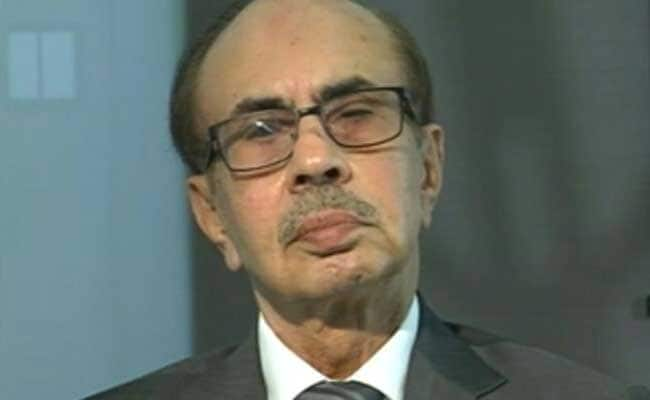
Hyderabad: Godrej Group Chairman Adi Godrej has said the government should not "interfere" in the real estate sector, often cited as one of the biggest black money generators, even as he termed demonetisation a "positive step".
He also pitched for improving the ease of doing business, state-funding of elections and early introduction of GST to curb corruption.
"No. Nothing," he replied when asked if he thought that the government needs to do something as some argue that real estate and gold are among the biggest generators of unaccounted wealth.
"You can't interfere in the business," Godrej told PTI in an interview.
"But in real estate, if permissions come quickly and they are not held up by government going into every little detail and High Court intervening saying this can't be done and that can't be done etc, etc... So, if ease of doing business is improved in real estate it will be very good", he said.
"But we must remember that what we talk of black money in real estate is mainly in resale of real estate and most of the large developers clearly do not accept cash and may be some small developers do," said Godrej, whose group has interest in realty business through a subsidiary, Godrej Properties.
Terming demonetisation a "positive step", he said the negatives from the move have been less than expected and positives would come in very fast.
"And so generally I think the recovery in terms of demand from demonetisation would take place fast, and the positives of demonetisation...higher tax, less black money in the market, more banking finance availability and all that...lower inflation etc...will kick in very soon", he said.
Speaking about the Godrej group, he said the recovery from "lower" sales have taken place quite well. "In our FMCG business, we have ended the quarter (ending December 31, 2016) quite well, and we feel that now the recovery will be good".
"Best way to tackle corruption is to improve the ease of doing business, less permissions from government so you don't have to go and knock on the government. So, that's a good way of cutting it (corruption) down", Godrej said.
Secondly, he said, state funding of elections would be a good thing.
"But I think the best thing for the country would be early introduction of GST because GST has lot of economic benefits, including improving the ease of doing business etc. If GST is brought in by April first or latest by July first, I think it will have tremendous beneficial effect", Godrej said.
The government would get "lot of revenues" from the demonetisation move, Godrej said, adding that it would be a good opportunity to cut direct taxes in the coming budget so that "much more money will be declared by the people and also it will help the growth of the economy".
"Main thing would be in ease of doing business. That means, less and less government permissions. You declare a policy and let people go ahead and do their business. If they break the policy, take action but don't go for case-by-case government permissions", he said.
"Once GST comes, I think the Indian economy will do very well and growth will be very good," he added.
(This story has not been edited by NDTV staff and is auto-generated from a syndicated feed.)

-
Ten Things I Learnt This Samvat

Patience can be a trap. Cheap stocks can stay cheap. Leverage can wipe you out. What did Samvat 2082 teach us? Niraj Shah writes on 10 lessons from the year gone by.
-
Talking Points This Week: Tech Nerves, FII Buying, And A Faraway Banking Shock
The global markets are not shining this Diwali. The exception in the large markets is, India.
-
Midterm Rally Lasted A Day. The Hard Reality Of A Divided US May Last Two Years | Opinion
Between a contested AI boom, a debt ceiling that arrives in 2027 and a president with every incentive to act alone, the next two years may prove more volatile than the first day's rally suggests.
-
Blue Wave Will Derail the AI Trade but Won't Dismantle the AI Era | Unhedged Position
The Democrats' sweep of the US Congress will see politics collide with economic forces both over the long and short term.
-
It's Time To Take The GST Council's Bet On Trust Global
Payment records can prove India's services exports, and clear, proportionate rules can bring foreign digital sellers into the tax net.
-
Opinion | India at 38: From Innovation Overperformer to Innovation Powerhouse
India now has 453 VC-backed deep science startups, 18 of them late-stage, after 117 percent growth since 2020. Laurus Labs, at USD 9.3 billion, is the most valuable deep science company in any middle-income economy outside China.
-
Navigating Energy Crossroads: S Jaishankar's Call For Diversified Supply Chains At G20 Ministerial Meeting
As geopolitical fault lines continue to test maritime trade routes and commodity flows, Jaishankar's message remains pertinent: true economic resilience requires open markets, protected transit lines, and a genuine commitment to multilateral cooperation rather than coercion.
-
Indians Are Travelling, But Not Every Journey Is A Holiday | The Week In Whys
Pilgrims, patients and working women are the real travellers, and the system hasn't quite caught up with them.
-
Getting To Work Costs Women More | The Reason Why
It is not just about women paying more than men. It is about women paying much more in cities than in villages.









