Domestic Air Traffic Rose In 2021-22, Yet 40% Lower Than Pre-Pandemic Level: ICRA
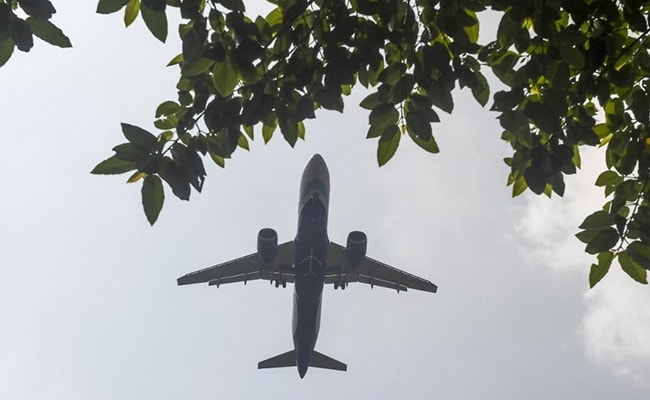
India's domestic air passenger traffic is estimated to have grown by around 59 per cent year-on-year to 84 million in 2021-22, although it is still about 40 per cent lower as compared to the pre-pandemic level, credit ratings agency ICRA said on Monday.
It also expects elevated aviation turbine fuel (ATF) prices, aggravated by geo-political issues, to remain a near-term challenge for the industry and will be a key determinant of profitability for the sector. On a sequential basis, domestic passenger traffic spiked about 37 per cent to 10.6 million in March, driven by a near to normalcy in airline operations owing to waning of impact of the pandemic, ICRA noted.
The passenger traffic on local air routes was 7.7 million in February 2022, it added.
Traffic growth in March this year stood at 35 per cent as compared to over 7.8 million in the year-ago month, ICRA noted further.
Airlines' capacity deployment for March 2022 registered a growth of 12 per cent at 80,217 departures as compared to over 71,548 departures clocked in the same month of last year, ICRA said.
Domestic departures logged 42 per cent growth in March this year over the previous month, driven by increased pace of vaccination and rapid abatement of the third wave of COVID-19, which allowed for quick lifting of travel restrictions, the ratings agency said.
"Domestic passenger traffic for 2021-22 is estimated at around 84 million, y-o-y growth of 59 per cent, marginally higher than our estimate of 80-82 million, although it is around 40 per cent lower than pre-COVID levels,” Vice President and Sector Head of ICRA Suprio Banerjee said.
For March this year, the average daily departures were at around 2,588, higher than the average daily departures of around 2,308 in March 2021, and notably higher compared to around 2,023 in February 2022, he said.

-
Talking Points This Week: Tech Nerves, FII Buying, And A Faraway Banking Shock

The global markets are not shining this Diwali. The exception in the large markets is, India.
-
Midterm Rally Lasted A Day. The Hard Reality Of A Divided US May Last Two Years | Opinion
Between a contested AI boom, a debt ceiling that arrives in 2027 and a president with every incentive to act alone, the next two years may prove more volatile than the first day's rally suggests.
-
Blue Wave Will Derail the AI Trade but Won't Dismantle the AI Era | Unhedged Position
The Democrats' sweep of the US Congress will see politics collide with economic forces both over the long and short term.
-
It's Time To Take The GST Council's Bet On Trust Global
Payment records can prove India's services exports, and clear, proportionate rules can bring foreign digital sellers into the tax net.
-
Opinion | India at 38: From Innovation Overperformer to Innovation Powerhouse
India now has 453 VC-backed deep science startups, 18 of them late-stage, after 117 percent growth since 2020. Laurus Labs, at USD 9.3 billion, is the most valuable deep science company in any middle-income economy outside China.
-
Navigating Energy Crossroads: S Jaishankar's Call For Diversified Supply Chains At G20 Ministerial Meeting
As geopolitical fault lines continue to test maritime trade routes and commodity flows, Jaishankar's message remains pertinent: true economic resilience requires open markets, protected transit lines, and a genuine commitment to multilateral cooperation rather than coercion.
-
Indians Are Travelling, But Not Every Journey Is A Holiday | The Week In Whys
Pilgrims, patients and working women are the real travellers, and the system hasn't quite caught up with them.
-
Getting To Work Costs Women More | The Reason Why
It is not just about women paying more than men. It is about women paying much more in cities than in villages.
-
AI Bias In Investing Cannot Be Eliminated, But It Can Be Governed
Framing is a particularly important example as identical financial information presented in terms of gains rather than losses can lead an LLM to reach a different assessment.









