Docomo Moves U.S. Court To Enforce London Court’s Award Against Tatas
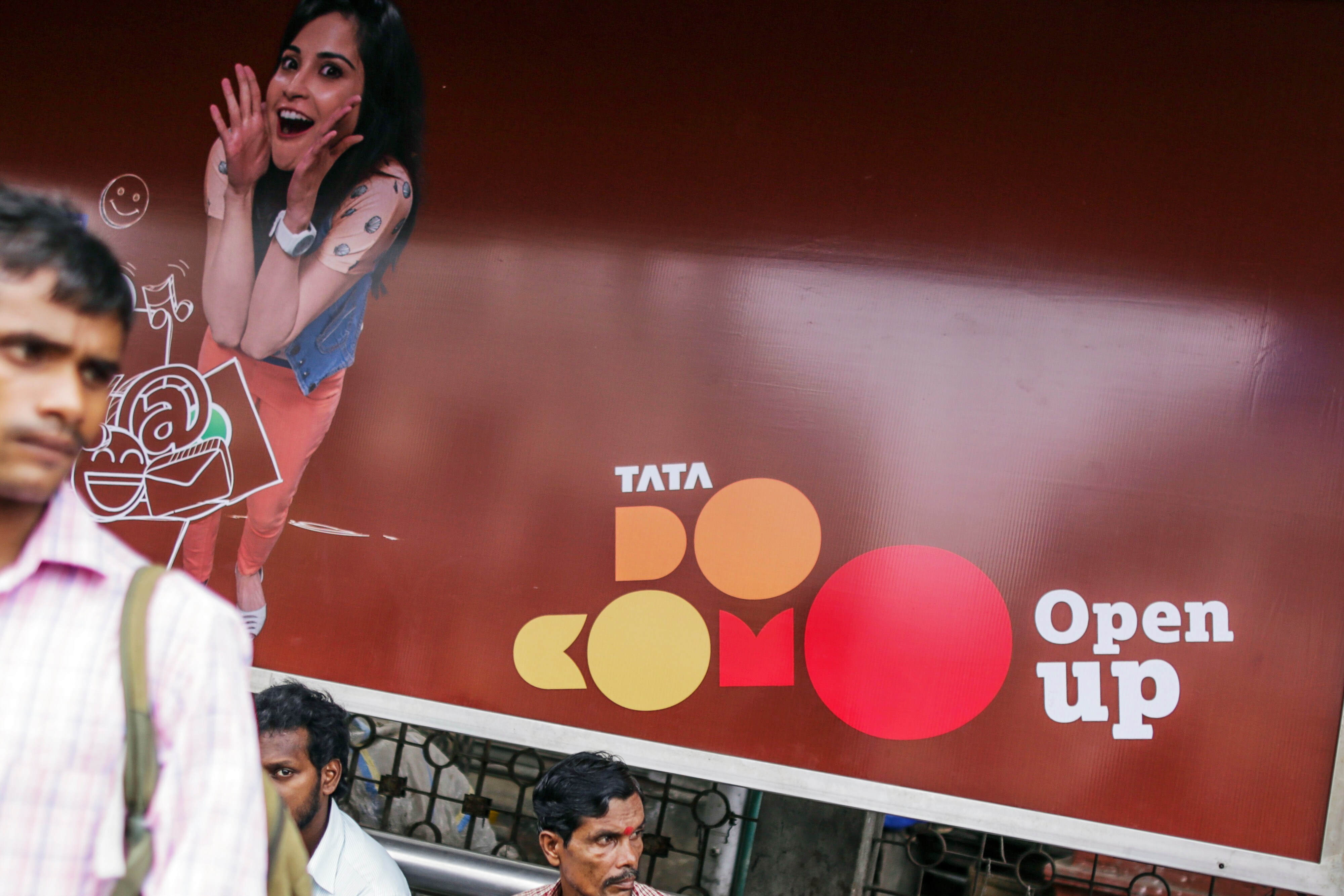
Japanese telecom firm NTT Docomo on Friday said it has moved a U.S. court to force its estranged Indian partner Tata Group to pay $1.2 billion awarded as damages by an international arbitration for breach of contract.
Tata Sons said it will resist enforcement of the arbitration award in India as also other jurisdictions as it has been barred by Indian law and public policy for paying damages awarded for breaching a contract to buyback Docomo shares in their joint venture at a pre-agreed price.
"Docomo has taken a further step to enforce the London Court of Arbitration (LCIA) award against Tata by commencing action in the United States District Court for the Southern District of New York," Japan's largest telecom firm said in a statement.
It believed that the decision of LCIA that Tata has breached its commercial agreement and owes Docomo $1.2 billion in damages is enforceable in any country which is a signatory to the New York Convention, including the United States.
"Until, Docomo receives the full amount due, it will continue to seek enforcement globally," the statement said.
Tata Sons in a statement said it has from outset emphasised its "commitment to honoring its contractual obligations to Docomo in accordance with the applicable law." "Tata Sons maintains the same position with respect to the award. However, performance of the award requires the approval of the Reserve Bank of India, which to date has been denied on the basis of pre-existing regulations that are fully in the knowledge of Docomo.
"Until it has been authorised to proceed with payment by the relevant Indian legal authority, Tata Sons has been advised that enforcement of the award would be contrary to Indian law and public policy," the statement said.
Tata Sons said on that basis it is "resisting enforcement in India and will resist enforcement in any other jurisdiction Docomo files for enforcement".
It further said it has already placed the full amount awarded to Docomo in the arbitration – $1.17 billion, in cash – with the high court of Delhi, where Docomo has previously filed for enforcement of the arbitral award and the entire issue is pending adjudication.
Docomo had in November 2009 acquired 26.5 percent stake in Tata Teleservices for about Rs 12,740 crore (at Rs 117 per share). This was as per a 2008 understanding that in case it exits the venture within five years, it will be paid a minimum 50 percent of the acquisition price. The Tata-Docomo buyback contract was signed despite Reserve Bank of India (RBI) rules barring pre-set buyback pricing.
Docomo in April 2014 decided to exit the joint venture that struggled to grow subscribers quickly. It sought Rs 58 per share or Rs 7,200 crore from Tatas. But the Indian Group offered Rs 23.34 a share in line with RBI guidelines that states that an international firm can only exit its investment at a valuation "not exceeding that arrived at on the basis of return on equity".
The Japanese firm dragged Tatas to international arbitration where it won a $1.17 billion award. To honour that award, an application was made to the RBI seeking exemption from the foreign exchange act.
The Reserve Bank in turn wrote to the Finance Ministry seeking exemption from the rules as such a measure would boost investor confidence. But the Finance Ministry turned down the plea as it would set a precedence for other such cases.Meanwhile, Tata Sons on Friday said it has filed evidence with English High Court supporting application to set aside ex-parte order obtained by NTT Docomo.
"Tata Sons has today (Friday) filed evidence in support of its September 5th, 2016 application before the English High Court of Justice," Tata Sons said in a statement.
The application seeks to set aside the court's ex-parte order dated July 25, 2016 that granted NTT Docomo Inc leave to enforce the LCIA arbitral award, the statement added.
Tata Sons' evidence outlines the grounds on which it will resist enforcement of the award, including the argument that performance of the award without approval by Reserve Bank of India would be illegal under Indian law and contrary to public policy.
Another ground cited in the evidence is that "Docomo has not validly tendered its shares in Tata Teleservices Limited to Tata Sons, which is a necessary condition precedent to payment by Tata of the sum awarded by the arbitral tribunal".
Tata Sons clarified that by pursuing the application before the London court, it is "following the path laid down by the arbitral tribunal in the award".
"The arbitral tribunal, with Docomo's encouragement, expressly left open the issue of whether performance of the award would require approval from the Reserve Bank of India.
Tata sought such approval and was refused. Accordingly, Tata Sons' actions do not, in any manner, detract from its stated commitment to discharge its obligations to the fullest extent permitted under law," Tatas claimed.

-
Navigating Energy Crossroads: S Jaishankar's Call For Diversified Supply Chains At G20 Ministerial Meeting

As geopolitical fault lines continue to test maritime trade routes and commodity flows, Jaishankar's message remains pertinent: true economic resilience requires open markets, protected transit lines, and a genuine commitment to multilateral cooperation rather than coercion.
-
Indians Are Travelling, But Not Every Journey Is A Holiday | The Week In Whys
Pilgrims, patients and working women are the real travellers, and the system hasn't quite caught up with them.
-
Getting To Work Costs Women More | The Reason Why
It is not just about women paying more than men. It is about women paying much more in cities than in villages.
-
AI Bias In Investing Cannot Be Eliminated, But It Can Be Governed
Framing is a particularly important example as identical financial information presented in terms of gains rather than losses can lead an LLM to reach a different assessment.
-
Joining The Dots | Dark Skies, Steady Diya: Why Hope Holds This Diwali
With war, a weak rupee and foreign outflows weighing on sentiment, policymakers at the NDTV World Summit and market veterans at NDTV Profit Ignite: Diwali Edition offered the same advice: stay invested and filter out the noise.
-
The Curious Case of Equitas Small Finance Bank And A CEO Who Quit For Stock
PN Vasudevan believes persistent investor concerns over a perceived conflict of interest had become a governance overhang on Equitas Small Finance Bank's stock, even as the lender improved profitability and asset quality.
-
Talking Points This Week: AI Cash Burn, A Tiger Comeback And An India That Still Finds Its Own Path
India is not immune to higher oil or tighter global liquidity, yet its earnings base is broader, its domestic policy levers are still available.
-
Foreign Investors Own Half Of HDFC Bank and ICICI Bank. An LTCG Cut Could Matter Most Here
Foreign portfolio investors have US$115 billion parked in HDFC Bank, ICICI Bank. If the government cuts long-term capital gains tax, Jefferies says returning foreign money could land here first.
-
'Never Seen This Level Of Negativity': Sandeep Tandon Says The Next Rally May Be Closer Than You Think
Veteran investor Sandeep Tandon says foreign selling is easing, large-caps are due a comeback and mid-caps are crowded, while he turns positive on gold, power and pharma this Diwali.
-
Indians Stay With Family, Not In Hotels | The Reason Why
India still lacks enough clean, reliable and affordable hotels for budget-conscious travellers.










