Do States Have Room To Cut VAT On Petrol And Diesel?
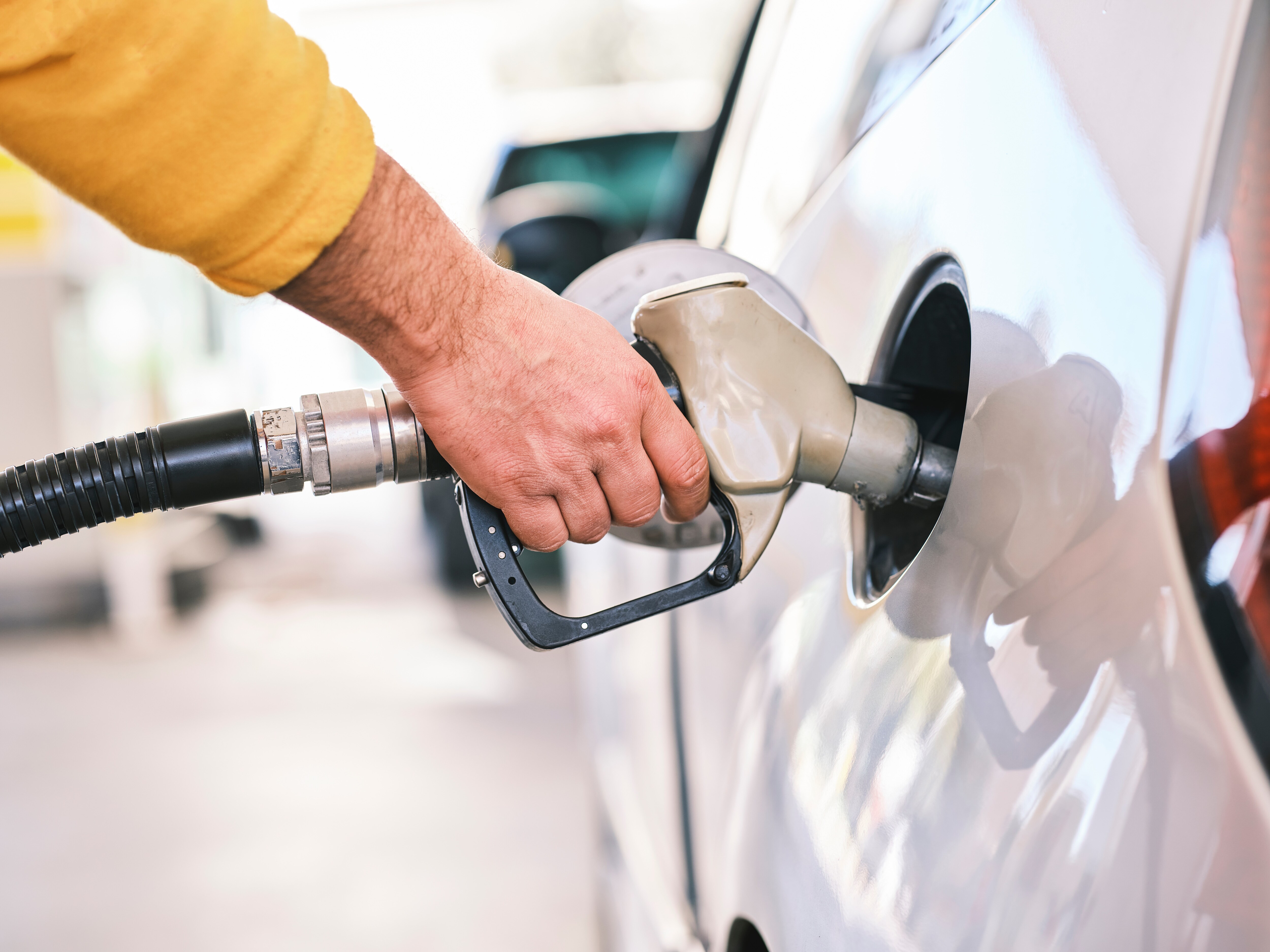
Ever since the central government lowered excise duty on auto fuels, states have faced calls to lower value-added tax. Even Reserve Bank of India Governor Shaktikanta Das, citing the impact of excise duty cut, has said that a VAT reduction can further soften inflation.
But do states have room to cut fuel taxes?
They do going by how much they benefited from rising oil prices, according to Soumya Kanti Ghosh, economist and group chief economic adviser at State Bank of India.
According to an SBI report authored by Ghosh, states gained Rs 49,229 crore from VAT when oil prices were increasing, and will forego Rs 15,021 crore after the excise duty cut. That implies gains still outstrip the revenue forgone by Rs 34,208 crore.
If that cushion is entirely adjusted, states on an average can still cut diesel price at least by Rs 2 a litre and petrol by Rs 3 a litre each, the report said.

The central government reduced the excise duty by Rs 8 a litre for petrol and Rs 6 a litre for diesel. It's the second such relief since November when the levy was lowered by Rs 5 per litre on petrol and Rs 10 per litre on diesel.
After the latest cut, Maharashtra lowered VAT by Rs 2.08 per litre on petrol and by Rs 1.44 per litre on diesel. Rajasthan brought it down by Rs 2.48 and Rs 1.16 per liter, respectively, while Kerala cut it by Rs 2.41 and Rs 1.36 a litre.
Twenty one states and union territories (with legislature) had reduced per litre VAT by Rs 1.8-10 on petrol and Rs 2-7 on diesel after the November cut. According to Reserve Bank of India's report on state finance budgets for 2021-22, that resulted in an average revenue loss of 0.08% of the GDP.
Can States Afford It?
Irrespective of what states earn from fuel, the decision to cut VAT will depend on their overall finances.
Anuj Sethi, senior director at Crisil Ratings Ltd., told BQ Prime that for every Rs 1 litre additional cut on VAT on petrol and diesel, states could lose about Rs 12,000-13,000 crore annually.
There may be some VAT reduction but the scope of reduction depends on the state's fiscal situation and needs and their own development agenda, Devendra Pant, chief economist at India Ratings and Research Pvt., told BQ Prime over the phone.
A key concern for states will be the impending end to GST compensation in June. Some states are more vulnerable than others to this loss of revenue.
According to an earlier report by Ghosh, GST compensation contributes more than 20% of the tax revenue for seven states. The states include Assam (22%), Bihar (29%), Delhi (32%), Gujarat (20%), Himachal Pradesh (28%), Jharkhand (20%) and Karnataka (23%).
Once the compensation ends, states' revenue will fall. Tarun Bajaj, revenue secretary, had in a post-budget interaction said that the shortfall could be "massive" at around Rs 1 lakh crore.
The GST Constitutional amendment assured states of compensation for loss of revenue for five years (2017-2022), as state levies were subsumed under the common national tax. A subsequent law mandated a 14% compounded growth in states' GST revenue every year till 2022.
While some states are looking at other measures to offset the loss of GST compensation, Sethi said it's not an easy decision as the composition of state's own revenues vary across borders.
Alongside the end of GST compensation, states have other fiscal pressures to contend with this year.
The central government has decided to adjust off-budget borrowings via state-owned entities and special purpose vehicles in the overall debt ceiling.
While that's aimed at improving fiscal transparency, it will lower states' ability to raise funds. According to the SBI report, Telangana, Andhra Pradesh, Rajasthan, UP, Punjab, Chhattisgarh and Kerala have significant outstanding guarantees, limiting their space to borrow in the current fiscal.
The borrowing limit for states for FY23 is set at 3.5% of the GSDP with an additional 0.5% on completion of power sector reforms.
Is Tax Buoyance Enough To Offset Loss?
The GST department has said that monthly collections of more than Rs 1 lakh crore over the last year could alleviate some of the fiscal pressure for states.
But according to Pratap Ranjan Jena, associate professor at National Institute of Public Finance and Policy, that's not certain. "We are yet to see if the increase in GST collections and the state share of the same will help," he told BQ Prime. "But it remains that state finances are still stressed."
Sethi said it would be best to wait and watch. "On one end, we have the cost of power generation rising that states are absorbing, and on the other there is also the broader inflationary pressure," he said. "The good GST momentum helps, and that could decide if more states will also reduce VAT on fuel."
Will Capex Suffer?
The larger concern for some economists is that if states cut VAT, it may affect capex plans, hurting growth.
"Capex is more likely to be affected as it's residual item in the system," Jena said. "Revenue expenditure, which is committed, forms a majority of state expenditure."
To be sure, Finance Minister Nirmala Sitharaman in the budget for 2022-23 allocated a Rs 1 lakh crore loan to states to front-load their capex.
According to Pant, capex by states put together is more than central capex. "And often in moments of fiscal crisis, the axe falls on capex and social infrastructure.”

-
Love, Sex Aur Dhokha: The Audacious Plot To Spy On Jensen Huang

A Taipei dinner, a Singapore chip buyer and a suspected Chinese asset: inside the alleged spy operation that got close to NVIDIA's Jensen Huang.
-
Ten Things I Learnt This Samvat
Patience can be a trap. Cheap stocks can stay cheap. Leverage can wipe you out. What did Samvat 2082 teach us? Niraj Shah writes on 10 lessons from the year gone by.
-
Talking Points This Week: Tech Nerves, FII Buying, And A Faraway Banking Shock
The global markets are not shining this Diwali. The exception in the large markets is, India.
-
Midterm Rally Lasted A Day. The Hard Reality Of A Divided US May Last Two Years | Opinion
Between a contested AI boom, a debt ceiling that arrives in 2027 and a president with every incentive to act alone, the next two years may prove more volatile than the first day's rally suggests.
-
Blue Wave Will Derail the AI Trade but Won't Dismantle the AI Era | Unhedged Position
The Democrats' sweep of the US Congress will see politics collide with economic forces both over the long and short term.
-
It's Time To Take The GST Council's Bet On Trust Global
Payment records can prove India's services exports, and clear, proportionate rules can bring foreign digital sellers into the tax net.
-
Opinion | India at 38: From Innovation Overperformer to Innovation Powerhouse
India now has 453 VC-backed deep science startups, 18 of them late-stage, after 117 percent growth since 2020. Laurus Labs, at USD 9.3 billion, is the most valuable deep science company in any middle-income economy outside China.
-
Navigating Energy Crossroads: S Jaishankar's Call For Diversified Supply Chains At G20 Ministerial Meeting
As geopolitical fault lines continue to test maritime trade routes and commodity flows, Jaishankar's message remains pertinent: true economic resilience requires open markets, protected transit lines, and a genuine commitment to multilateral cooperation rather than coercion.
-
Indians Are Travelling, But Not Every Journey Is A Holiday | The Week In Whys
Pilgrims, patients and working women are the real travellers, and the system hasn't quite caught up with them.









