Do-it-yourselfers Inspire Hardware Renaissance in Silicon Valley
In the shadow of Internet monoliths such as Facebook, Google and Twitter, it's easy to forget that Silicon Valley got its start from hard-scrabble tinkerers building radios, microchips and other devices.
Now, a proliferation of high-tech but affordable manufacturing tools and new sources of funding are empowering a generation of handy entrepreneurs and laying the foundation for a hardware renaissance.
Inventors are working on projects as varied as drones, improved artificial limbs, smart jewellery and handheld devices for detecting gluten in food.
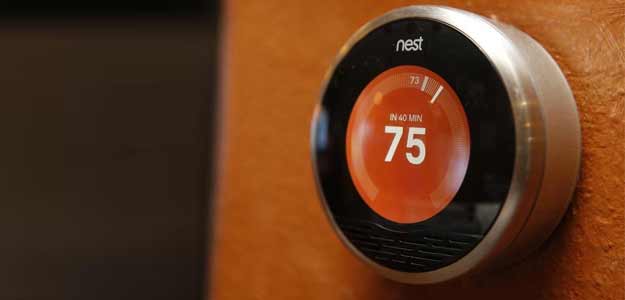
Google in January acquired four-year-old smart thermostat maker Nest Labs for $3.2 billion. Facebook in March spent $2 billion on virtual reality headset startup Oculus Rift, founded by a college dropout in his parents' garage. 3D printer maker MakerBot Industries was sold for $400 million in 2013 to Stratasys Inc - just three years after it was cofounded by a former art teacher.
All of them embody the growing focus on hardware and the so-called "Maker movement" sweeping northern California and, in a smaller way, Europe and other countries. Renewed interest in tinkering with objects - versus apps or software - is attracting more money from investors and fostering a growing number of workshops, where aspiring inventors can get their hands on computerized milling machines and other high-end tools.
"Two and a half years ago when we were started, it was rough," said Jeremy Conrad, co-founder of Lemnos Labs, an incubator that provides funding, tools and guidance for startups working on physical products. "Now we have more relationships with venture capitalists who are interested in hardware than we have companies to fund."
The growing wave of do-it-yourselfers may hold the key to manufacturing innovation. President Barack Obama sees children who are "makers of things, not just consumers of things" as a step toward rebuilding a withered U.S. manufacturing industry.
A decade ago, free, open-source code slashed the cost and complexity of starting a software company, sparking a boom in Internet and social media startups founded by twenty-something, self-taught programmers. Now hardware is catching up to the open-source revolution, with common standards and a culture that encourages the sharing of designs and building blocks that save inventors the time and expense of reinventing the wheel.
Take the palm-sized "Arduino" computer board, ubiquitous in the maker movement. The roughly $20 item was developed for students, offering low price and relatively easy programming. Arduino lets do-it-yourselfers snap together and program interchangeable components such as GPS chips and motor controllers to run everything from robots to cocktail mixers.
Knitting to Robotics
From families to entrepreneurs, growing numbers of people are rolling up their sleeves and discovering how much easier it has become to make things with their hands.
The advent of community workshops, often called hackerspaces, allow like-minded people to collaborate on everything from knitting to drones and often provide industrial tools - including laser-cutters and 3D printers - too expensive for most people to buy on their own.
TechShop, one of the largest in its field, charges members a monthly fee for classes and access to tools, and has grown to eight locations around the country and 6,000 members since its first outlet opened in 2006.
While hackerspaces have existed for years in Europe and are expanding in Asia, northern California's technology legacy has made it a maker Mecca.
Today's do-it-yourselfers follow a storied tradition in the San Francisco Bay area, where amateurs dabbled with early radios a century ago and electronics enthusiasts in the 1970s formed the Homebrew Computer Club, a group whose members included Apple Inc co-founder Steve Wozniak.
Maker festivals have become major venues for hobbyists to show off their projects and hob-nob. In 2006, 22,000 people descended on magazine publisher Maker Media's first "Maker Faire" in Silicon Valley, a cross between a science fair and jamboree for adults.
Since then, its events have expanded across the United States and into Japan and Europe with a total of 530,000 attendees at affiliated fairs last year. The flagship annual shindig in San Mateo, California, is on May 17 and 18.
Most makers are hobbyists, but a handful sell their wares to friends or online and an even smaller group aspires to win backing from investors, or from crowdfunding sites such as Kickstarter or Indiegogo, to manufacture their products.
Take theatre technician Andrew Rutter, who took laser-cutting classes through the maker community in San Francisco soon after immigrating from Britain in 2010.
He used his new skill to build a high-end 3D printer and soon after launched Type A Machines, which has grown to 21 employees and sold over 500 of the devices, assembling many of them at a former Caterpillar factory.
"There is a large percentage of people out there who have ideas and want to make stuff, but they lack the training and access to equipment to do it," the 33-year old said.
Ann Miura-Ko, a self-professed tinkerer and partner at Floodgate, which invests in early-stage startups, believes nostalgia for the Valley days of old plays a role in the Maker boom.
"Just the same way you have kids who have been coding for 10 years at the age of 16, you're going to see kids who have been making stuff for 10 years at the age of 16. If you see that, you'll know we're ready for the Mark Zuckerberg of hardware." Miura-Ko said.
The End Game?
To be sure, funding for software startups - from enterprise application developers to more consumer-friendly mobile apps - dwarfs hardware investments.
It may take years for hardware to excite investors the way it once did. Dealing with suppliers, assembly lines, transport, warehousing and retailers still make the hardware business daunting compared with software for many would-be entrepreneurs in Silicon Valley.
But interest is rising. According to the National Venture Capital Association, investments in various categories of computer- and electronics-related startups grew 24 percent last year to $843 million after falling 26 percent in 2012. The group does not track a specific "hardware" category.
Kickstarter is another popular venue for makers seeking funding. Since the crowdsourcing platform's 2009 launch, more than $116 million has been raised for more than 1,400 technology-related projects, of which the majority have been hardware gadgets.
Eric Migicovsky cobbled together a prototype of his Pebble smartwatch using an Arduino board and an old cellphone screen. Released in 2013, Pebble devices helped set the tone in an emerging smartwatch category and competes with products from tech heavyweights like Samsung Electronics and Qualcomm, and it raised over $10 million on Kickstarter.
Kickstarter funders also backed Oculus Rift.
Semiconductor companies including Atmel, ARM Holdings and Intel Corp now sponsor maker events and workshops, hoping perhaps to happen upon the next Steve Jobs.
Even the White House is planning its own maker-meetup this year. It wants public schools to create more hackerspaces, and for universities to let students submit maker projects as part of their applications, like the Massachusetts Institute of Technology started doing last year.
Products of the do-it-yourself movement - better 3D printing, laser cutters, water jets and other tools - will help the United States safeguard and extend its lead in advanced manufacturing, said Christine Furstoss, who is in charge of manufacturing R&D at General Electric.
"We're proud of our manufacturing heritage, but we don't invent everything," Furstoss said of GE, which has opened some of its patent catalogue, including technology for cooling jets and computerized scooters, to inventors. "The spirit and tools of the maker movement are something we want to engage with."
Copyright: Thomson Reuters 2014

-
Where You Live Shapes How You Get To Work | The Reason Why

Two-wheelers are the most popular way to get to work in India, accounting for nearly 43% of workplace commutes.
-
High US Salaries, No Green Card Certainty: The Financial Calculation Facing Indian H-1B Families
The suspension of PERM processing at eight technology employers does not cancel existing H-1B visas. What it does is force a question many Indian families have been avoiding: is the US salary worth tying your career and family plans to one employer?
-
Unhedged Position: Can India See An Indonesia-Style Time Correction?
The Nifty is trading below levels it first clocked in 2024. Is there, then, as I have suggested in the headline, potential that the current time correction drags on painfully for the next three-five, even ten years?
-
Navigating Friction And Energy Realities: An Analysis Of Marco Rubio's October Visit To India
Occurring at a critical juncture marked by stalled trade negotiations and escalating geopolitical pressures over global energy supplies, the visit offers a profound window into modern US-India relations.
-
India Exports Capital. Why Not Export Trusteeship?
The big question, then, is whether India can build an institution that global borrowers, investors, banks, and lawyers can trust, even without an Indian connection.
-
France's Economy & Politics Are In Crisis | The Reason Why
Let's look at how the French economy and politics evolved under Nicolas Sarkozy, Franois Hollande and Emmanuel Macron.
-
You May Inherit The Business. You Must Earn Its Credibility.
Succession tests the founder's ability to share authority as much as it tests the next generation's readiness to assume it.
-
Signing Deals Is One Thing; Making Them Work Is Another | The Week In Whys
Sometimes, things don't turn out as planned. Indian companies have lost some bids to rivals, some projects won't produce until 2030.
-
FOMC Wall, PERM Suspension, Hospital Stocks | Talking Points This Week
A PERM suspension would directly affect green-card sponsorship rather than H-1B visas, so the near-term earnings impact could remain relatively limited. The key question is whether this marks a new phase in US scrutiny of Indian IT.
-
Everything, Everywhere, All At Once: Dalal Street's Week To Forget | Joining The Dots
Visa curbs, a Starlink spat and cancer drug caps: what connects this week's shocks for Indian markets









