Diwali Splurge Also Bares Lingering Pain For Consumption In India
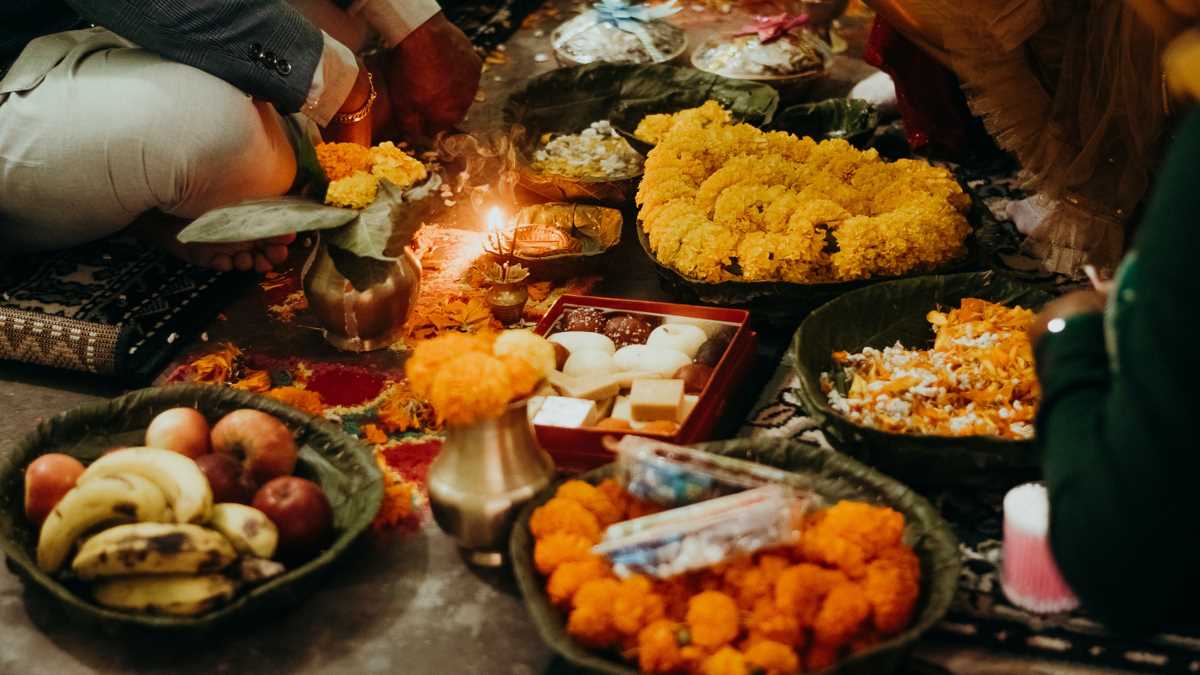
Sales of fast-moving consumer goods soared during the Diwali week as consumers indulged themselves even amid inflation. Yet, that isn't a sign of a reversal from a year earlier, when shoppers resisted the urge to splurge as rising costs pinched wallets.
Sales of consumer goods grew 10.6% over the previous year's Diwali between Oct. 18 and 24, according to data sourced from Bizom. Sales in the first two-three weeks of October rose 5.6% over September and 5.2% over a year earlier.
This uptick in sales—after falling 9.6% month-on-month in September—was led by commodities such as packaged wheat and rice to oil, chocolates and confectionery. But demand for beverages and all non-food categories shrunk, shows data from the retail intelligence firm that tracks 75 lakh kirana shops.
"It seems that no amount of inflationary headwinds, irregular monsoon and the earlier pandemic worries can prevent Indians from celebrating festivals," Akshay D'Souza, chief growth and insights officer at Bizom, told BQ Prime.
According to Desmond D'souza, senior director-sales at Mondelez India Foods Pvt., the company has seen "encouraging offtakes" this year, as consumers ventured out to social events and celebrated occasions after two years of lull due to the Covid-19 pandemic.
"As a gifting choice, we have seen significantly higher offtakes across channels this year with our premium portfolio leading the way," he said.
Biscuits and confectionery manufacturer Parle Products Pvt. has seen a 10-12% increase in sales during the festive season this year compared to 2021, and 7-8% higher sales in October over September.
"We have had significant sales of larger packs, partly because there was a good amount of rush in modern trade and e-commerce throughout the festive season. We also saw a good increase in demand for gift boxes," Mayank Shah, senior category head, Parle Products, told BQ Prime.
"Consumers were in the mood to rejoice, especially after two years of subdued festivities and Covid-led restrictions."
Bikanervala Foods Pvt., which sells packaged snacks under the Bikano brand, saw a 20% spike in sales. "This year, we launched an extensive range of gift packs—a pack for every budget, which starts at Rs 179 and goes up to Rs 799," said Manish Aggarwal, director, Bikanervala Foods.
Categories like chocolates, biscuits, salty snacks and noodles continue to see robust growth, signalling that the pandemic codes are slowly reversing, and indulgence has peaked, the research firm Kantar said in its latest FMCG Pulse report.
However, the report also highlighted a muted festive quarter is expected as it does not see "much happening this year to see any change to the 2021 trend".
Will Higher Diwali Sales Sustain?
For FMCG companies, sluggish rural demand and inflated prices of key raw materials remain a key pain point, despite prices of commodities—such as palm oil—cooling down.
"Premium brands are growing at a faster rate than the popular brands and popular brands are growing faster than the mass brands," said Sanjiv Mehta, chairman and managing director of Hindustan Unilever Ltd., referring to people with disposable income continuing to spend, while others are not as resilient to inflation.
Dabur India Ltd.'s Chief Executive Officer Mohit Malhotra agreed that inflation continues to hurt consumption. Rural demand lagged urban for the company for the first time in five quarters, though he expects consumption in the hinterland to revive in the second half of the fiscal.
Malhotra said that "green shoots" are visible with the recovery of the festive season. The company is witnessing growth in Rs 1-20 packs as well, he said.
Sunil D'Souza, the chief executive officer and managing director at Tata Consumer Products Ltd., said that the company saw marginal improvement in consumer sentiment at the end of September and beginning of October, a period that marked the onset of festivities.
However, he cautioned that it is too early to call out any kind of structural recovery.
Tata Consumer Products' domestic packaged beverages revenue declined 2%, with volumes shrinking 1% during the quarter ended September due to softness in rural and semi-urban markets. The company also suffered a market share decline of 20 basis points on a moving annual total basis in August, D'Souza said, citing Nielsen data.
According to HUL's Mehta, sales data beyond October will determine if the current demand trend will continue. "We will need to look at post-Diwali, and that will give us a sense whether the offtake has been better than last year."
Bikano's Aggarwal expects high festive sales to taper off in the coming months, as spiralling prices continue to pinch consumer wallets and reshape consumption.
"It will majorly impact rural sentiments weighing on volumes," he said. "But right pricing in rural areas would be the key to get good sales."
No Respite From Inflation
Indians are shopping more frequently as companies reduce quantity and make packs smaller to conceal higher prices, Kantar's FMCG Pulse report highlighted.
The average monthly sales of fast-moving consumer product packs in the country stood at 19.2 billion, or 62 packs per household, from April to August 2022. This is significantly higher than monthly sales of 15 billion packs, or 51 packs per household, before the Covid-19 outbreak.
While the packs bought before the pandemic weighed 438 grams on average, they have now shrunk to just 309 grams amid soaring inflation, Kantar said. The increase in the number of packs bought is significant in food products.
And while festive indicators for FMCG are positive, Bizom's D'Souza cautioned that consumers were holding back spends in the non-festive period.
In May, sales had declined 16.5% sequentially amid price hikes and sluggish rural demand. June and July also saw sales drop 0.9% and 7.9%, respectively, according to Bizom data.
Sales did pick up 6.3% in August, as consumers went out "in hordes to meet friends and families" during occasions like Ganesh Chaturthi, Raksha Bandhan, Independence Day, and Janmashtami.
FMCG sales in September were again lackluster, leading to kirana stores going easy on stocking, though the festive month of October saw sales spurt again.
According to D'Souza, consumer goods brands have focused on price-led growth in the previous quarters, with the hope of seeing a festive consumption spike in the run-up to Diwali. "However, that will need to change as we get into the period after the major festivals."
Companies will now need to focus on consumption growth measures by offering higher value to consumers to offset the price burden that is preventing them from consuming, he said.

-
Opinion | India at 38: From Innovation Overperformer to Innovation Powerhouse

India now has 453 VC-backed deep science startups, 18 of them late-stage, after 117 percent growth since 2020. Laurus Labs, at USD 9.3 billion, is the most valuable deep science company in any middle-income economy outside China.
-
Navigating Energy Crossroads: S Jaishankar's Call For Diversified Supply Chains At G20 Ministerial Meeting
As geopolitical fault lines continue to test maritime trade routes and commodity flows, Jaishankar's message remains pertinent: true economic resilience requires open markets, protected transit lines, and a genuine commitment to multilateral cooperation rather than coercion.
-
Indians Are Travelling, But Not Every Journey Is A Holiday | The Week In Whys
Pilgrims, patients and working women are the real travellers, and the system hasn't quite caught up with them.
-
Getting To Work Costs Women More | The Reason Why
It is not just about women paying more than men. It is about women paying much more in cities than in villages.
-
AI Bias In Investing Cannot Be Eliminated, But It Can Be Governed
Framing is a particularly important example as identical financial information presented in terms of gains rather than losses can lead an LLM to reach a different assessment.
-
Joining The Dots | Dark Skies, Steady Diya: Why Hope Holds This Diwali
With war, a weak rupee and foreign outflows weighing on sentiment, policymakers at the NDTV World Summit and market veterans at NDTV Profit Ignite: Diwali Edition offered the same advice: stay invested and filter out the noise.
-
The Curious Case of Equitas Small Finance Bank And A CEO Who Quit For Stock
PN Vasudevan believes persistent investor concerns over a perceived conflict of interest had become a governance overhang on Equitas Small Finance Bank's stock, even as the lender improved profitability and asset quality.
-
Talking Points This Week: AI Cash Burn, A Tiger Comeback And An India That Still Finds Its Own Path
India is not immune to higher oil or tighter global liquidity, yet its earnings base is broader, its domestic policy levers are still available.
-
Foreign Investors Own Half Of HDFC Bank and ICICI Bank. An LTCG Cut Could Matter Most Here
Foreign portfolio investors have US$115 billion parked in HDFC Bank, ICICI Bank. If the government cuts long-term capital gains tax, Jefferies says returning foreign money could land here first.










