Disclosure Of Big Defaulters' Names Will Not Lead Anywhere: Supreme Court
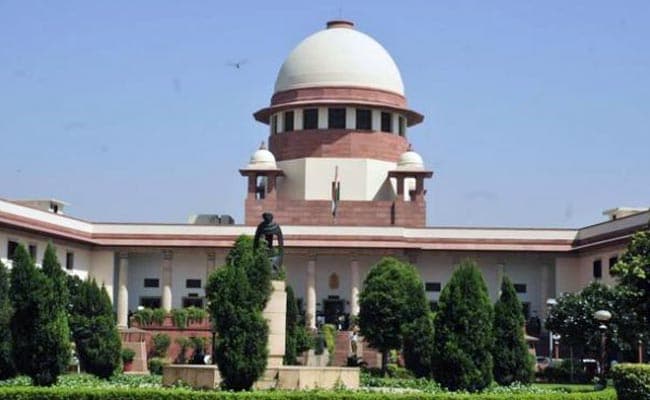
New Delhi: The Supreme Court on Friday said that disclosure of names of debtors, who owe Rs 500 crore and more to banks, will not lead "anywhere" as the important issue is to address "root cause" of accumulation of non-performing assets (NPAs).
"The disclosure of names with over Rs 500 cr bad loans will not lead anywhere. Root of the malice is accumulation of NPAs. The real cause is to address the root cause of NPAs and how to solve it," a bench comprising Chief Justice T S Thakur and Justices A M Khanwilkar and D Y Chandrachud said.
The observations assume significance as the the apex court, time and again, has been asking the Reserve Bank of India (RBI) and the Centre about the possibility of disclosing names of those who have defaulted in repaying bad loans to banks to the tune of Rs 500 crore and more.
Stressing the need to find "some solution" and reason as to why bad loans are accumulating, the bench asked Solicitor General (SG) Ranjit Kumar, appearing for the Centre and RBI, to file an affidavit within four weeks detailing steps taken to overhaul debt recovery system and laws dealing with quasi-judicial bodies like the Debt Recovery Tribunal (DRT) and the Debt Recovery Appellate Tribunal (DRAT).
During the hearing, the SG informed the bench that a committee, set up to deal with various issues including the NPAs, would give its report shortly and moreover, the banks are and will keep trying to recover bad loans.
Earlier, the apex court was informed that only 57 borrowers have defaulted on bank loans amounting to a whopping Rs 85,000 crore.
The court, after perusing an RBI report on people who have taken loan worth over Rs 500 crore and defaulted, had asked the central bank as to why their names should not be made public.
"Who are these people who have borrowed money and are not paying back? Why this fact that the person has borrowed money and not paying back be not known to the public," the bench had asked.
Advocate Prashant Bhushan, appearing for NGO Centre for Public Interest Litigation (CPIL), had favoured disclosure of the outstanding loan amount and cited an apex court verdict of December 2015 to claim that RBI has to provide all information.
The apex court had earlier expressed concern over the growing amount of loans not being returned and said, "People are taking thousands of crore and running away by declaring their companies insolvent, but poor farmers who take small amounts of Rs 20,000 or Rs 15,000 suffer."
On April 12, the court had suggested making public the total outstanding amount without disclosing defaulters' names, but RBI had resisted the proposal citing confidentiality clause.
The petition, which was filed in 2003 by the Centre for Public Interest Litigation (CPIL), had originally raised the issue of loans advanced to some companies by state-owned Housing and Urban Development Corporation (HUDCO). The plea had said that about Rs 40,000 crore of corporate debt was written off in 2015.
The Supreme Court had then directed RBI to provide a list of companies which had defaulted bank loans of over Rs 500 crore while expressing serious concern over the growth in bad loans.
It had also asked RBI to provide a list of companies loans of which have been restructured under corporate debt restructuring schemes.
The bench had expressed surprise that no concrete steps had been taken for recovery of loans from the defaulters.
While passing the order, the court had taken note of a report in a national daily about bad loans or non-performing assets and the inability of the banks to recover them.
(This story has not been edited by NDTV staff and is auto-generated from a syndicated feed.)

-
Navigating Energy Crossroads: S Jaishankar's Call For Diversified Supply Chains At G20 Ministerial Meeting

As geopolitical fault lines continue to test maritime trade routes and commodity flows, Jaishankar's message remains pertinent: true economic resilience requires open markets, protected transit lines, and a genuine commitment to multilateral cooperation rather than coercion.
-
Indians Are Travelling, But Not Every Journey Is A Holiday | The Week In Whys
Pilgrims, patients and working women are the real travellers, and the system hasn't quite caught up with them.
-
Getting To Work Costs Women More | The Reason Why
It is not just about women paying more than men. It is about women paying much more in cities than in villages.
-
AI Bias In Investing Cannot Be Eliminated, But It Can Be Governed
Framing is a particularly important example as identical financial information presented in terms of gains rather than losses can lead an LLM to reach a different assessment.
-
Joining The Dots | Dark Skies, Steady Diya: Why Hope Holds This Diwali
With war, a weak rupee and foreign outflows weighing on sentiment, policymakers at the NDTV World Summit and market veterans at NDTV Profit Ignite: Diwali Edition offered the same advice: stay invested and filter out the noise.
-
The Curious Case of Equitas Small Finance Bank And A CEO Who Quit For Stock
PN Vasudevan believes persistent investor concerns over a perceived conflict of interest had become a governance overhang on Equitas Small Finance Bank's stock, even as the lender improved profitability and asset quality.
-
Talking Points This Week: AI Cash Burn, A Tiger Comeback And An India That Still Finds Its Own Path
India is not immune to higher oil or tighter global liquidity, yet its earnings base is broader, its domestic policy levers are still available.
-
Foreign Investors Own Half Of HDFC Bank and ICICI Bank. An LTCG Cut Could Matter Most Here
Foreign portfolio investors have US$115 billion parked in HDFC Bank, ICICI Bank. If the government cuts long-term capital gains tax, Jefferies says returning foreign money could land here first.
-
'Never Seen This Level Of Negativity': Sandeep Tandon Says The Next Rally May Be Closer Than You Think
Veteran investor Sandeep Tandon says foreign selling is easing, large-caps are due a comeback and mid-caps are crowded, while he turns positive on gold, power and pharma this Diwali.
-
Indians Stay With Family, Not In Hotels | The Reason Why
India still lacks enough clean, reliable and affordable hotels for budget-conscious travellers.










