Direct Tax Dispute Resolution Scheme Gathers Only Rs 1,200 Crore
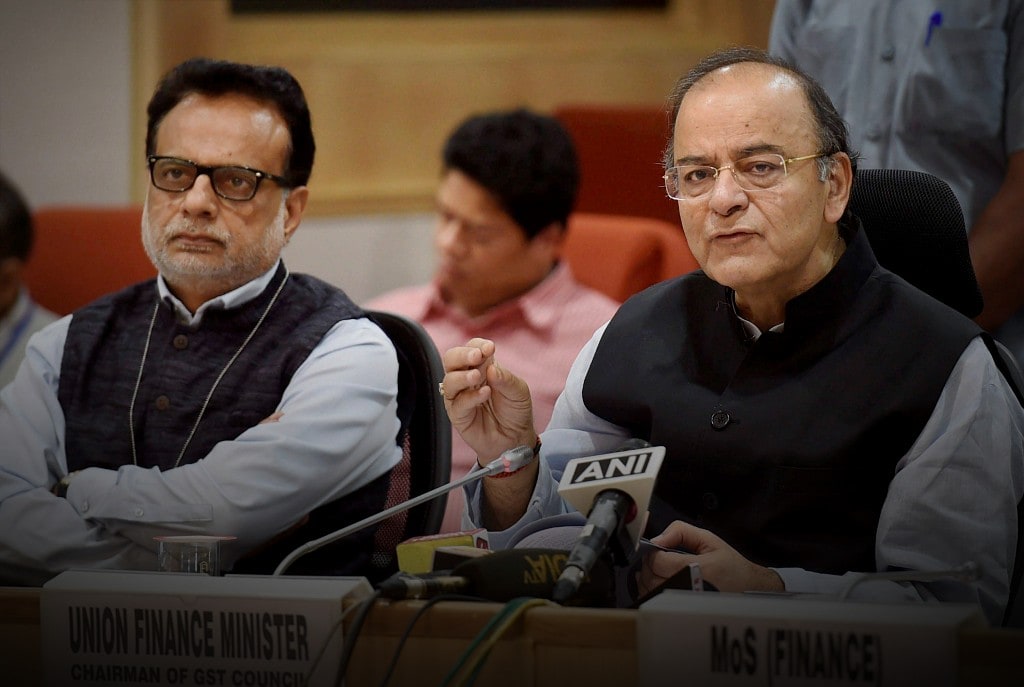
The government's ambitious tax dispute resolution scheme has ended with just Rs 1,200 crore being collected, and none of the high-profile retrospective tax cases involving firms like Vodafone and Cairn Energy opting to settle.
Finance Minister Arun Jaitley, in his budget for 2016-17, announced the Direct Tax Dispute Resolution Scheme that sought not just to settle disputes in retrospective taxes, but end nearly 2.6 lakh pending tax cases where Rs 5.16 lakh crore are locked in.
The scheme, which provided for waiving interest and penalties if the principal amount involved in tax cases is paid, opened on June 1, 2016, and closed on January 31 this year after one extension was given.
We have a similar scheme in indirect tax so any company involved in a tax dispute can anytime settle a case like that by paying principal amount. So indirect tax collection through the scheme wasn't much. In direct taxes, it was Rs 1,200 crore.Finance Ministry Official To PTI
None of the firms involved in retrospective tax cases came forward to settle the dispute by paying the principal amount.
Through the scheme, the government was hoping to settle major retrospective tax cases facing Vodafone Group and Cairn Energy of UK. It also expected a third of other tax disputes to be settled.
The scheme provided for waiver of interest and penalty for retrospective tax cases only if the company in question withdraws all appeals against the government at all judicial forums.
UK oil explorer Cairn Energy is facing a tax demand of Rs 10,247 crore on alleged capital gains made in a 2006 business re-organisation it carried out in its India unit before getting it listed. The total tax due after including interest comes to over Rs 29,000 crore.
British telecom giant Vodafone is facing a total demand of Rs 14,200 crore in tax, interest and penalty with regard to its $11 billion acquisition of 67 per cent stake in the mobile phone business owned by Hutchison Whampoa in 2007.
Both firms raised their concerns over the tax demands and challenged the matter by initiating international arbitration.
For disputes other than retrospective tax cases, taxpayers whose appeals are pending as on February 29, 2016 before the Commissioner of Income Tax (Appeals) could have settled cases by paying the disputed tax and interest up to the date of assessment.
As per Income Tax Department data, there were 73,402 appeals with tax effect above Rs 10 lakh and 1,85,858 appeals with tax effect below Rs 10 lakh which are pending before CIT (Appeal) as on February 29, 2016. Thus, 2,59,260 appellants were eligible for the benefit of this scheme.
As per the scheme, a taxpayer who had an appeal pending before the CIT (Appeals) could have settled his/her case by paying the disputed tax and interest up to the date of assessment. No penalty in respect of cases with disputed tax up to Rs 10 lakh will be levied.
For cases exceeding Rs 10 lakh, 25 per cent of penalty was offered to be levied and any pending appeal against a penalty order could have been settled by paying 25 per cent of the minimum of the imposable penalty.

-
Unhedged Position: Can India See An Indonesia-Style Time Correction?

The Nifty is trading below levels it first clocked in 2024. Is there, then, as I have suggested in the headline, potential that the current time correction drags on painfully for the next three-five, even ten years?
-
Navigating Friction And Energy Realities: An Analysis Of Marco Rubio's October Visit To India
Occurring at a critical juncture marked by stalled trade negotiations and escalating geopolitical pressures over global energy supplies, the visit offers a profound window into modern US-India relations.
-
India Exports Capital. Why Not Export Trusteeship?
The big question, then, is whether India can build an institution that global borrowers, investors, banks, and lawyers can trust, even without an Indian connection.
-
France's Economy & Politics Are In Crisis | The Reason Why
Let's look at how the French economy and politics evolved under Nicolas Sarkozy, Franois Hollande and Emmanuel Macron.
-
You May Inherit The Business. You Must Earn Its Credibility.
Succession tests the founder's ability to share authority as much as it tests the next generation's readiness to assume it.
-
Signing Deals Is One Thing; Making Them Work Is Another | The Week In Whys
Sometimes, things don't turn out as planned. Indian companies have lost some bids to rivals, some projects won't produce until 2030.
-
FOMC Wall, PERM Suspension, Hospital Stocks | Talking Points This Week
A PERM suspension would directly affect green-card sponsorship rather than H-1B visas, so the near-term earnings impact could remain relatively limited. The key question is whether this marks a new phase in US scrutiny of Indian IT.
-
Everything, Everywhere, All At Once: Dalal Street's Week To Forget | Joining The Dots
Visa curbs, a Starlink spat and cancer drug caps: what connects this week's shocks for Indian markets
-
India Is Going Abroad For Critical Minerals. But It May Take Years To Pay Off | The Reason Why
Although India's steps are in the right direction, they remain modest compared with India's growing dependence.
-
When Everyone Has AI, What Gives You An Edge?
India's young workforce is entering an uncertain world of work where powerful AI tools are becoming widely accessible. The advantage will belong to those who combine deep expertise with digital fluency, and the distinctly human capabilities that technology cannot manufacture.









