Demonetisation To Have Transformative Effect On Economy: Urjit Patel
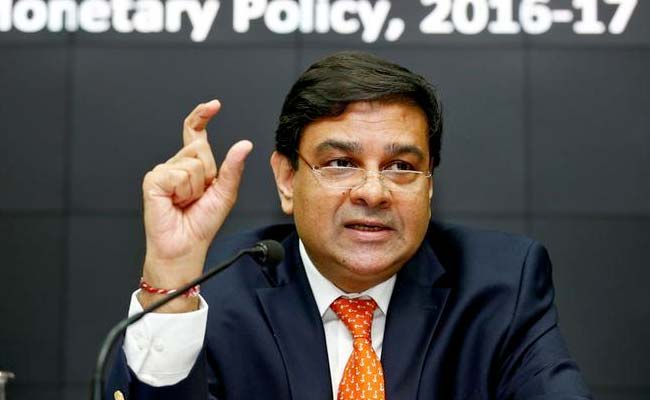
Mumbai: Reserve Bank of India Governor Urjit Patel on Thursday said the demonetisation exercise will have "far reaching changes" towards a transformative effect on the economy going forward, despite some short-term disruptions and "public hardship".
He also cautioned that there was "little room for complacency and it is important to guard against sporadic volatility in financial markets".
"The withdrawal of specified bank notes will impart far reaching changes going forward. It is expected to significantly transform the domestic economy," Mr Patel said in his foreword to the half-yearly Financial Stability Report.
He said the increasing adoption of digital modes of payments will lead to greater intermediation, efficiency gains, accountability and transparency.
The RBI governor acknowledged there have been short-term disruptions and hardship to the public because of the move to scrap the high denomination notes of Rs 500 and Rs 1,000 announced on November 8 by Prime Minister Narendra Modi.
Banks are accepting the scrapped notes till Friday.
In an interview to PTI on November 27, Mr Patel had said that the central bank is committed to easing honest citizens' pain.
In the foreword, Mr Patel said introduction of reform measures like the Goods and Services Tax on indirect taxation and the Bankruptcy Code for resolving asset quality stress will impart resilience to the economy.
On the domestic macroeconomic front, condition remain "stable" with a cool-down in inflation but Patel acknowledged that the growth momentum has "slackened" recently.
He said the country is adhering to international standards in banking without "losing sight of domestic
compulsions".
Mr Patel said the global financial crisis led banks to do stress test and match risk appetites with risk taking capacity, and added that last year's asset quality review and the subsequent corrective actions, which led to a spike in bad assets and shaving profits, are efforts in the same direction.
He said the stress shown by the domestic banking system is partly reflective of "legacy issues" but also said that "enhanced transparency has helped to reinforce the stability of India's financial system".
The global uncertainties are on the rise and the hardening of interest rates in the US and rise in commodity prices, particularly crude oil, will only increase the risk of a spillover to emerging markets, he added.
"There is little room for complacency and it is important to guard against sporadic volatility in financial
markets," Mr Patel said.

-
High US Salaries, No Green Card Certainty: The Financial Calculation Facing Indian H-1B Families

The suspension of PERM processing at eight technology employers does not cancel existing H-1B visas. What it does is force a question many Indian families have been avoiding: is the US salary worth tying your career and family plans to one employer?
-
Unhedged Position: Can India See An Indonesia-Style Time Correction?
The Nifty is trading below levels it first clocked in 2024. Is there, then, as I have suggested in the headline, potential that the current time correction drags on painfully for the next three-five, even ten years?
-
Navigating Friction And Energy Realities: An Analysis Of Marco Rubio's October Visit To India
Occurring at a critical juncture marked by stalled trade negotiations and escalating geopolitical pressures over global energy supplies, the visit offers a profound window into modern US-India relations.
-
India Exports Capital. Why Not Export Trusteeship?
The big question, then, is whether India can build an institution that global borrowers, investors, banks, and lawyers can trust, even without an Indian connection.
-
France's Economy & Politics Are In Crisis | The Reason Why
Let's look at how the French economy and politics evolved under Nicolas Sarkozy, Franois Hollande and Emmanuel Macron.
-
You May Inherit The Business. You Must Earn Its Credibility.
Succession tests the founder's ability to share authority as much as it tests the next generation's readiness to assume it.
-
Signing Deals Is One Thing; Making Them Work Is Another | The Week In Whys
Sometimes, things don't turn out as planned. Indian companies have lost some bids to rivals, some projects won't produce until 2030.
-
FOMC Wall, PERM Suspension, Hospital Stocks | Talking Points This Week
A PERM suspension would directly affect green-card sponsorship rather than H-1B visas, so the near-term earnings impact could remain relatively limited. The key question is whether this marks a new phase in US scrutiny of Indian IT.
-
Everything, Everywhere, All At Once: Dalal Street's Week To Forget | Joining The Dots
Visa curbs, a Starlink spat and cancer drug caps: what connects this week's shocks for Indian markets
-
India Is Going Abroad For Critical Minerals. But It May Take Years To Pay Off | The Reason Why
Although India's steps are in the right direction, they remain modest compared with India's growing dependence.









