Demonetisation Effect: Money Supply Growth May Decline By 3 Per Cent
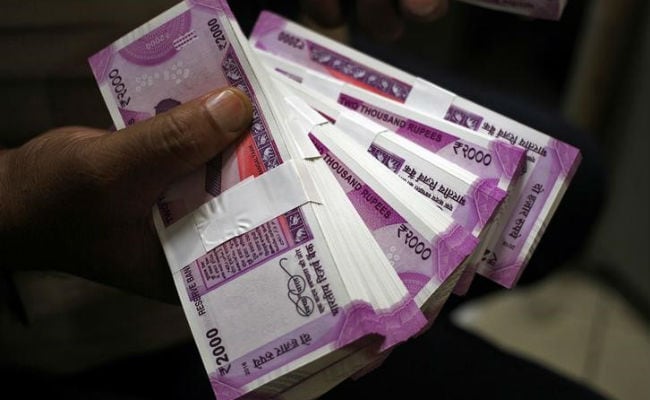
Mumbai: The average growth of money supply in the economy may slip to 9 per cent from 12 per cent in the near term, if 25-30 per cent of unaccounted currency does not flow back into the banking system post demonetisation move, Dun & Bradstreet said in a report.
On the "basis of the result of the demonetisation that took place in 1978; if 25-30 per cent of unaccounted /undeclared money does not come back in the system that is Rs 3.5 trillion to Rs 4.3 trillion, it will impact growth in money supply by about 3 per cent," the report said.
"Considering the average growth of money supply for last three years which is around 12 per cent, growth in money supply might moderate to an estimated 9 per cent in near term," it added.
However, it noted that in the case the RBI decides to print the entire 86 per cent of the high denomination notes, money supply will pick up with the new notes being gradually circulated over a period of time.
On the evening of November 8, the government announced that Rs 500 and Rs 1,000 notes would no longer be legal tender, as part of its move to eradicate black money.
As per D&B, while demonetisation would cause short term pain across the board, it is largely anticipated to have far reaching impact on the Indian economy in the mid to long term. "In sync with the Digital India initiative, these measures would accelerate the move towards a cashless economy. Along with GST, this measure would improve tax compliance and fiscal balance of the government," the report said.
Noting that the move sends out a positive signal to global investors, D&B said it may help India climb the rank of various indices published by international agencies such as the corruption perceptions index.
The efforts taken by the government to eradicate black money over the past two and a half years include formation of a special investigation team, law passed in 2015 on disclosure of foreign bank accounts, levy of strict rules to curtail benami transactions in 2016, and scheme to declare black money in 2016.
These efforts have resulted in more than Rs 1.25 trillion of black money being unearthed, the report said.
(This story has not been edited by NDTV staff and is auto-generated from a syndicated feed.)

-
High US Salaries, No Green Card Certainty: The Financial Calculation Facing Indian H-1B Families

The suspension of PERM processing at eight technology employers does not cancel existing H-1B visas. What it does is force a question many Indian families have been avoiding: is the US salary worth tying your career and family plans to one employer?
-
Unhedged Position: Can India See An Indonesia-Style Time Correction?
The Nifty is trading below levels it first clocked in 2024. Is there, then, as I have suggested in the headline, potential that the current time correction drags on painfully for the next three-five, even ten years?
-
Navigating Friction And Energy Realities: An Analysis Of Marco Rubio's October Visit To India
Occurring at a critical juncture marked by stalled trade negotiations and escalating geopolitical pressures over global energy supplies, the visit offers a profound window into modern US-India relations.
-
India Exports Capital. Why Not Export Trusteeship?
The big question, then, is whether India can build an institution that global borrowers, investors, banks, and lawyers can trust, even without an Indian connection.
-
France's Economy & Politics Are In Crisis | The Reason Why
Let's look at how the French economy and politics evolved under Nicolas Sarkozy, Franois Hollande and Emmanuel Macron.
-
You May Inherit The Business. You Must Earn Its Credibility.
Succession tests the founder's ability to share authority as much as it tests the next generation's readiness to assume it.
-
Signing Deals Is One Thing; Making Them Work Is Another | The Week In Whys
Sometimes, things don't turn out as planned. Indian companies have lost some bids to rivals, some projects won't produce until 2030.
-
FOMC Wall, PERM Suspension, Hospital Stocks | Talking Points This Week
A PERM suspension would directly affect green-card sponsorship rather than H-1B visas, so the near-term earnings impact could remain relatively limited. The key question is whether this marks a new phase in US scrutiny of Indian IT.
-
Everything, Everywhere, All At Once: Dalal Street's Week To Forget | Joining The Dots
Visa curbs, a Starlink spat and cancer drug caps: what connects this week's shocks for Indian markets
-
India Is Going Abroad For Critical Minerals. But It May Take Years To Pay Off | The Reason Why
Although India's steps are in the right direction, they remain modest compared with India's growing dependence.









