Demonetisation A Masterstroke, Give It Time To Play Out: Industry Body
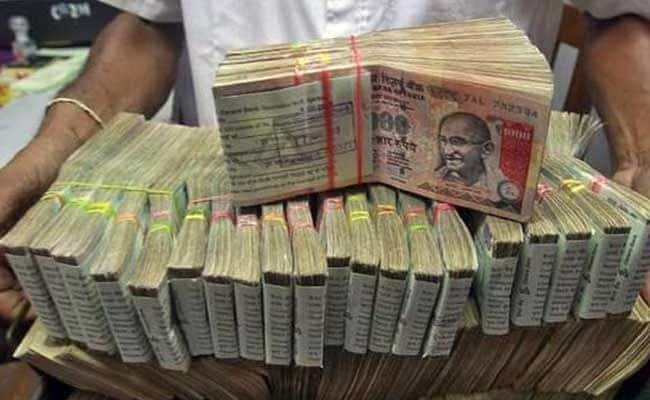
New Delhi: Terming the move to demonetise high value notes as "masterstroke", industry body CII today said it expects economy to emerge much stronger after a short period of some pain when it adjusts to the sudden withdrawal of cash.
"After a short period of some pain when the economy adjusts to the sudden withdrawal of cash, CII expects a much stronger economy. India's cash-dependence is extremely high with a currency-GDP ratio of around 12 per cent compared to 4-5 per cent in other developing countries," CII said in a statement quoting CII DG Chandrajit Banerjee.
"High level of cash usage tends to slow down the flow of money through the economy. As we transition to a greater usage of fintech for payments, spending will rise, leading to additional economic growth. This is an economic masterstroke by the Prime Minister and must be allowed time to play out."
According to CII, Banerjee observed that lower cash use will have a dampening impact on inflation and this will be a further positive for India's macro-fundamentals.
"The Reserve Bank will now have more room to cut interest rates as inflation subsides. Already, the bond market has reacted to the news with a reduction in the bond yields," Banerjee said.
The CII director general noted that the biggest gain from this move will be greater formalisation of the economy.
"Currently, the costs of informality are evident in low tax base which impacts government revenues, lack of economic control through monetary instruments, and lower economies of scale.
"India's tax base is low and its tax to GDP ratio needs to increase from the current level of 16.6 per cent, which is much lower than about 21 per cent in other emerging economies.
Less than 30 million Indians filed personal income tax, with more than half of these paying no tax," he noted.
CII in a statement said the prevalence of cash use has also made India prone to high inflation, adding corruption and excessive cash use tends to erode the purchasing power of money.
It further elaborated that this move will be positive for banks whose deposit mobilisation will be strengthened.
The old currency notes will be deposited with banks and more households will find it imperative to open bank accounts and make use of card payments.
Noting that currency in the form of Rs 1,000 and Rs 500 notes amounted to Rs 14.2 lakh crore as of March 2016, or about 85 per cent of total currency in circulation, the industry body said if this is converted into current and savings deposits, there will be an increase in bank's liquidity.
Stressing that the existence of a parallel economy provides unfair competition to organised industry that pays taxes and complies with standards, the body felt such a decisive move will change the perception of India completely and bring about much-needed transparency.
(This story has not been edited by NDTV staff and is auto-generated from a syndicated feed.)

-
High US Salaries, No Green Card Certainty: The Financial Calculation Facing Indian H-1B Families

The suspension of PERM processing at eight technology employers does not cancel existing H-1B visas. What it does is force a question many Indian families have been avoiding: is the US salary worth tying your career and family plans to one employer?
-
Unhedged Position: Can India See An Indonesia-Style Time Correction?
The Nifty is trading below levels it first clocked in 2024. Is there, then, as I have suggested in the headline, potential that the current time correction drags on painfully for the next three-five, even ten years?
-
Navigating Friction And Energy Realities: An Analysis Of Marco Rubio's October Visit To India
Occurring at a critical juncture marked by stalled trade negotiations and escalating geopolitical pressures over global energy supplies, the visit offers a profound window into modern US-India relations.
-
India Exports Capital. Why Not Export Trusteeship?
The big question, then, is whether India can build an institution that global borrowers, investors, banks, and lawyers can trust, even without an Indian connection.
-
France's Economy & Politics Are In Crisis | The Reason Why
Let's look at how the French economy and politics evolved under Nicolas Sarkozy, Franois Hollande and Emmanuel Macron.
-
You May Inherit The Business. You Must Earn Its Credibility.
Succession tests the founder's ability to share authority as much as it tests the next generation's readiness to assume it.
-
Signing Deals Is One Thing; Making Them Work Is Another | The Week In Whys
Sometimes, things don't turn out as planned. Indian companies have lost some bids to rivals, some projects won't produce until 2030.
-
FOMC Wall, PERM Suspension, Hospital Stocks | Talking Points This Week
A PERM suspension would directly affect green-card sponsorship rather than H-1B visas, so the near-term earnings impact could remain relatively limited. The key question is whether this marks a new phase in US scrutiny of Indian IT.
-
Everything, Everywhere, All At Once: Dalal Street's Week To Forget | Joining The Dots
Visa curbs, a Starlink spat and cancer drug caps: what connects this week's shocks for Indian markets
-
India Is Going Abroad For Critical Minerals. But It May Take Years To Pay Off | The Reason Why
Although India's steps are in the right direction, they remain modest compared with India's growing dependence.









