Dell, HP Among 27 Firms Approved For PLI 2.0 Scheme For IT Hardware
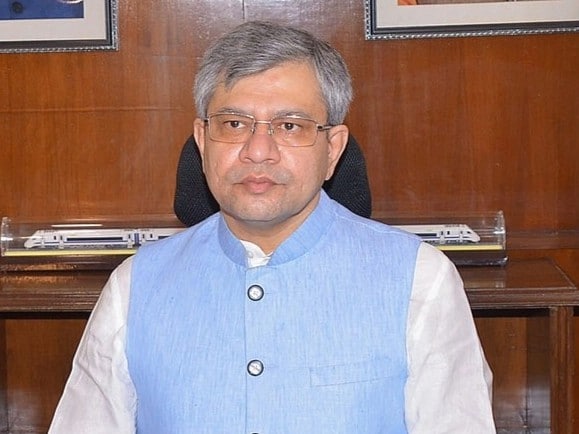
As many as 27 firms have been approved under the PLI 2.0 scheme for IT hardware, according to Union Minister Ashwini Vaishnaw.
The minister said of the 27, 23 firms are ready to start manufacturing on Day 0. "The rest will be ready to start within the next 90 days," he told reporters in New Delhi on Saturday.
The 27 firms will together invest about Rs 3,000 crore under the scheme, and value production worth Rs 3.5 lakh crore (about $42 billion) is expected.
"The investment will generate direct employment for 50,000 people, and indirect employment for about 1.5 lakh people," he added. Servers, laptops, tablets and PCs will be manufactured under the scheme.
He said Dell, Foxconn, HP, Asus, Acer, Lenovo and others are among those that have received approval. Among listed firms, Syrma SGS Technology Ltd., Netweb Technologies and ITI Ltd. are also approved.
Here's the full list:
Dell International Services India Pvt.
Rising Stars Hi-Tech Pvt.
HP India Sales Pvt.
Flextronics Technologies (India) Pvt.
Padget Electronics Pvt.
SOJO Manufacturing Services (AP) Pvt.
VVDN Technologies Pvt.
Goodworth Electronics Pvt.
Neolync Tele Communications Pvt.
Syrma SGS Technology Ltd.
Bhagwati Products Ltd.
Netweb Technologies India Ltd.
Genus Electrotech Ltd.
Sahasra Electronic Solutions Ltd.
Hangsine Technosoft Pvt.
Riot Labz Pvt.
Smile Electronics Ltd.
Mega Networks Pvt.
Plumage Solutions Private Limited
HLBS Tech Pvt.
Panache Digilife Ltd.
RDP Workstations Pvt.
Kaynes Electronics Manufacturing Pvt.
INP Technologies Pvt.
Optiemus Telecommunication Pvt.
ITI Ltd.
Sancraft Industries Pvt.
"Excelling in the initial phase of PLI 1.0, by surpassing targets twofold, we are now gearing up for PLI 2.0 with increased incentives, anticipating even greater success," Sanjay Lodha, chairman and managing director of Netweb Technologies told BQ Prime.
The PLI Scheme 2.0 for IT Hardware was approved in May this year, with the aim of "localisation of components and sub-assemblies and allowing for a longer duration to develop the supply chain within the country."

-
Navigating Friction And Energy Realities: An Analysis Of Marco Rubio's October Visit To India

Occurring at a critical juncture marked by stalled trade negotiations and escalating geopolitical pressures over global energy supplies, the visit offers a profound window into modern US-India relations.
-
India Exports Capital. Why Not Export Trusteeship?
The big question, then, is whether India can build an institution that global borrowers, investors, banks, and lawyers can trust, even without an Indian connection.
-
France's Economy & Politics Are In Crisis | The Reason Why
Let's look at how the French economy and politics evolved under Nicolas Sarkozy, Franois Hollande and Emmanuel Macron.
-
You May Inherit The Business. You Must Earn Its Credibility.
Succession tests the founder's ability to share authority as much as it tests the next generation's readiness to assume it.
-
Signing Deals Is One Thing; Making Them Work Is Another | The Week In Whys
Sometimes, things don't turn out as planned. Indian companies have lost some bids to rivals, some projects won't produce until 2030.
-
FOMC Wall, PERM Suspension, Hospital Stocks | Talking Points This Week
A PERM suspension would directly affect green-card sponsorship rather than H-1B visas, so the near-term earnings impact could remain relatively limited. The key question is whether this marks a new phase in US scrutiny of Indian IT.
-
Everything, Everywhere, All At Once: Dalal Street's Week To Forget | Joining The Dots
Visa curbs, a Starlink spat and cancer drug caps: what connects this week's shocks for Indian markets
-
India Is Going Abroad For Critical Minerals. But It May Take Years To Pay Off | The Reason Why
Although India's steps are in the right direction, they remain modest compared with India's growing dependence.
-
When Everyone Has AI, What Gives You An Edge?
India's young workforce is entering an uncertain world of work where powerful AI tools are becoming widely accessible. The advantage will belong to those who combine deep expertise with digital fluency, and the distinctly human capabilities that technology cannot manufacture.
-
Wrong Labels, High Pesticide Residues Holding Back Agri Exports | The Reason Why
India needs stronger domestic food-safety and labelling standards, with best practices becoming part of everyday business for farmers, traders and food companies.










