Alstom Begins Manufacturing Of Trains For India's 1st Rapid Rail Corridor
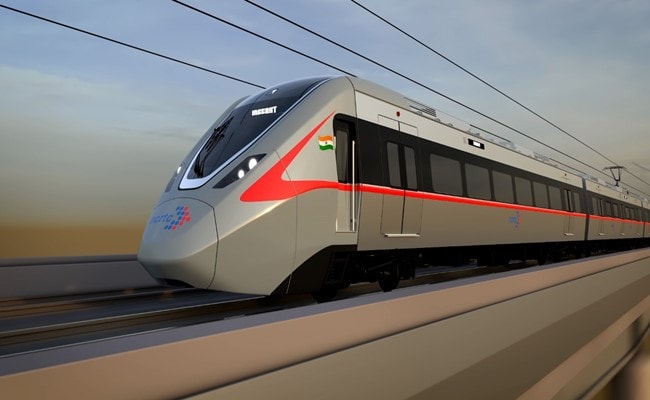
French multinational rolling stock manufacturer Alstom began the manufacturing of modern, commuter and transit trains for the country's very first regional rapid transit system (RRTS) corridor between Delhi-Ghaziabad-Meerut. With this, the country will adopt the European Train Control System or ETCS in mainline railways for the very first time with the first phase of the regional rapid transit network in the national capital region (NCR). (Also Read: Alstom Wins Delhi-Meerut Rapid Rail's Contract For Signalling, Telecommunications )
In May 2020, Alstom won a contract to design, build, and deliver 210 regional commuter and transit train cars along with its comprehensive maintenance services for a period of 15 years. Alstom will deliver 30 regional commuter trainsets of six cars each and 10 intracity mass transit trainsets of three cars each, according to the contract.
The train sets for the regional rapid rail corridor are 100 per cent indigenously manufactured, with over 80 per cent localisation, keeping in line with the government's 'Make-in-India' guidelines, according to a statement shared by Alstom.
The trains are being manufactured in Alstom's factory situated in Savli, Gujarat. The factory will manufacture the car bodies, bogies, and undertake the train testing. The propulsion systems and electricals are being manufactured at the company's factory located in Maneja, Gujarat.
Earlier this year, the multinational rolling stock manufacturer won a contract worth €106 million to design, supply, and install the train control, signaling, as well as telecommunication system for the 82.15 km-long Delhi-Ghaziabad-Meerut regional rapid rail corridor. The National Capital Region Transport Corporation Ltd. (NCRTC) - responsible for implementing the RRTS project, awarded the contract to Alstom in January 2021.
The Delhi-Ghaziabad-Meerut rapid rail corridor is targeted to be ready for services by 2025. The semi high-speed train will operate on an indigenous ballastless track, suitable for supporting a high design speed of 180 km per hour and an operational speed of 160 km per hour.
Out of the 82 km long Delhi-Meerut rapid rail corridor, the priority section - 17 km-long Sahibabad-Duhai, has been targeted to be ready for commuters by 2023.

-
Talking Points This Week: Tech Nerves, FII Buying, And A Faraway Banking Shock

The global markets are not shining this Diwali. The exception in the large markets is, India.
-
Midterm Rally Lasted A Day. The Hard Reality Of A Divided US May Last Two Years | Opinion
Between a contested AI boom, a debt ceiling that arrives in 2027 and a president with every incentive to act alone, the next two years may prove more volatile than the first day's rally suggests.
-
Blue Wave Will Derail the AI Trade but Won't Dismantle the AI Era | Unhedged Position
The Democrats' sweep of the US Congress will see politics collide with economic forces both over the long and short term.
-
It's Time To Take The GST Council's Bet On Trust Global
Payment records can prove India's services exports, and clear, proportionate rules can bring foreign digital sellers into the tax net.
-
Opinion | India at 38: From Innovation Overperformer to Innovation Powerhouse
India now has 453 VC-backed deep science startups, 18 of them late-stage, after 117 percent growth since 2020. Laurus Labs, at USD 9.3 billion, is the most valuable deep science company in any middle-income economy outside China.
-
Navigating Energy Crossroads: S Jaishankar's Call For Diversified Supply Chains At G20 Ministerial Meeting
As geopolitical fault lines continue to test maritime trade routes and commodity flows, Jaishankar's message remains pertinent: true economic resilience requires open markets, protected transit lines, and a genuine commitment to multilateral cooperation rather than coercion.
-
Indians Are Travelling, But Not Every Journey Is A Holiday | The Week In Whys
Pilgrims, patients and working women are the real travellers, and the system hasn't quite caught up with them.
-
Getting To Work Costs Women More | The Reason Why
It is not just about women paying more than men. It is about women paying much more in cities than in villages.
-
AI Bias In Investing Cannot Be Eliminated, But It Can Be Governed
Framing is a particularly important example as identical financial information presented in terms of gains rather than losses can lead an LLM to reach a different assessment.









