Delhi High Court Asks Government To Share Copy Of Blocking Order With Website Owner
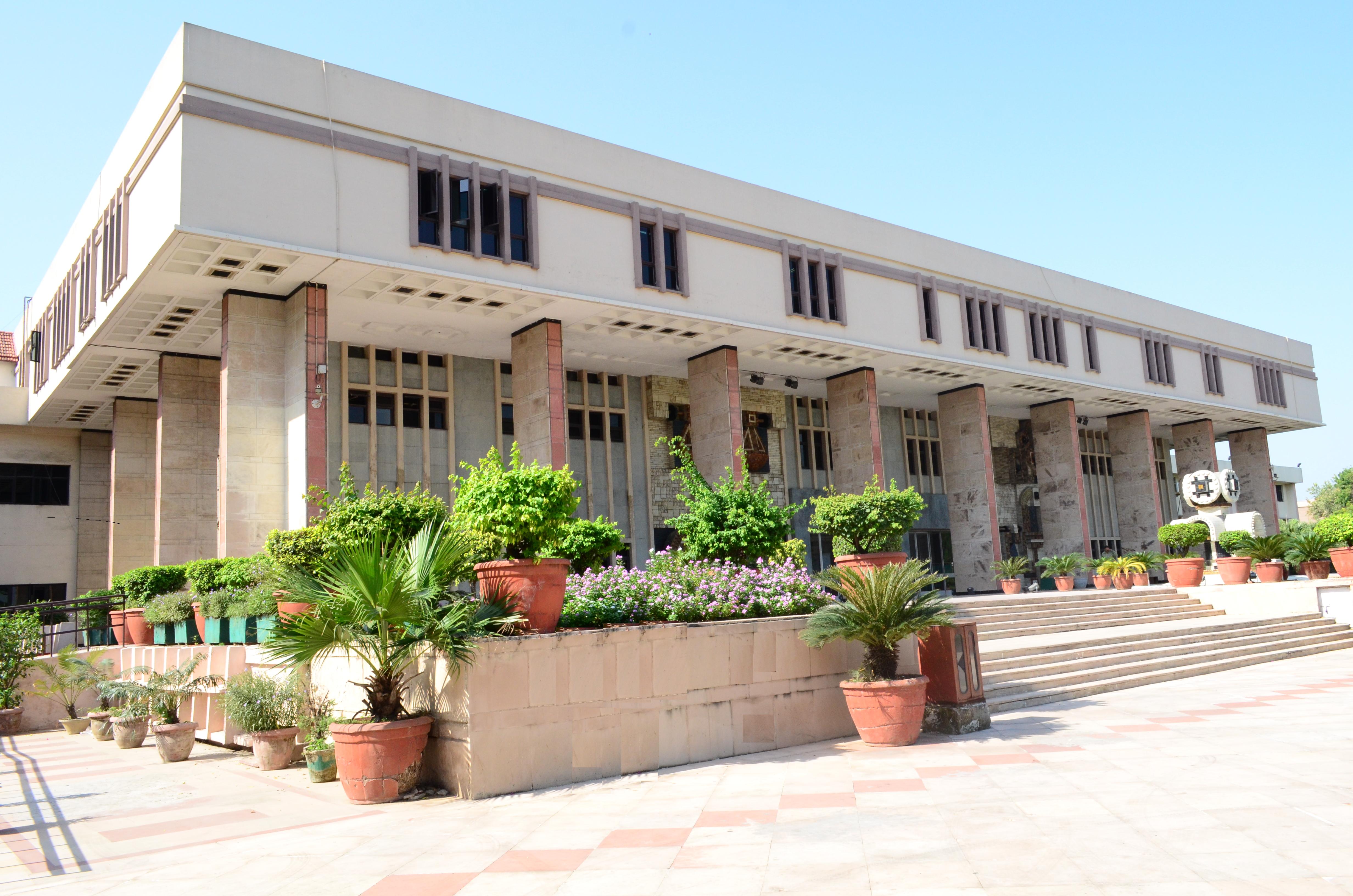
In a rare order, the Delhi High Court has asked the central government to provide a copy of its order blocking access to a satirical website to its owner.
dowrycalculator.com, created by Tanul Thakur, was blocked by the Ministry of Electronics and Information Technology in May 2018, seven years after it started. The direction was passed under the Section 69-A of the Information and Technology Act, 2001.
This provision allows the government to ask an intermediary to block any information generated, transmitted, received, stored or hosted in any computer resource. The grounds range from sovereignty and integrity of India to public order or for preventing incitement to the commission of any cognisable offence.
Dowrycalculator was designed as an online form that visitors could fill with options to arrive at a fictional “dowry amount” that a groom could attract based on social, educational and personal characteristics. Upon submitting the form, the website offered one out of nine pre-designed fictional dowry amounts, coupled with a satirical message that ridiculed the emphasis on dowry in society and how it could cause extreme financial hardship upon the bride's family.
According to the petitioner's lawyer, this is the first time a copy of the original censorship order would be provided to a content creator.
“I think the order is very important from the perspective of transparency since it is commonplace for the government to reject RTI requests by citing Rule 16 of the blocking rules,” said Thakur's lawyer Vrinda Bhandari of Internet Freedom Foundation. “Blocking orders are otherwise shrouded in secrecy and never published in the public domain.”
NS Nappinai, advocate, Supreme Court; and founder of Cyber Saathi, said disclosure was important as every person has the right to know why their freedoms are being curtailed, so that they are in a position to contest or counter the action. “This order will have a far-reaching impact as such transparency is mandatory for any order passed by government agencies, be it for blocking, takedowns or monitoring.”
No Notice Or Hearing Was Granted: Petitioner
The petitioner was aggrieved with the restraint on access to his website without any hearing being granted.
Thakur argued that he should have been granted a hearing under the Information Technology (Procedure and Safeguards for blocking of Information to public) Rules, 2009 but that was never done. The RTI application seeking clarity also did not achieve any result as the request was refused citing Rule 16 of the blocking rules.
The rule mandates that strict confidentiality should be maintained regarding all the requests and complaints received and the action taken on them.
Thakur then moved the high court, where he argued that the action of the government was arbitrary, excessive and an unreasonable restraint on his right to freedom of speech and expression guaranteed under Article 19(1)(a) of the Constitution.
The restrictions on this fundamental right have to be narrowly tailored and that was why the Section 69-A of the IT Act required the reasons for blocking to be recorded in writing, the petitioner said.
“The respondents [government] cannot simply parrot the wordings of Section 69-A(1) to justify blocking since it is well settled that the anticipated danger (of incitement of offence) should not be remote, conjectural or far-fetched; and should have a direct nexus with the speech,” Thakur told the Delhi High Court.
The government failed to back the reasoning that blocking the website was necessary to prevent incitement to commission of any cognisable offence relating to public order, the petitioner said.
The central government, however, told the high court that it was willing to provide a post-decisional hearing to the petitioner and opportunity to take any corrective measures if found necessary. Thakur expressed his willingness to participate in the hearing.
The division bench of the Delhi High Court, comprising Justice Manmohan and Justice Dinesh Kumar Sharma, directed a committee set up by the IT Ministry under the blocking rules to grant a hearing to the petitioner on May 23. “A copy of the original blocking order, after redacting the portion pertaining to the third parties shall be furnished to the petitioner on or before May 23,” the high court said.
The case will be taken up for hearing next in September.

-
High US Salaries, No Green Card Certainty: The Financial Calculation Facing Indian H-1B Families

The suspension of PERM processing at eight technology employers does not cancel existing H-1B visas. What it does is force a question many Indian families have been avoiding: is the US salary worth tying your career and family plans to one employer?
-
Swiggy vs Eternal: Food Delivery's Two Rivals Are No Longer In The Same Race
Eternal is building a private AI assistant, dark.ai. Swiggy is still working out how to make Instamart pay, with an operating loss of Rs 895 crore in the July-September quarter while Blinkit stayed profitable.
-
Where You Live Shapes How You Get To Work | The Reason Why
Two-wheelers are the most popular way to get to work in India, accounting for nearly 43% of workplace commutes.
-
Unhedged Position: Can India See An Indonesia-Style Time Correction?
The Nifty is trading below levels it first clocked in 2024. Is there, then, as I have suggested in the headline, potential that the current time correction drags on painfully for the next three-five, even ten years?
-
Navigating Friction And Energy Realities: An Analysis Of Marco Rubio's October Visit To India
Occurring at a critical juncture marked by stalled trade negotiations and escalating geopolitical pressures over global energy supplies, the visit offers a profound window into modern US-India relations.
-
India Exports Capital. Why Not Export Trusteeship?
The big question, then, is whether India can build an institution that global borrowers, investors, banks, and lawyers can trust, even without an Indian connection.
-
France's Economy & Politics Are In Crisis | The Reason Why
Let's look at how the French economy and politics evolved under Nicolas Sarkozy, Franois Hollande and Emmanuel Macron.
-
You May Inherit The Business. You Must Earn Its Credibility.
Succession tests the founder's ability to share authority as much as it tests the next generation's readiness to assume it.
-
Signing Deals Is One Thing; Making Them Work Is Another | The Week In Whys
Sometimes, things don't turn out as planned. Indian companies have lost some bids to rivals, some projects won't produce until 2030.
-
FOMC Wall, PERM Suspension, Hospital Stocks | Talking Points This Week
A PERM suspension would directly affect green-card sponsorship rather than H-1B visas, so the near-term earnings impact could remain relatively limited. The key question is whether this marks a new phase in US scrutiny of Indian IT.









