Debit Card Breach: The No Disclosure Regime
In 2012, a U.S. based payment processing firm Global Payments identified and self-reported a breach that had affected approximately 1.5 million cards. The CEO issued a public apology and the company also set up a website -www.2012infosecurityupdate.com - that gave consumers information on the extent and nature of the breach and remedial measures taken.
In 2014, U.S. bank, JPMorgan Chase, disclosed to the Securities and Exchange Commission (SEC) that a cyber-attack had compromised its data, impacting approximately 76 million households and 7 million small businesses. The bank also disclosed that user contact information - name, address, phone number and email address - and internal JPMorgan Chase information relating to such users had been compromised.
Are Customers Not Entitled To Know?
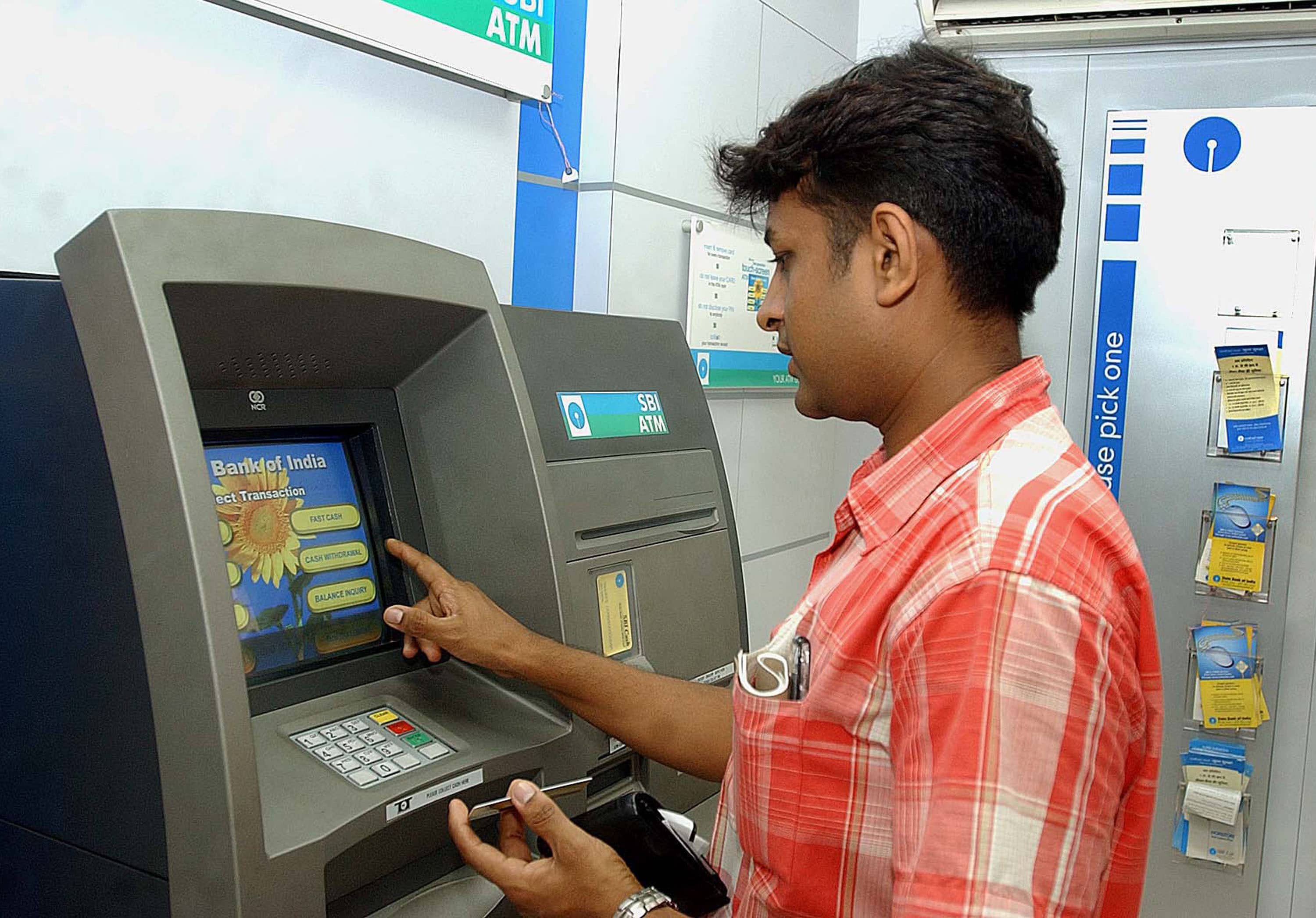
In India, it's been over two months since 32 lakh debit cards across 19 banks were hacked, as estimated by to National Payments Corporation of India Ltd (NPCIL)
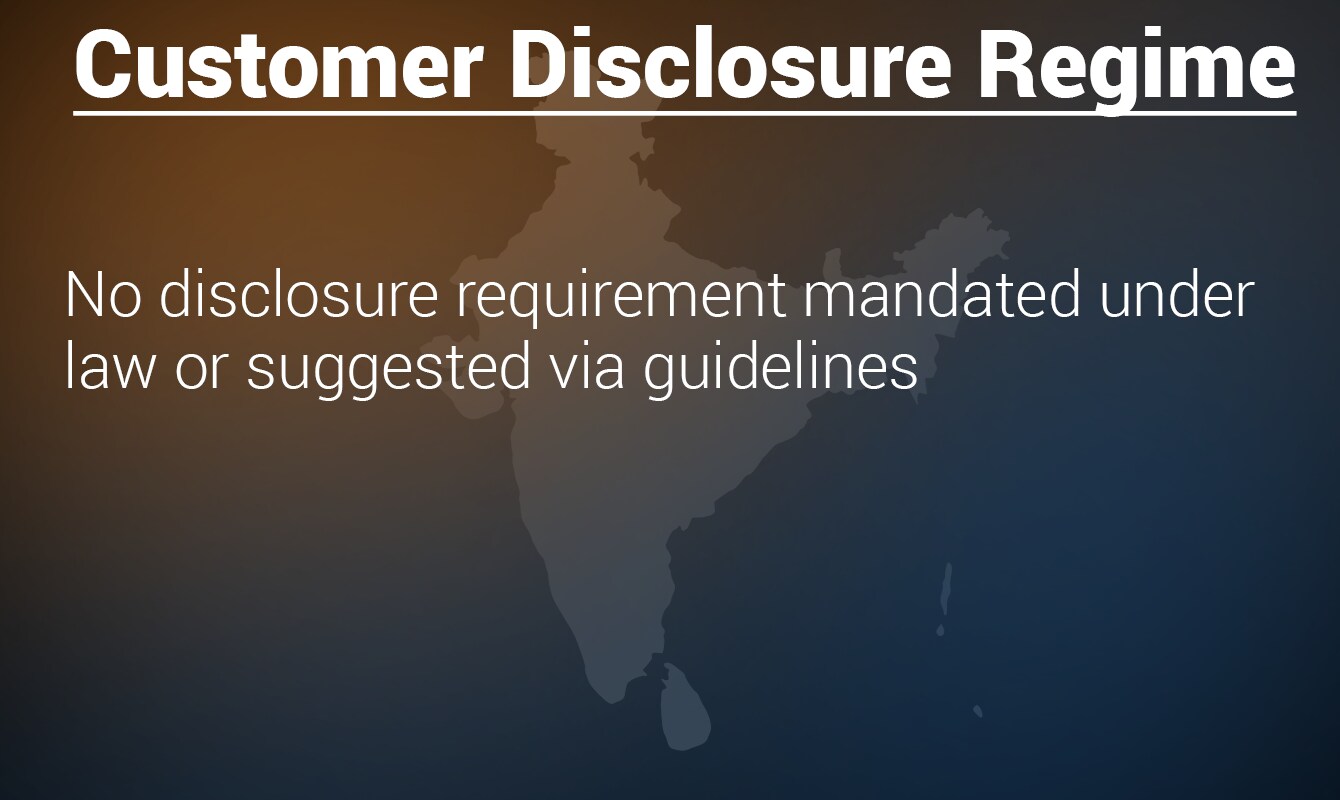
Banks issued general advisories to customers to change pins and passwords but gave very little information on how and where the breach took place. And it was only last week that the Reserve Bank of India reacted and stated that a forensic audit is underway. Even after the forensic audit is concluded, it's unclear if customers will get to know much and that's because Indian law does not require this disclosure. It only requires banks to disclose unusual cyber security incidents to the RBI and Indian Banks – Center for Analysis of Risks and Threats (IB-CART).
Disclosure Requirement In The U.S.
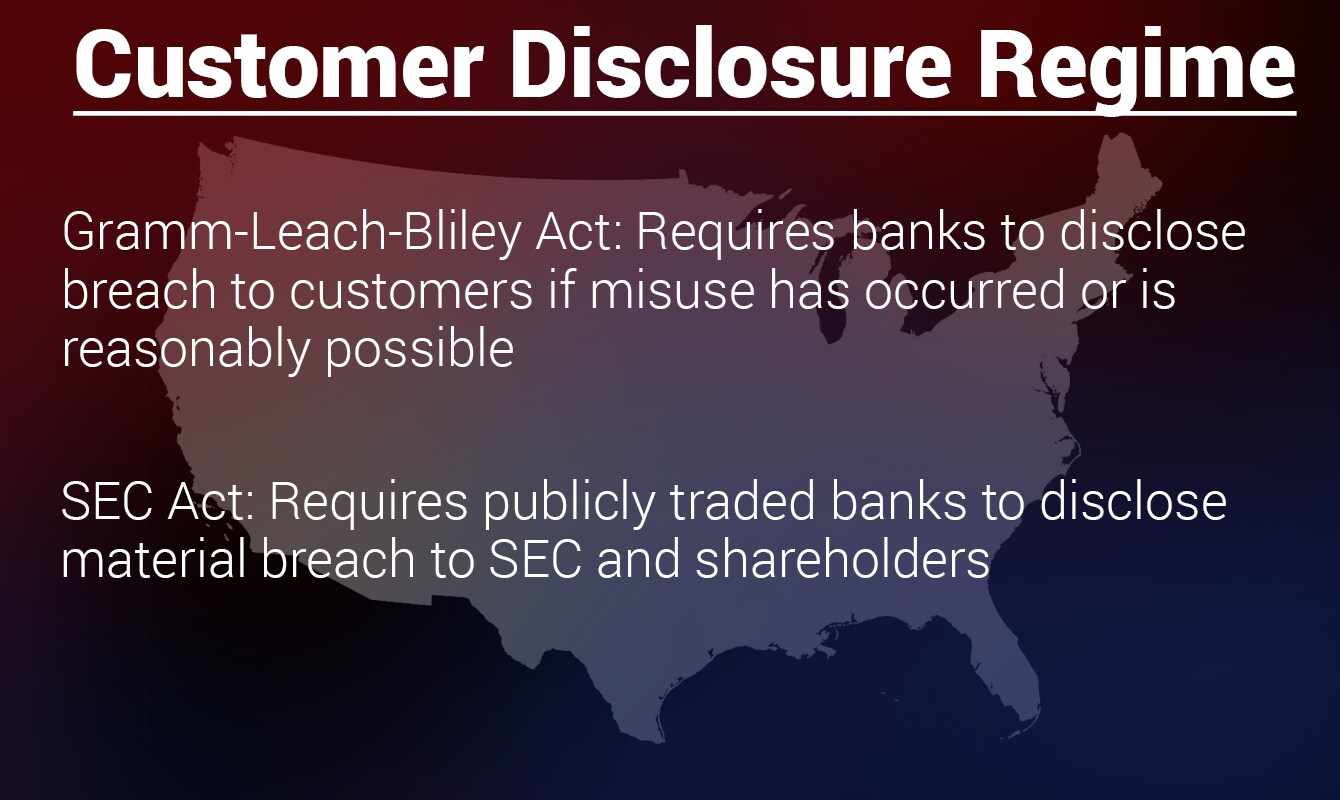
In the United States, under the federal banking law - Gramm-Leach-Bliley Act - banks are required to disclose breaches to customers if a certain risk threshold is met. This threshold is a determination by a bank whether misuse of sensitive customer information has occurred or is reasonably possible, explained Peter Guffin, partner and chair of the privacy and data security practice at American law firm Pierce Atwood. Banks that are not federally regulated are required to make disclosures under state laws.
Some banks are state chartered and are subject to the laws of a particular state. Like the federal law, the state laws also require banks to notify the affected customers i.e. customers whose card or information is known to have been compromised. The bank need not wait for a fraud charge or for a misuse of an identity.Peter Guffin, Partner & Chair- Privacy And Data Security Practice, Pierce Atwood
For publicly traded banks, there is an additional disclosure requirement under the Securities Exchange Act, 1934.
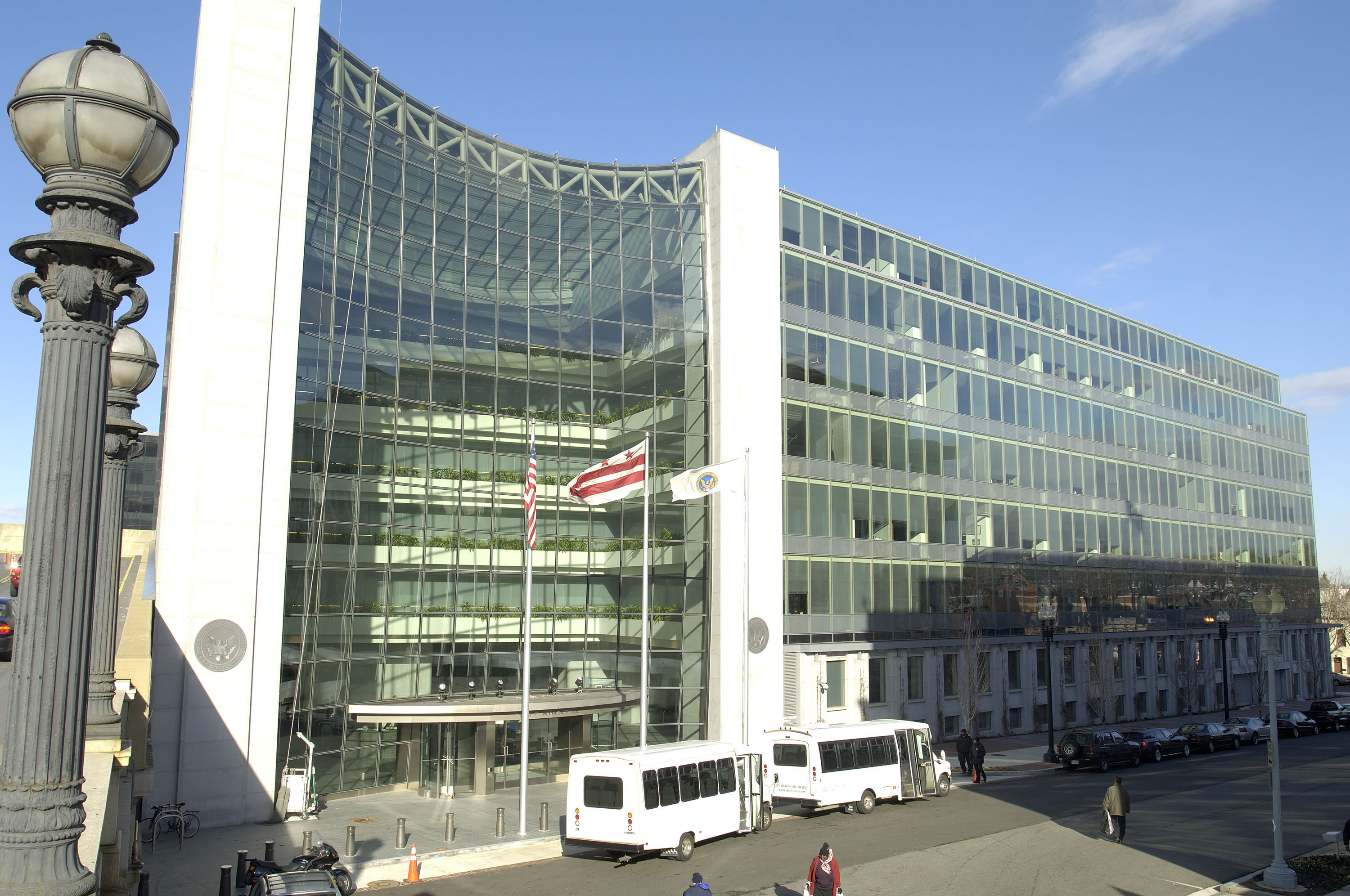
Listed banks need to make a public disclosure of any material breach. There will be a reporting obligation to the Securities and Exchange Commission and that disclosure about a material adverse incident will go to the shareholders of that bank.Peter Guffin, Partner & Chair- Privacy And Data Security Practice, Pierce Atwood
The disclosures need to be detailed. Peter explained that most breach notification statutes require banks to notify the affected customer about how the breach happened. If it is the bank's network affected by a malware or an ATM machine or an employee who stole the information, the bank is obliged to explain to the customer how it happened and steps taken to fix that problem, he added.
Disclosure Requirement In Singapore
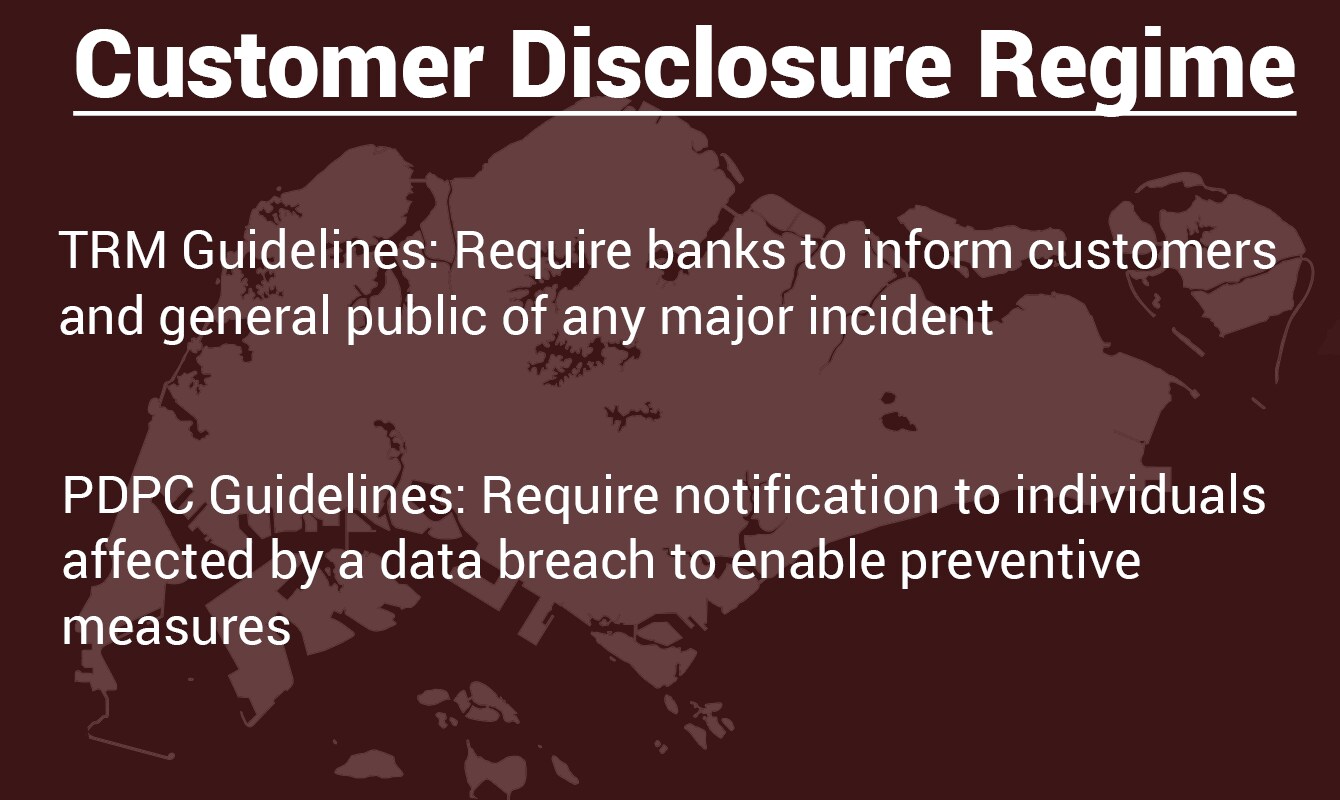
Unlike the U.S., Singapore has mandated disclosures on cyber-attacks and system disruptions not by way of a law but via guidelines. Under the Internet Banking and Technology Risk Management Guidelines (TRM), the Monetary Authority of Singapore (MAS) requires financial institutions to keep customers informed of any major incident. It also requires banks to assess the effectiveness of the mode of communication, including informing the general public, where necessary, said Ken Chia, principal and member of global privacy steering committee at international law firm Baker & McKenzie.
Under the guidelines, the MAS would expect them to disclose what has happened and steps that have been taken to address the issue.Ken Chia, Principal & Member - Global Privacy Steering Committee, Baker & McKenzie
In addition to the TRM regime, guidelines by the Personal Data Protection Commission state that it is a good practice to notify individuals affected by a data breach. Ken points out that this is to encourage individuals to take preventive measures to reduce the impact of the data breach.
The organisation could also be bound by legal or contractual obligations to notify affected individuals immediately if a data breach involves sensitive personal data. This allows them to take necessary actions early to avoid potential abuse of the compromised data.Ken Chia, Principal & Member - Global Privacy Steering Committee, Baker & McKenzie
The guidelines also require affected individuals to be notified when the data breach is resolved, Ken added.
Back home however, the lack of a regulatory framework for disclosures in card breach cases may mean that customers will learn very little about India's biggest financial cyber attack.

-
Navigating Friction And Energy Realities: An Analysis Of Marco Rubio's October Visit To India

Occurring at a critical juncture marked by stalled trade negotiations and escalating geopolitical pressures over global energy supplies, the visit offers a profound window into modern US-India relations.
-
India Exports Capital. Why Not Export Trusteeship?
The big question, then, is whether India can build an institution that global borrowers, investors, banks, and lawyers can trust, even without an Indian connection.
-
France's Economy & Politics Are In Crisis | The Reason Why
Let's look at how the French economy and politics evolved under Nicolas Sarkozy, Franois Hollande and Emmanuel Macron.
-
You May Inherit The Business. You Must Earn Its Credibility.
Succession tests the founder's ability to share authority as much as it tests the next generation's readiness to assume it.
-
Signing Deals Is One Thing; Making Them Work Is Another | The Week In Whys
Sometimes, things don't turn out as planned. Indian companies have lost some bids to rivals, some projects won't produce until 2030.
-
FOMC Wall, PERM Suspension, Hospital Stocks | Talking Points This Week
A PERM suspension would directly affect green-card sponsorship rather than H-1B visas, so the near-term earnings impact could remain relatively limited. The key question is whether this marks a new phase in US scrutiny of Indian IT.
-
Everything, Everywhere, All At Once: Dalal Street's Week To Forget | Joining The Dots
Visa curbs, a Starlink spat and cancer drug caps: what connects this week's shocks for Indian markets
-
India Is Going Abroad For Critical Minerals. But It May Take Years To Pay Off | The Reason Why
Although India's steps are in the right direction, they remain modest compared with India's growing dependence.
-
When Everyone Has AI, What Gives You An Edge?
India's young workforce is entering an uncertain world of work where powerful AI tools are becoming widely accessible. The advantage will belong to those who combine deep expertise with digital fluency, and the distinctly human capabilities that technology cannot manufacture.
-
Wrong Labels, High Pesticide Residues Holding Back Agri Exports | The Reason Why
India needs stronger domestic food-safety and labelling standards, with best practices becoming part of everyday business for farmers, traders and food companies.










