Daylight Saving Time Isn’t All Bad
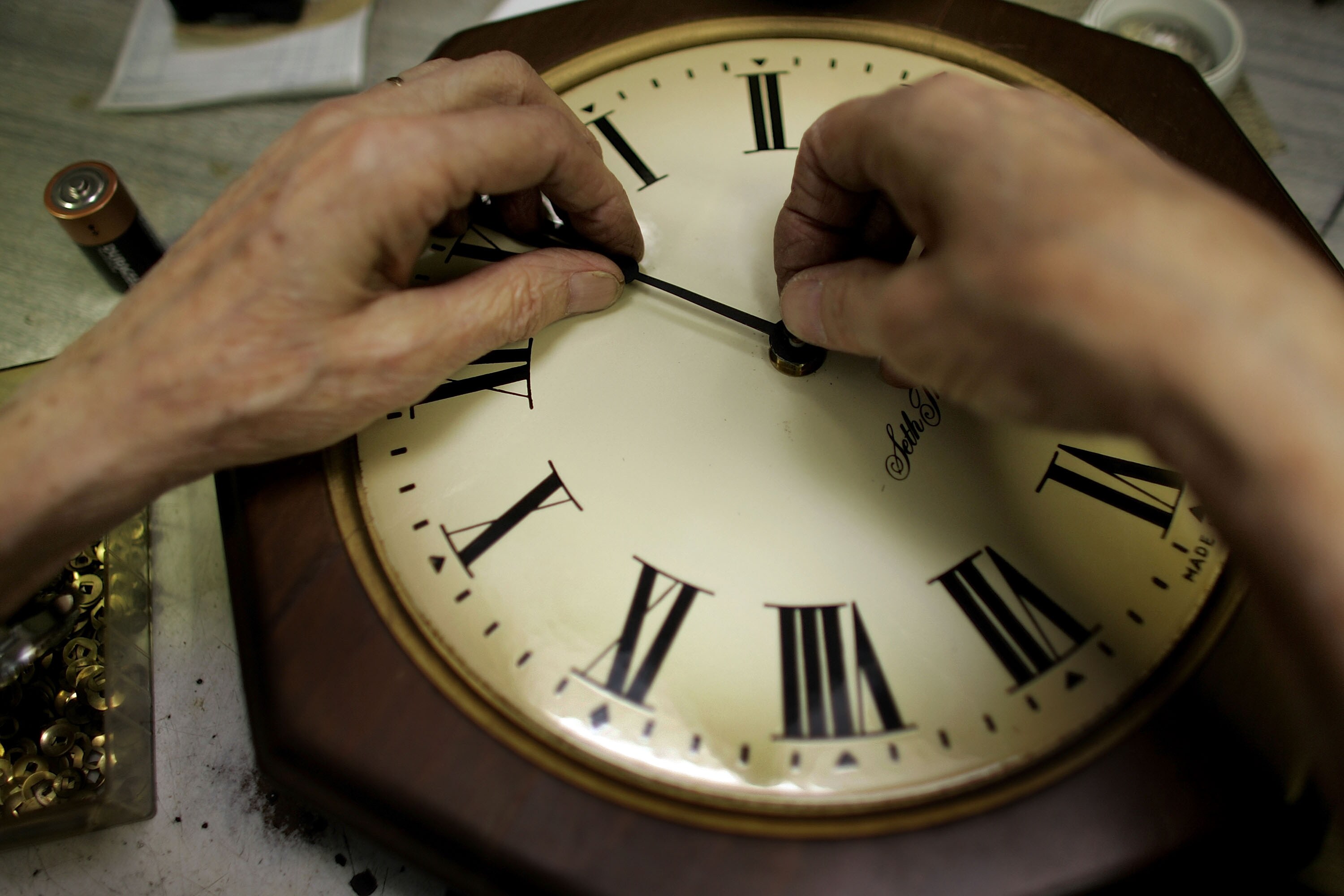
In early March, as the snow starts consolidating in dirty piles and Easter candy shows up in the pharmacy aisles, people here in New England start talking with joy and anticipation about the “spring forward” time change. Soon, we'll be able to walk out of work into the sunlight.
But sleep specialists aren't so enthusiastic. Neither is President Donald Trump, who promised last December to end the annual ritual of changing to daylight saving time, calling it “inconvenient.” And it seems a majority of Americans agree. A January Gallop poll found that 54% of adults want daylight saving time to end, preferring standard time year-round. In 1999, 73% said they favored it.
Nevertheless, for now, we're still on track to move our clocks forward an hour at 2 a.m. Sunday. Two states, Hawaii and Arizona (except for the Navajo Nation), don't observe daylight saving time.
But changing the clocks to get more afternoon light in summer and more morning light in winter has benefits. The practice, which has been going on for over a half-century, allows us to make healthier choices. More daylight means more time for activities like exercise, gardening, hanging out with family and socializing.
Daylight saving time has already crept up to two-thirds of the year after a 2007 change that moved the spring-forward date from April to March.
Research is split on the issue. Sleep doctors say the time change wreaks havoc on our bodies, citing studies showing an uptick in accidents, heart attacks and strokes in the days after our clocks are moved forward an hour. Other studies show the cardiac risk is too tiny to use as a basis for recommendations. Sleep researchers may be blaming the time change for what are just poor sleep habits.
Daylight saving time was first rolled out in the US in 1918 as a way to conserve energy, but its use after that was spotty. The switch back and forth each year was standardized in the 1960s. Until recently, it was popular because it allowed many working people to enjoy daylight longer in summer. Changing back to standard time in November saves us from dark mornings in the winter. The US twice experimented with year-round daylight saving time — in 1945 and 1974. During the second experiment, people complained about the dangers of going to work and sending kids to school in the dark.
Standard time is more in sync with our natural circadian rhythms, said pediatrician and sleep medicine specialist Deepa Berman of the University of Pittsburgh Medical Center. That's also the official position of the American Academy of Sleep Medicine, she said.
When everything works as it should, our bodies wake and sleep in a natural rhythm that syncs with the sun, Berman said. When we change our clocks, that rhythm is disrupted. “The way our internal body clock is set up is that in the morning, it wants light, and in the evening, it wants darkness.” She said springing forward can disrupt our bodies more than jet lag.
While many people find the extra sunlight beneficial, Berman says it's not worth the cost of an hour of sleep, which tends to exacerbate the epidemic of sleep deprivation.
Her experience would be different from mine. In Pittsburgh, where she lives, year-round standard time would still give them some light during summer evenings, with a sunset at 7:54 p.m. on the longest days and a sunrise at 4:50 a.m. Here in Providence, Rhode Island, we'd feel short-changed in the evenings, with the longest days seeing sunset at 7:24 p.m., and, to add to the pain, we'd get unwanted morning light with sunrise at 4:10 a.m.
I suggested we don't need to jolt ourselves awake on Monday. We could ease ourselves into the earlier schedule by going to bed a little earlier during the week before the change and maybe opening a curtain to let a bit of that sunlight in at 6 a.m. We could steal that hour from TV, which the average person watches for three hours daily. Some could steal it from the two or more hours the average American spends on social media, pretending to be too busy to sleep.
Of course, many people are losing rest for reasons that aren't frivolous. “Unfortunately, life happens, and not everyone is able to” reallocate time to get more shut-eye, Berman said. Some Americans are indeed forced to work multiple jobs to make ends meet and get far too little sleep, but getting rid of daylight saving time isn't enough to solve that problem.
When I ride my bike through the urban greens of Providence on a late afternoon in May or June, I can't help but see all those people looking happy and healthy, enjoying a public park instead of staring at screens, and wonder whether we've underrated the health benefits they're enjoying.

-
High US Salaries, No Green Card Certainty: The Financial Calculation Facing Indian H-1B Families

The suspension of PERM processing at eight technology employers does not cancel existing H-1B visas. What it does is force a question many Indian families have been avoiding: is the US salary worth tying your career and family plans to one employer?
-
Unhedged Position: Can India See An Indonesia-Style Time Correction?
The Nifty is trading below levels it first clocked in 2024. Is there, then, as I have suggested in the headline, potential that the current time correction drags on painfully for the next three-five, even ten years?
-
Navigating Friction And Energy Realities: An Analysis Of Marco Rubio's October Visit To India
Occurring at a critical juncture marked by stalled trade negotiations and escalating geopolitical pressures over global energy supplies, the visit offers a profound window into modern US-India relations.
-
India Exports Capital. Why Not Export Trusteeship?
The big question, then, is whether India can build an institution that global borrowers, investors, banks, and lawyers can trust, even without an Indian connection.
-
France's Economy & Politics Are In Crisis | The Reason Why
Let's look at how the French economy and politics evolved under Nicolas Sarkozy, Franois Hollande and Emmanuel Macron.
-
You May Inherit The Business. You Must Earn Its Credibility.
Succession tests the founder's ability to share authority as much as it tests the next generation's readiness to assume it.
-
Signing Deals Is One Thing; Making Them Work Is Another | The Week In Whys
Sometimes, things don't turn out as planned. Indian companies have lost some bids to rivals, some projects won't produce until 2030.
-
FOMC Wall, PERM Suspension, Hospital Stocks | Talking Points This Week
A PERM suspension would directly affect green-card sponsorship rather than H-1B visas, so the near-term earnings impact could remain relatively limited. The key question is whether this marks a new phase in US scrutiny of Indian IT.
-
Everything, Everywhere, All At Once: Dalal Street's Week To Forget | Joining The Dots
Visa curbs, a Starlink spat and cancer drug caps: what connects this week's shocks for Indian markets
-
India Is Going Abroad For Critical Minerals. But It May Take Years To Pay Off | The Reason Why
Although India's steps are in the right direction, they remain modest compared with India's growing dependence.









