David Einhorn's case against Apple rests on unusual legal tactic
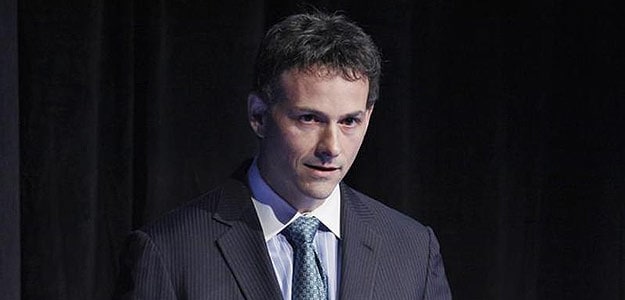
Hedge fund star David Einhorn wants to force Apple Inc to share some of its huge cash reserves with investors, but his lawsuit rests on a US securities rule that has little legal precedent.
Mr Einhorn's Greenlight Capital sued the iPad and iPhone maker in the US district court in Manhattan on Thursday to try to prevent Apple from eliminating preferred stock from its charter. The suit is part of Mr Einhorn's bid to pressure Apple to use some of its $137 billion in cash to issue perpetual preferred shares that pay dividends to existing shareholders.
The suit contends Apple violated Securities and Exchange Commission rules that prohibit companies from "bundling" unrelated matters into a single proposal for a shareholder vote.
Establishing that Apple violated the rules could be tricky. Little to no case law exists on the question and the SEC's own rule is relatively general with little guidance, legal experts said.
Still, James Cox, a professor at Duke University School of Law, thinks Mr Einhorn "has a hell of good case."
"I think he's got Apple in the crosshairs," he added, saying that it "strikes me as a fairly dramatic case of bundling," Mr Cox added.
The hedge fund manager is seeking an injunction to block a February 27 shareholder vote on the proposal, saying Apple violated Section 14 of the Securities Exchange Act of 1934. Arguments are to be heard before US district judge Richard Sullivan on February 22. Apple has until February 15 to file a response with the court.
The proxy proposal at issue seeks to amend Apple's articles of incorporation in three ways: by providing for majority voting for directors, establishing a par value for Apple stock and eliminating its ability to issue preferred stock.
Mr Einhorn is represented by law firm Akin Gump Strauss Hauer & Feld, Greenlight's long-time outside counsel. No lawyer for Apple is yet listed on the court docket and a representative declined to say who would represent Apple in the case.
On Friday, the California Public Employees Retirement System, the biggest U.S. public pension fund and owner of 2.7 million Apple shares, and influential proxy voting firm ISS Proxy Advisory Services both urged investors to vote in favour of the shareholder proposal in question.
"All shareholders should have a vote," Anne Simpson, Calpers senior portfolio manager and director of corporate governance, said on CNBC. "We don't want the board cutting a deal on the side with a hedge fund out of fear of a lawsuit that will cancel the annual meeting," she said.
"This is a big issue that needs to be thought through carefully and we want the board to come to all shareholders and give a chance to have their voice heard," she added.
ISS, which issues recommendations on how shareholders should vote on proxy proposals, generally believes the "bundling" of proposals was not in the best interest of shareholders, but supported the elimination of "blank check" preferred shares due to their potential to be misused as a takeover defence.
"Though many investors have viewed Apple's cash holdings as excessive and wanted to see more of it returned to shareholders, that view may not be universally held: other investors may prefer to see the cash (or at least a large portion of it) deployed for investments and acquisitions," it said in its Friday statement.
How will Apple respond?
It is unclear how Apple will respond in its formal reply to the lawsuits. On Thursday, Apple said Mr Einhorn's lawsuit was misguided and that adoption of the proposal would not preclude preferred share issuances in future.
"Currently, Apple's articles of incorporation provide for the issuance of 'blank check' preferred stock by the Board of Directors without shareholder approval," Apple said. "If Proposal #2 is adopted, our shareholders would have the right to approve the issuance of preferred stock," it also said.
Mr Einhorn, a well-known short-seller and Apple gadget fan, said in an interview with CNBC the company harboured a "Depression-era" mentality that led it to hoard cash and invest only in the safest, lowest-yielding securities.
Apple nearly went broke in the 1990s before Steve Jobs returned and engineered a sensational turnaround, with products such as the iPhone and iPad that became must-haves for consumers around the world. The company's near-death experience has led Apple to be exceptionally conservative with its cash.
Greenlight in its complaint said it supports two of the proposals, but not getting rid of preferred stock. Mr Einhorn deems preferred stock superior to dividends or share buybacks and has separately put forward a proposal for an issuance of Apple preferred stock with a perpetual 4 percent dividend.
But as Apple's proxy proposal is structured, Greenlight said, shareholders have "no choice but to either vote in favour of an amendment they oppose, or against an amendment they support."
Few lawsuits have ever been filed challenging proposals under the rules, a situation some legal experts attributed to the normally passive nature of shareholders.
"In most cases you're not going to get a lot of complaining about bundling," said Brian Slipakoff, special counsel at law firm Duane Morris in Philadelphia.
In one of the few related lawsuits, the 2nd US Circuit Court of Appeals in New York in 1999 recognized an implied private right of action by shareholders suing over alleged anti-bundling rule violations.
That precedent could back Mr Einhorn in his legal standing to bring the case. The appeals court ruling was cited by Greenlight in additional court papers filed late on Thursday.
Francis Vasquez, a lawyer with the law firm White & Case who is not involved in the case, said Apple might argue that because the stockholder proposals in Proposal 2 are all amendments to the charter, they are properly related.
The California company has another five proposals up for a vote, which are not being challenged by Einhorn and do not involve amending Apple's charter. Those measures focus on matters such as director elections and executive compensation.
"Apple's first argument likely is going to be, 'Look, these are all amendments we put in one place, they don't have to do with the other items,'" Mr Vasquez said.
The anti-bundling rules date from 1992. John Coffee, a professor at Columbia Law School, said the idea was to "prevent managements from bribing shareholders with a sweetener into voting for a proposal they would otherwise reject."
Copyright @ Thomson Reuters 2013

-
Talking Points This Week: Tech Nerves, FII Buying, And A Faraway Banking Shock

The global markets are not shining this Diwali. The exception in the large markets is, India.
-
Midterm Rally Lasted A Day. The Hard Reality Of A Divided US May Last Two Years | Opinion
Between a contested AI boom, a debt ceiling that arrives in 2027 and a president with every incentive to act alone, the next two years may prove more volatile than the first day's rally suggests.
-
Blue Wave Will Derail the AI Trade but Won't Dismantle the AI Era | Unhedged Position
The Democrats' sweep of the US Congress will see politics collide with economic forces both over the long and short term.
-
It's Time To Take The GST Council's Bet On Trust Global
Payment records can prove India's services exports, and clear, proportionate rules can bring foreign digital sellers into the tax net.
-
Opinion | India at 38: From Innovation Overperformer to Innovation Powerhouse
India now has 453 VC-backed deep science startups, 18 of them late-stage, after 117 percent growth since 2020. Laurus Labs, at USD 9.3 billion, is the most valuable deep science company in any middle-income economy outside China.
-
Navigating Energy Crossroads: S Jaishankar's Call For Diversified Supply Chains At G20 Ministerial Meeting
As geopolitical fault lines continue to test maritime trade routes and commodity flows, Jaishankar's message remains pertinent: true economic resilience requires open markets, protected transit lines, and a genuine commitment to multilateral cooperation rather than coercion.
-
Indians Are Travelling, But Not Every Journey Is A Holiday | The Week In Whys
Pilgrims, patients and working women are the real travellers, and the system hasn't quite caught up with them.
-
Getting To Work Costs Women More | The Reason Why
It is not just about women paying more than men. It is about women paying much more in cities than in villages.
-
AI Bias In Investing Cannot Be Eliminated, But It Can Be Governed
Framing is a particularly important example as identical financial information presented in terms of gains rather than losses can lead an LLM to reach a different assessment.









