Petrol Pumps Threaten 'No Purchase No Sale' Ahead Of New Pricing System
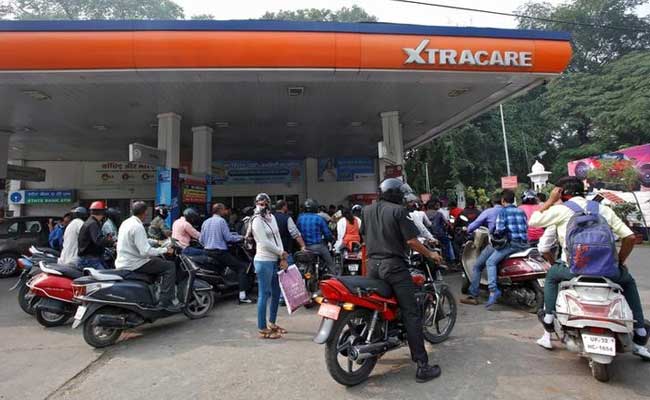
New Delhi: State-owned fuel retailers Indian Oil Corporation Limited (IOCL), Bharat Petroleum Corporation Limited (BPCL) and Hindustan Petroleum Corporation Limited (HPCL) have put in place an automated system to implement daily revision in petrol and diesel prices from June 16 even as a section of petrol pump dealers threatened to go on strike against the move. The daily change in prices of petrol and diesel across the country follows the success of a pilot implementation in five cities - Chandigarh, Jamshedpur, Puducherry, Udaipur, and Vishakhapatnam.
"This move will ensure that the benefit of even the smallest change in international oil prices can be passed down the line to the dealers and the end users," Indian Oil Corporation, the country's largest fuel retailer, said in a statement.
IOC said the seamless execution of the 40-day pilot in Chandigarh, Jamshedpur, Puducherry, Udaipur, and Vishakhapatnam has reassured all stakeholders on the efficacy of its implementation.
Federation of All India Petroleum Traders (FAIPT), which claims to represent most of nation's 54,000 petrol stations, said there will be "no purchase no sale" of petrol and diesel on June 16 in protest against the decision.
"Dealers of five cities where it was launched have already burnt their fingers. They are crying at the inventory loss that they have already suffered due the fluctuations in the daily changing prices on the inventory held by them," it said in a statement.
FAIPT said 50 per cent of petrol pumps sells on average 30 kilolitre of fuel per month. "One tank lorry of 18 Kls lasts most of such small dealers 7 to 10 days. Any such decision shall wipe out his entire working capital if the prices were to go down frequently," it said.
Also, there are dealerships where a tank lorry takes two to three days to reach the petrol pump and in such cases there is a strong possibility that by the time the tank lorry reaches the retail outlet its price might have already reduced leaving the dealer to suffer losses.
"Extensive training of dealers will be held to ensure that customers do not face any pricing misinformation or glitches," IOC said, adding that all its over 26,000 dealers will be given timely information on the effective prices at a pre-designated time - say 20:00 hrs for the next day.
At a large number of IOC's 10,000 automated fuel stations, daily price can be automatically updated centrally, besides technology also provides to schedule the price change at midnight.
At the non-automated petrol pumps, dealers would get the updated price by way of four distinct means: customised SMSs, e-mails, mobile app and web portal for dealers. "These means of communication are also available to dealers of automated petrol pumps," the statement said.
IOC said dealers have been carrying out price changes regularly. Similarly even now, the same system would continue, but on daily basis.
"Dealers will ensure price updation at their fuel stations before start of sale, every day. Updated prices will be immediately exhibited at all petrol pumps for information of the public," the statement said.
IOC said the daily price revision is an initiative for ensuring the best possible prices to the customers as well as improved transparency on the pricing mechanism.

-
Opinion | India at 38: From Innovation Overperformer to Innovation Powerhouse

India now has 453 VC-backed deep science startups, 18 of them late-stage, after 117 percent growth since 2020. Laurus Labs, at USD 9.3 billion, is the most valuable deep science company in any middle-income economy outside China.
-
Navigating Energy Crossroads: S Jaishankar's Call For Diversified Supply Chains At G20 Ministerial Meeting
As geopolitical fault lines continue to test maritime trade routes and commodity flows, Jaishankar's message remains pertinent: true economic resilience requires open markets, protected transit lines, and a genuine commitment to multilateral cooperation rather than coercion.
-
Indians Are Travelling, But Not Every Journey Is A Holiday | The Week In Whys
Pilgrims, patients and working women are the real travellers, and the system hasn't quite caught up with them.
-
Getting To Work Costs Women More | The Reason Why
It is not just about women paying more than men. It is about women paying much more in cities than in villages.
-
AI Bias In Investing Cannot Be Eliminated, But It Can Be Governed
Framing is a particularly important example as identical financial information presented in terms of gains rather than losses can lead an LLM to reach a different assessment.
-
Joining The Dots | Dark Skies, Steady Diya: Why Hope Holds This Diwali
With war, a weak rupee and foreign outflows weighing on sentiment, policymakers at the NDTV World Summit and market veterans at NDTV Profit Ignite: Diwali Edition offered the same advice: stay invested and filter out the noise.
-
The Curious Case of Equitas Small Finance Bank And A CEO Who Quit For Stock
PN Vasudevan believes persistent investor concerns over a perceived conflict of interest had become a governance overhang on Equitas Small Finance Bank's stock, even as the lender improved profitability and asset quality.
-
Talking Points This Week: AI Cash Burn, A Tiger Comeback And An India That Still Finds Its Own Path
India is not immune to higher oil or tighter global liquidity, yet its earnings base is broader, its domestic policy levers are still available.
-
Foreign Investors Own Half Of HDFC Bank and ICICI Bank. An LTCG Cut Could Matter Most Here
Foreign portfolio investors have US$115 billion parked in HDFC Bank, ICICI Bank. If the government cuts long-term capital gains tax, Jefferies says returning foreign money could land here first.










