No Merit In Cyrus Mistry's Case Against Sacking As Tata Chairman: Court
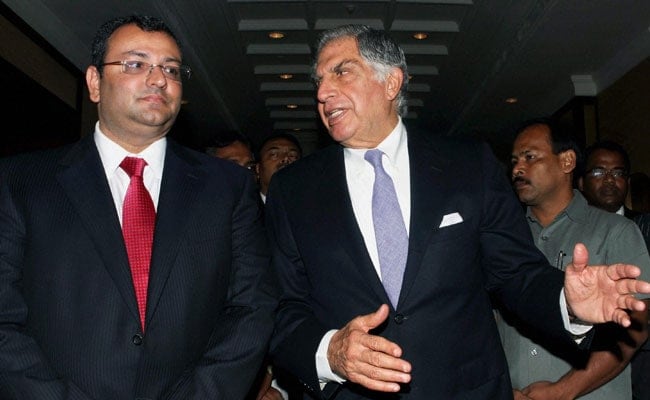
Cyrus Mistry's petition against his removal as Tata Sons' chairman two years ago has no merit, the National Company Law Tribunal (NCLT) declared on Monday, dismissing his challenge.
The tribunal said the board of directors is competent to remove its executive directors and Mr Mistry was ejected "because a majority of the board members had lost confidence in him after he sent out certain crucial information to the Income Tax department, leaked details to the media and came out openly in public against the company's shareholders and its board."
In response Mr Mistry said that he was disappointed but not surprised with the NCLT verdict. "The ruling of the National Company Law Tribunal is disappointing although not surprising. We will continue to strive for ensuring good governance and protection of interests of minority shareholders and all stakeholders in Tata Sons from the wilful brute rule of the majority... An appeal on merits will be pursued," read a statement released from Mr Mistry's office.
Mr Mistry was sacked from the board of Tata Sons after a four-year stint in October 2016, and Ratan Tata was restored as the interim chairman.
"The judgement of the NCLT, delivered this morning has been a vindication of the actions that Tata Sons felt obliged to take in October 2016. It is a reinforcement of the principles and forthrightness that prevails in our judicial system, which should make all of us proud of our country and its democracy," Mr Tata said in a statement.
In his petition, Mr Mistry had called his removal illegal and had also alleged mismanagement at Tata Sons, oppression of minority shareholders, a breakdown of corporate governance and excessive interference by Tata Trusts.
The two judges of the tribunal did not find any merit in legacy issues raised by Mr Mistry or in the argument that Ratan Tata had interfered.
Countering Mr Mistry's charges, the Tata Group had said that his removal was not illegal and that was familiar with the affairs of Tata Sons.
Mr Mistry took over as the chairman of the salt-to-software group in 2012 after Ratan Tata announced his retirement.
Two months after his abrupt removal, Mr Mistry and his family-run investment firm, Cyrus Investments, approached the corporate tribunal alleging "oppression" of minority shareholders. The Companies Act mandates that a petitioner should hold at least one-tenth of the issued share capital of a company or represent 10 per cent of the total number of members to file cases alleging mismanagement.
Mr Mistry can challenge today's order before the National Company Law Appellate Tribunal.

-
Talking Points This Week: Tech Nerves, FII Buying, And A Faraway Banking Shock

The global markets are not shining this Diwali. The exception in the large markets is, India.
-
Midterm Rally Lasted A Day. The Hard Reality Of A Divided US May Last Two Years | Opinion
Between a contested AI boom, a debt ceiling that arrives in 2027 and a president with every incentive to act alone, the next two years may prove more volatile than the first day's rally suggests.
-
Blue Wave Will Derail the AI Trade but Won't Dismantle the AI Era | Unhedged Position
The Democrats' sweep of the US Congress will see politics collide with economic forces both over the long and short term.
-
It's Time To Take The GST Council's Bet On Trust Global
Payment records can prove India's services exports, and clear, proportionate rules can bring foreign digital sellers into the tax net.
-
Opinion | India at 38: From Innovation Overperformer to Innovation Powerhouse
India now has 453 VC-backed deep science startups, 18 of them late-stage, after 117 percent growth since 2020. Laurus Labs, at USD 9.3 billion, is the most valuable deep science company in any middle-income economy outside China.
-
Navigating Energy Crossroads: S Jaishankar's Call For Diversified Supply Chains At G20 Ministerial Meeting
As geopolitical fault lines continue to test maritime trade routes and commodity flows, Jaishankar's message remains pertinent: true economic resilience requires open markets, protected transit lines, and a genuine commitment to multilateral cooperation rather than coercion.
-
Indians Are Travelling, But Not Every Journey Is A Holiday | The Week In Whys
Pilgrims, patients and working women are the real travellers, and the system hasn't quite caught up with them.
-
Getting To Work Costs Women More | The Reason Why
It is not just about women paying more than men. It is about women paying much more in cities than in villages.
-
AI Bias In Investing Cannot Be Eliminated, But It Can Be Governed
Framing is a particularly important example as identical financial information presented in terms of gains rather than losses can lead an LLM to reach a different assessment.









