Cyrus Mistry Caused Huge Financial Loss To Group Firms: Tata Sons
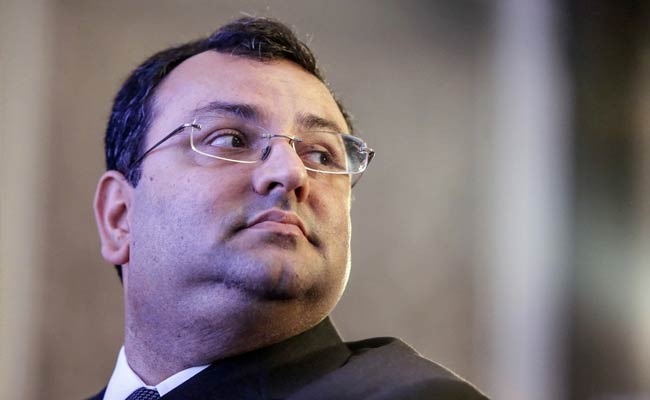
Mumbai: Refuting Cyrus Mistry's allegations of "breakdown" in the governance of trusts managing Tata Sons, the group holding firm on Monday said the trusts are governed by individual wills of Jamsetji Tata and his two sons, and accused the ousted Chairman of causing huge financial losses.
Tata Sons, the holding firm for over $100 billion conglomerate, said Mr Mistry's statements have caused the group, including the companies where he continues to be the Chairman, "enormous damage and caused considerable financial loss to all shareholders, running into tens of thousands of crores".
"The Trusts are governed by the individual Wills of Jamsetji Tata, his two sons, Sir Dorabji Tata and Sir Ratan Tata, and other founders. The Trusts have been scrupulously following the mandates set out in the Wills," Tata Sons said in a statement.
That is the reason the different Trusts continue in existence for decades, it added.
Various Tata Trusts of which Ratan Tata is lifetime chairman, owns 66 per cent in Tata Sons, and are all public trusts.
Earlier, stepping up his fight against Tatas and patriarch Ratan Tata, Mr Mistry sought government's intervention to "remedy and repair breakdown" in the governance of trusts managing Tata Sons.
Reaching out to shareholders of six Tata group firms, where promoters have called EGMs to remove him from their boards, Mr Mistry said, "The Tata Group is no one's personal fiefdom: it does not belong to any individual, not to the trustees of Tata Trusts, not to the Tata Sons directors, and not to the directors of the operating companies.
Refuting the claim, Tata Sons said: "After he became the Chairman of Tata Sons, it is Mr. Mistry who converted the Group into his "personal fiefdom", with his unilateral actions destroying precious institutional memory of the House of Tata."
Mr Mistry has chosen to fight his removal in the media even at the cost of hurting and damaging the Tata group, including Tata companies, even while remaining as its Chairman, Tata Sons said.
"His statements have caused the group (including the companies where he continues to be the Chairman) enormous damage and caused considerable financial loss to all shareholders, running into tens of thousands of crores," it added.
Tata companies and Tata Sons have, for many decades, worked cohesively and seamlessly for the benefit of all stakeholders namely the companies, their shareholders and employees and for society at large, it said.
"There was no other agenda or personal interest as ultimately even the dividends paid to Tata Sons and subsequently to its own shareholders went largely back to philanthropy except for those paid to the minority shareholders," it added.
The operating Tata companies have individually grown and prospered but they have also benefited in no small measure from being part of the Tata group, it said.
"It is the Tata legacy that has attracted capital in all forms and gives the comfort of safety because of the past default-free record. Therefore, Tata companies do not exist in a vacuum but benefit from being part of the Tata group which is most evident in times of difficulty. It is all this that is at stake," the statement said.
The Tata Group has enjoyed the confidence of generations of shareholders for more than a century. The shareholders of Tata Group companies are eminently qualified to see through the smokescreen of baseless allegations being passed off as an appeal to shareholders, it said.
"The price of his (Mistry's) wanton allegations has been borne by none other than millions of shareholders. Tata Sons believes the shareholders will judge these malicious actions on their own merit or the lack of it," it said.
(This story has not been edited by NDTV staff and is auto-generated from a syndicated feed.)

-
High US Salaries, No Green Card Certainty: The Financial Calculation Facing Indian H-1B Families

The suspension of PERM processing at eight technology employers does not cancel existing H-1B visas. What it does is force a question many Indian families have been avoiding: is the US salary worth tying your career and family plans to one employer?
-
Unhedged Position: Can India See An Indonesia-Style Time Correction?
The Nifty is trading below levels it first clocked in 2024. Is there, then, as I have suggested in the headline, potential that the current time correction drags on painfully for the next three-five, even ten years?
-
Navigating Friction And Energy Realities: An Analysis Of Marco Rubio's October Visit To India
Occurring at a critical juncture marked by stalled trade negotiations and escalating geopolitical pressures over global energy supplies, the visit offers a profound window into modern US-India relations.
-
India Exports Capital. Why Not Export Trusteeship?
The big question, then, is whether India can build an institution that global borrowers, investors, banks, and lawyers can trust, even without an Indian connection.
-
France's Economy & Politics Are In Crisis | The Reason Why
Let's look at how the French economy and politics evolved under Nicolas Sarkozy, Franois Hollande and Emmanuel Macron.
-
You May Inherit The Business. You Must Earn Its Credibility.
Succession tests the founder's ability to share authority as much as it tests the next generation's readiness to assume it.
-
Signing Deals Is One Thing; Making Them Work Is Another | The Week In Whys
Sometimes, things don't turn out as planned. Indian companies have lost some bids to rivals, some projects won't produce until 2030.
-
FOMC Wall, PERM Suspension, Hospital Stocks | Talking Points This Week
A PERM suspension would directly affect green-card sponsorship rather than H-1B visas, so the near-term earnings impact could remain relatively limited. The key question is whether this marks a new phase in US scrutiny of Indian IT.
-
Everything, Everywhere, All At Once: Dalal Street's Week To Forget | Joining The Dots
Visa curbs, a Starlink spat and cancer drug caps: what connects this week's shocks for Indian markets
-
India Is Going Abroad For Critical Minerals. But It May Take Years To Pay Off | The Reason Why
Although India's steps are in the right direction, they remain modest compared with India's growing dependence.









