Current Account Deficit Set To Widen To A Decade-High This Year: Report
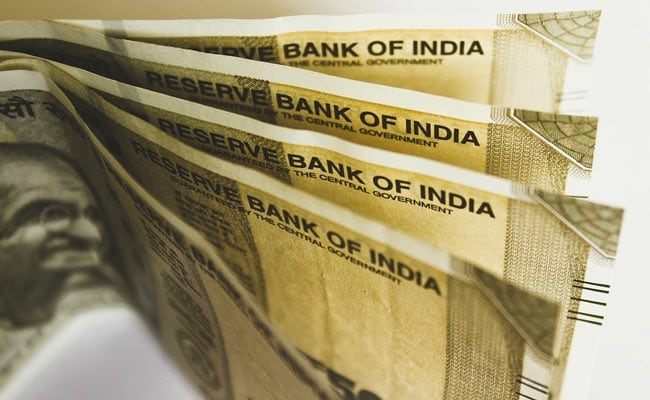
The current account deficit deteriorated sharply in the last quarter and is expected to end the fiscal year at its widest in a decade as ballooning trade imbalances coincide with a decline in foreign investment, a Reuters poll found.
A revival in domestic demand in Asia's third-largest economy and a surge in global commodity prices - combined with a battered currency and gaping trade deficit - has widened the current account shortfall.
That gap is expected to average 3.1% of gross domestic product this fiscal year, according to an Aug. 22-26 Reuters poll of 26 economists.
That would be the widest since hitting almost 5% during the "taper tantrum" crisis nearly a decade ago when the US Federal Reserve cut its government bond purchases. About a decade later, India finds itself in a similar situation.
Since the beginning of the year, the US Federal Reserve has embarked on its most aggressive tightening cycle in decades, tapering more than $8 trillion of Treasury securities and triggering outflows from emerging markets, including India.
The Reuters poll predicted the current account gap at a decade-high of 3.9% last quarter, before narrowing to 3.6%, 3.0% and 2.5%, in Q2, Q3 and Q4 of this fiscal year, respectively.
"On the one hand, there is a stagnation of exports that we are seeing, which over the past six to seven months is stagnating around $35-$36 billion. Whereas if you look at imports, that has been continuing to increase," said Suvodeep Rakshit, senior economist at Kotak Institutional Equities.
"The external imbalances are possibly at their peak now. In some sense it is concerning because the outlook for now is very uncertain. There is no clear direction ... so we'll have to wait and figure out, and the risk scenarios are on the higher side."
The median forecast for the current account gap was one of the widest among regional peers polled by Reuters, only exceeded by the Philippines which is also facing its widest deficit in decades.
The rupee has weakened more than 7% since the beginning of the year as foreign investors pulled out $30 billion from equities over worries that the trade deficit could worsen, pushing the Reserve Bank of India (RBI) to defend the currency with its foreign reserves.
But the worst may be yet to come. Prices of crude oil - biggest import - were expected to stay above $100 a barrel this year as tight supply overshadows demand concerns in a difficult global environment characterized by high recession risk.
With inflation expected to remain above the top end of the target range, the RBI is left with few options other than to raise interest rates by another 60 basis points by end-March, according to another Reuters poll.
However, that will be not enough to stem the rupee's losses as some major central banks were expected to deliver nearly that much in a single meeting.
After expanding 13.5% in the previous quarter, economic growth is set to slow considerably to 6.2%, 4.5% and 4.2% in the current and following quarters, highlighting a below-potential growth trajectory for the world's second-most populous country.

-
Where You Live Shapes How You Get To Work | The Reason Why

Two-wheelers are the most popular way to get to work in India, accounting for nearly 43% of workplace commutes.
-
High US Salaries, No Green Card Certainty: The Financial Calculation Facing Indian H-1B Families
The suspension of PERM processing at eight technology employers does not cancel existing H-1B visas. What it does is force a question many Indian families have been avoiding: is the US salary worth tying your career and family plans to one employer?
-
Unhedged Position: Can India See An Indonesia-Style Time Correction?
The Nifty is trading below levels it first clocked in 2024. Is there, then, as I have suggested in the headline, potential that the current time correction drags on painfully for the next three-five, even ten years?
-
Navigating Friction And Energy Realities: An Analysis Of Marco Rubio's October Visit To India
Occurring at a critical juncture marked by stalled trade negotiations and escalating geopolitical pressures over global energy supplies, the visit offers a profound window into modern US-India relations.
-
India Exports Capital. Why Not Export Trusteeship?
The big question, then, is whether India can build an institution that global borrowers, investors, banks, and lawyers can trust, even without an Indian connection.
-
France's Economy & Politics Are In Crisis | The Reason Why
Let's look at how the French economy and politics evolved under Nicolas Sarkozy, Franois Hollande and Emmanuel Macron.
-
You May Inherit The Business. You Must Earn Its Credibility.
Succession tests the founder's ability to share authority as much as it tests the next generation's readiness to assume it.
-
Signing Deals Is One Thing; Making Them Work Is Another | The Week In Whys
Sometimes, things don't turn out as planned. Indian companies have lost some bids to rivals, some projects won't produce until 2030.
-
FOMC Wall, PERM Suspension, Hospital Stocks | Talking Points This Week
A PERM suspension would directly affect green-card sponsorship rather than H-1B visas, so the near-term earnings impact could remain relatively limited. The key question is whether this marks a new phase in US scrutiny of Indian IT.
-
Everything, Everywhere, All At Once: Dalal Street's Week To Forget | Joining The Dots
Visa curbs, a Starlink spat and cancer drug caps: what connects this week's shocks for Indian markets









