Bitcoin Could Be Laid Low By Miners' Malady
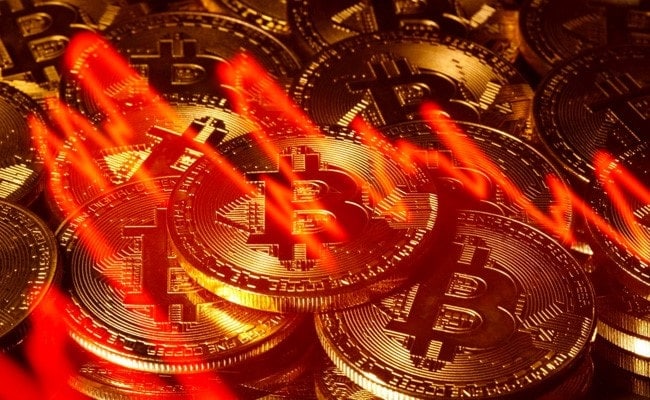
Bitcoin miners are feeling the heat - and the pain's rippling downstream to pressure prices.
The cryptocurrency's spectacular rally in 2021 drew thousands of entrants into mining, or producing new coin. As a result the hashrate, or combined computational power used by bitcoin miners globally, has roughly quadrupled over the past six months to blow past 200 million "terahashes" per second.
But what's that got to do with the price of bitcoin?
A rising hashrate makes it becomes harder for miners to earn coin and cover their costs of hardware, electricity and staff - so many are more likely to sell, rather than hold, their newly minted cryptocurrency, exerting a bearish force on the market.
"Running costs are a major factor in miners' decision to hold or sell newly acquired coins. They are the first and most natural sellers in the crypto space and so definitely impact prices," said Justin d'Anethan, institutional sales director at crypto financial services firm Amber Group.
The total value of coins held in miners' wallets has fallen to around $75 billion from $114 billion at the start of November, as their profitability has been squeezed by the rising hashrate as well as falling prices, according to Oslo-based crypto research firm Arcane Research.
Miners have been transferring more coins to exchanges than adding to reserves, according to crypto industry analytics firms, a sign of selling or intent to sell.
Such flows are adding to pressures facing bitcoin, whose drift towards the mainstream has seen it caught up in a selloff in global markets driven by tensions on the Ukraine border and the Federal Reserve's policy tightening.
The world's dominant cryptocurrency is trading at about $37,400, which is 40 per cent below its Nov. 10 high of $62,000.
What It Costs?
Bitcoin mining, in simple terms, is the process by which a network of computers checks and validates a block of transactions that then get added to the blockchain. Miners get rewarded for completing a block.
It's an expensive business, though, requiring not just sophisticated and fast "rigs" costing upwards of $10,000, but also a huge amount of power. And it's getting pricier.
The seven-day average of total mining cost per transaction validated has fallen to $176.8 from a record $235.57 hit in May last year, data from blockchain.com shows.
"As more miners join the network, each individually earns fewer bitcoin. This is because network difficulty increases in order to slow the issuance of new bitcoin," said Joe Burnett, analyst at infrastructure and mining firm Blockware Solutions.
Waning mining profitability is also hitting the broader market because some institutional investors, who are unable or unwilling to invest directly in cryptocurrencies, instead buy shares of listed miners or ETFs that track miners as an alternative way of gaining access to the young industry.
Shares of U.S.-listed crypto miners Marathon Digital Holdings and Riot Blockchain have plunged 66% and 52 per cent, respectively, since early November.
The Valkyrie Bitcoin Miners ETF is meanwhile trading at a roughly 5% discount to its net asset value since the fund's launch in early February, and the Viridi Clean Energy Crypto-Mining & Semiconductor ETF has lost 23% since the beginning of the year.
The Last Bitcoin
Some of the pressures on miners flow from bitcoin's inherent structure. The decentralised blockchain was created anonymously with a final limit of 21 million coins, of which nearly 19 million has already been minted.
It takes around 10 minutes to mine one block and the reward for miners - who currently get 6.25 bitcoin per block - is halved about every four years.
"There could be one miner or a million, it doesn't change anything. There's only one block and a set number of bitcoins issued," said d'Anethan at Amber Group.
A final note: don't lose sleep fretting about what will happen when the last bitcoin is mined - that's not expected until the middle of the next century, 2140 to be exact.

-
Navigating Friction And Energy Realities: An Analysis Of Marco Rubio's October Visit To India

Occurring at a critical juncture marked by stalled trade negotiations and escalating geopolitical pressures over global energy supplies, the visit offers a profound window into modern US-India relations.
-
India Exports Capital. Why Not Export Trusteeship?
The big question, then, is whether India can build an institution that global borrowers, investors, banks, and lawyers can trust, even without an Indian connection.
-
France's Economy & Politics Are In Crisis | The Reason Why
Let's look at how the French economy and politics evolved under Nicolas Sarkozy, Franois Hollande and Emmanuel Macron.
-
You May Inherit The Business. You Must Earn Its Credibility.
Succession tests the founder's ability to share authority as much as it tests the next generation's readiness to assume it.
-
Signing Deals Is One Thing; Making Them Work Is Another | The Week In Whys
Sometimes, things don't turn out as planned. Indian companies have lost some bids to rivals, some projects won't produce until 2030.
-
FOMC Wall, PERM Suspension, Hospital Stocks | Talking Points This Week
A PERM suspension would directly affect green-card sponsorship rather than H-1B visas, so the near-term earnings impact could remain relatively limited. The key question is whether this marks a new phase in US scrutiny of Indian IT.
-
Everything, Everywhere, All At Once: Dalal Street's Week To Forget | Joining The Dots
Visa curbs, a Starlink spat and cancer drug caps: what connects this week's shocks for Indian markets
-
India Is Going Abroad For Critical Minerals. But It May Take Years To Pay Off | The Reason Why
Although India's steps are in the right direction, they remain modest compared with India's growing dependence.
-
When Everyone Has AI, What Gives You An Edge?
India's young workforce is entering an uncertain world of work where powerful AI tools are becoming widely accessible. The advantage will belong to those who combine deep expertise with digital fluency, and the distinctly human capabilities that technology cannot manufacture.
-
Wrong Labels, High Pesticide Residues Holding Back Agri Exports | The Reason Why
India needs stronger domestic food-safety and labelling standards, with best practices becoming part of everyday business for farmers, traders and food companies.










