"Cryptocurrencies Are Even Worse Than Ponzi Schemes": RBI Deputy Governor
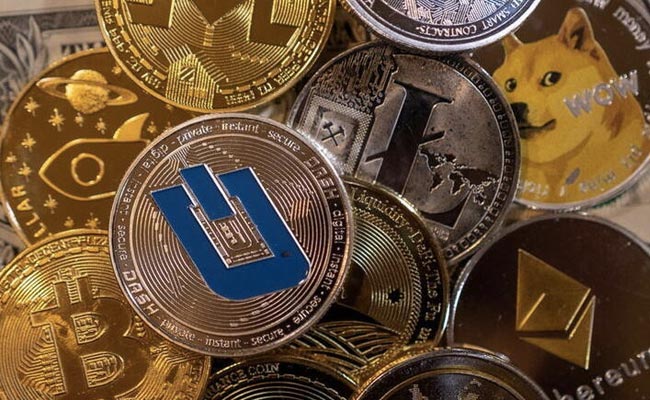
Making a strong case for banning cryptocurrencies, Reserve Bank Deputy Governor T Rabi Sankar on Monday said they are even worse than Ponzi schemes and threaten the financial sovereignty of a country.
Observing that crypto-technology is underpinned by a philosophy to evade government controls, he said they have been specifically developed to bypass the regulated financial system.
More substantially, he added, cryptocurrencies can wreck the currency system, monetary authority, banking system, and in general the government's ability to control the economy.
"All these factors lead to the conclusion that banning cryptocurrency is perhaps the most advisable choice open to India," Sankar said while delivering a keynote address at the Indian Banks Association 17th Annual Banking Technology Conference and Awards.
The Deputy Governor said crypto-technology is underpinned by a philosophy to evade government controls.
"Cryptocurrencies have specifically been developed to bypass the regulated financial system. These should be reason enough to treat them with caution.
"We have also seen that cryptocurrencies are not amenable to definition as a currency, asset or commodity; they have no underlying cash flows, they have no intrinsic value; that they are akin to Ponzi schemes, and may even be worse. These should be reason enough to keep them away from the formal financial system," he noted.
Additionally, they undermine financial integrity, especially the KYC regime and AML/CFT (anti-money laundering/combating the financing of terrorism) regulations and at least potentially facilitate anti-social activities, Sankar said.
"They threaten the financial sovereignty of a country and make it susceptible to strategic manipulation by private corporates creating these currencies or governments that control them...We have examined the arguments proffered by those advocating that cryptocurrencies should be regulated and found that none of them stand up to basic scrutiny," he said.
The senior RBI official further said global advertisements with themes such as 'fortune favours the brave' is reflected somewhat in our very own 'lag ja re...kuch to badlega'.
"It would serve us well if the understanding about cryptocurrencies goes beyond the hype and gets rooted in reason and pragmatism," he added.
Sankar also dismissed as superficial the argument that cryptocurrencies should not be banned because a ban is unlikely to be effective.
One might as well argue that drug trafficking is a rampant phenomenon despite a ban, and therefore drug trafficking should be legalised and regulated, he remarked.
If cryptocurrencies are banned, the vast majority of investors who are law abiding would desist from investing. Those few elements who would continue to invest will essentially be carrying out an illegal activity. Such exceptions should reinforce the need for a ban, rather than invalidate it, he said.

-
Unhedged Position: Can India See An Indonesia-Style Time Correction?

The Nifty is trading below levels it first clocked in 2024. Is there, then, as I have suggested in the headline, potential that the current time correction drags on painfully for the next three-five, even ten years?
-
Navigating Friction And Energy Realities: An Analysis Of Marco Rubio's October Visit To India
Occurring at a critical juncture marked by stalled trade negotiations and escalating geopolitical pressures over global energy supplies, the visit offers a profound window into modern US-India relations.
-
India Exports Capital. Why Not Export Trusteeship?
The big question, then, is whether India can build an institution that global borrowers, investors, banks, and lawyers can trust, even without an Indian connection.
-
France's Economy & Politics Are In Crisis | The Reason Why
Let's look at how the French economy and politics evolved under Nicolas Sarkozy, Franois Hollande and Emmanuel Macron.
-
You May Inherit The Business. You Must Earn Its Credibility.
Succession tests the founder's ability to share authority as much as it tests the next generation's readiness to assume it.
-
Signing Deals Is One Thing; Making Them Work Is Another | The Week In Whys
Sometimes, things don't turn out as planned. Indian companies have lost some bids to rivals, some projects won't produce until 2030.
-
FOMC Wall, PERM Suspension, Hospital Stocks | Talking Points This Week
A PERM suspension would directly affect green-card sponsorship rather than H-1B visas, so the near-term earnings impact could remain relatively limited. The key question is whether this marks a new phase in US scrutiny of Indian IT.
-
Everything, Everywhere, All At Once: Dalal Street's Week To Forget | Joining The Dots
Visa curbs, a Starlink spat and cancer drug caps: what connects this week's shocks for Indian markets
-
India Is Going Abroad For Critical Minerals. But It May Take Years To Pay Off | The Reason Why
Although India's steps are in the right direction, they remain modest compared with India's growing dependence.
-
When Everyone Has AI, What Gives You An Edge?
India's young workforce is entering an uncertain world of work where powerful AI tools are becoming widely accessible. The advantage will belong to those who combine deep expertise with digital fluency, and the distinctly human capabilities that technology cannot manufacture.









