Crypto Investors Face More Uncertainty After Rocky Start To 2022
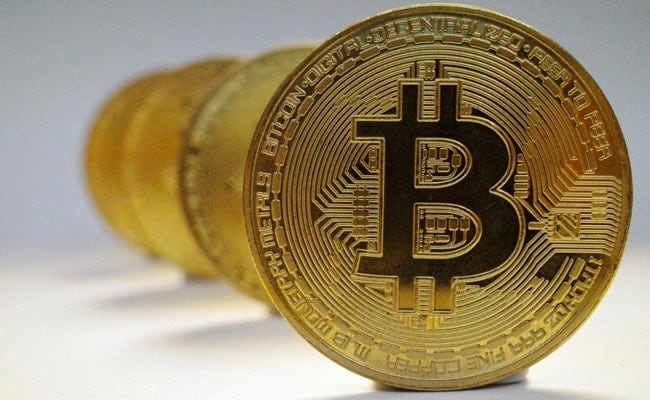
Investors are bracing for more gyrations in bitcoin and other cryptocurrencies, as worries over a hawkish Federal Reserve threaten to squelch risk appetite across markets.
The volatility traditionally associated with cryptocurrencies has been on full display in recent weeks. Bitcoin, the largest cryptocurrency, is up by around 33 per cent since January 24 and recently traded at $43,850, rebounding from a tumble that cut its price in half from November's record high. Its main rival, ether, is up around 45 per cent since January 24 at around $3,200, following a nearly 56 per cent nosedive from its record high of $4,868, also in November.
While proponents of cryptocurrencies once touted their lack of correlation to other assets, bitcoin and its peers saw huge gains over the last two years, rallying along with stocks as the Fed and other central banks pumped unprecedented levels of stimulus into the global economy. Bitcoin is up 1,039 per cent since March 2020 and ether has risen 2,940 per cent, though the rallies in both cryptocurrencies have been interrupted by numerous-stomach churning selloffs.
Their recent volatility has come amid a broader market selloff driven by investors recalibrating their portfolios to account for a more aggressive Fed, which is now expected to raise rates as many as seven times this year as it fights surging inflation. The benchmark S&P 500 index is down 5.5 per cent year-to-date, while the tech-heavy Nasdaq has lost 9.3 per cent.
Worries that an aggressive central bank tightening cycle going forward will hamstring risky assets has made it difficult for some traders to maintain their bullish outlook on bitcoin and other cryptos, an asset class already identified with intense volatility.
Escalating tensions in Ukraine, where Washington warned a Russian invasion could begin any day, could also spark broad market moves, investors said.
Bitcoin has "really become the ultimate momentum trade and there are so many risks that can trigger a 40 per cent drop out of nowhere," said Ed Moya, senior analyst at Oanda.
Bitcoin's volatility hasn't stopped some analysts from trying to gauge the currency's fair value or point out potentially important price levels.
Analysts at JPMorgan estimate bitcoin's current fair value at around $38,000 – some 15 per cent below its recent price – based on its volatility in comparison with that of gold, another asset investors often use to hedge their portfolios against inflation and economic uncertainty.
Vanda Research, meanwhile, said in a recent note that most of the bearish bets on a weaker bitcoin price were entered at around $47,000, and "there could be a large short-squeeze if the aforementioned threshold is crossed, and retail investors return to crypto-trading."
Meanwhile, correlations between bitcoin and the S&P 500 reached an all-time high on January 31, according to data from BofA Global Research, undercutting the case for those hoping to use the cryptocurrency as a hedge against market turbulence.
Investors next week are expecting minutes from the Fed's most recent monetary policy meeting, due out Wednesday. Walmart and chipmaker Nvidia Corp will be among the companies reporting results, as corporate earnings season rolls on.
Some investors are steeling themselves to ride out the volatility in bitcoin, betting that the long-term value proposition of blockchain technology, the built in supply limit, and the network effect it produces, will endure despite frequent price swings.
Jurrien Timmer, director of global macro at Fidelity, likened the current speculation in cryptocurrencies to the turbulence tech stocks experienced during the dot-com era more than two decades ago, a boom-and-bust period that saw a comparatively small group of companies left standing.
"Amazon is still around and Apple is still around and they're bigger than ever and the thinking is that for bitcoin that will be the same," he said. "But it's not immune to those waves of speculation and sentiment."
Bitcoin could reach $100,000 as soon as 2023, Timmer has said, based on his supply/demand models.
Others believe mature cryptocurrencies like bitcoin and ether are unlikely to deliver the kind of eye-watering gains they have notched since their founding.
Instead, they are looking to the universe of new, alternative coins that are being created to take advantage of the money pouring into the crypto space, including the metaverse and NFTs, which saw $30 billion worth of venture capital investment last year, according to PitchBook.
Some altcoins include cosmos, Terra Luna, and Polkadot, which are down around 20.5 per cent, 38 per cent and 25.5 per cent year-to-date, respectively, according to coinmarketcap.com.
Understanding the risks linked to them and decentralized finance is going to be one of the main challenges for investors in 2022, said Lily Francus, director of quantitative research strategy at Moody's Analytics.
Cryptocurrencies "are going to remain very volatile going forward, but there are significant players on both the institutional side and the retail side that are still growing, so the interest is still growing," said Oanda's Moya.

-
Unhedged Position: Can India See An Indonesia-Style Time Correction?

The Nifty is trading below levels it first clocked in 2024. Is there, then, as I have suggested in the headline, potential that the current time correction drags on painfully for the next three-five, even ten years?
-
Navigating Friction And Energy Realities: An Analysis Of Marco Rubio's October Visit To India
Occurring at a critical juncture marked by stalled trade negotiations and escalating geopolitical pressures over global energy supplies, the visit offers a profound window into modern US-India relations.
-
India Exports Capital. Why Not Export Trusteeship?
The big question, then, is whether India can build an institution that global borrowers, investors, banks, and lawyers can trust, even without an Indian connection.
-
France's Economy & Politics Are In Crisis | The Reason Why
Let's look at how the French economy and politics evolved under Nicolas Sarkozy, Franois Hollande and Emmanuel Macron.
-
You May Inherit The Business. You Must Earn Its Credibility.
Succession tests the founder's ability to share authority as much as it tests the next generation's readiness to assume it.
-
Signing Deals Is One Thing; Making Them Work Is Another | The Week In Whys
Sometimes, things don't turn out as planned. Indian companies have lost some bids to rivals, some projects won't produce until 2030.
-
FOMC Wall, PERM Suspension, Hospital Stocks | Talking Points This Week
A PERM suspension would directly affect green-card sponsorship rather than H-1B visas, so the near-term earnings impact could remain relatively limited. The key question is whether this marks a new phase in US scrutiny of Indian IT.
-
Everything, Everywhere, All At Once: Dalal Street's Week To Forget | Joining The Dots
Visa curbs, a Starlink spat and cancer drug caps: what connects this week's shocks for Indian markets
-
India Is Going Abroad For Critical Minerals. But It May Take Years To Pay Off | The Reason Why
Although India's steps are in the right direction, they remain modest compared with India's growing dependence.
-
When Everyone Has AI, What Gives You An Edge?
India's young workforce is entering an uncertain world of work where powerful AI tools are becoming widely accessible. The advantage will belong to those who combine deep expertise with digital fluency, and the distinctly human capabilities that technology cannot manufacture.









