Crypto 'Fixed Deposits': What's So Fixed About Them?

Fixed deposits are some of the most commonly available financial instruments around. By virtue of their nomenclature which, seemingly, assures users of a "fixed" return along with the principal back in full, they are also commonly open to misunderstanding. We saw that in recent insolvencies in India where fixed-deposit holders of non-bank lenders were forced to take haircuts on their principal.
Fixed deposits or fixed-income products are no longer the preserve of the fiat world with crypto platforms adding these to their suite of offerings.
Take, for instance, a product being offered by a crypto exchange called "Bitbns". The exchange offers what it calls "fixed income plans". There are a number of them based on tokens like Bitcoin and Ether. They lay down a minimum deposit in fractions of the coins, lock that in for 30 days and offer an annualised rate of 10-40% depending on the scheme.
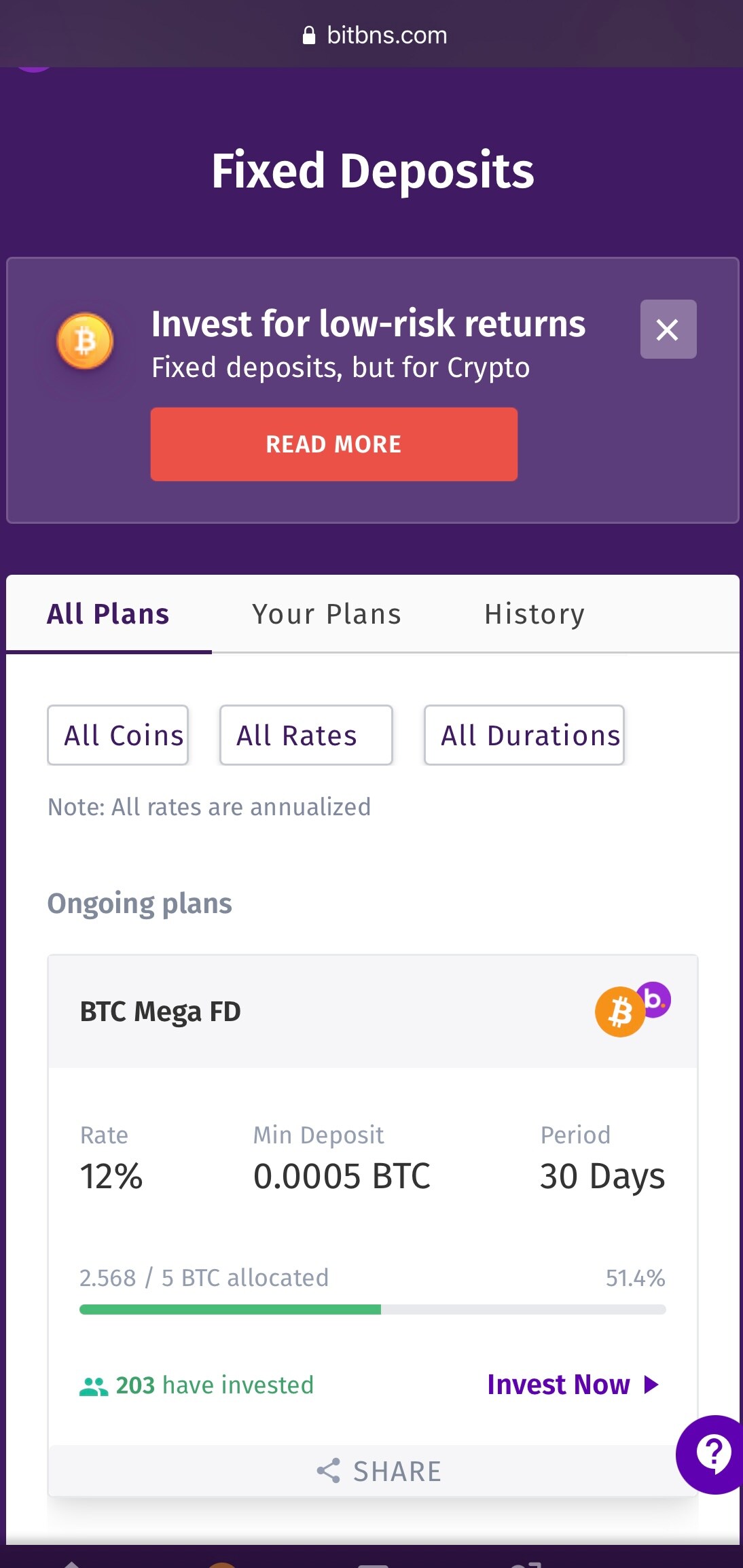
A snapshot of one of the fixed deposits being offered by Bitbns.
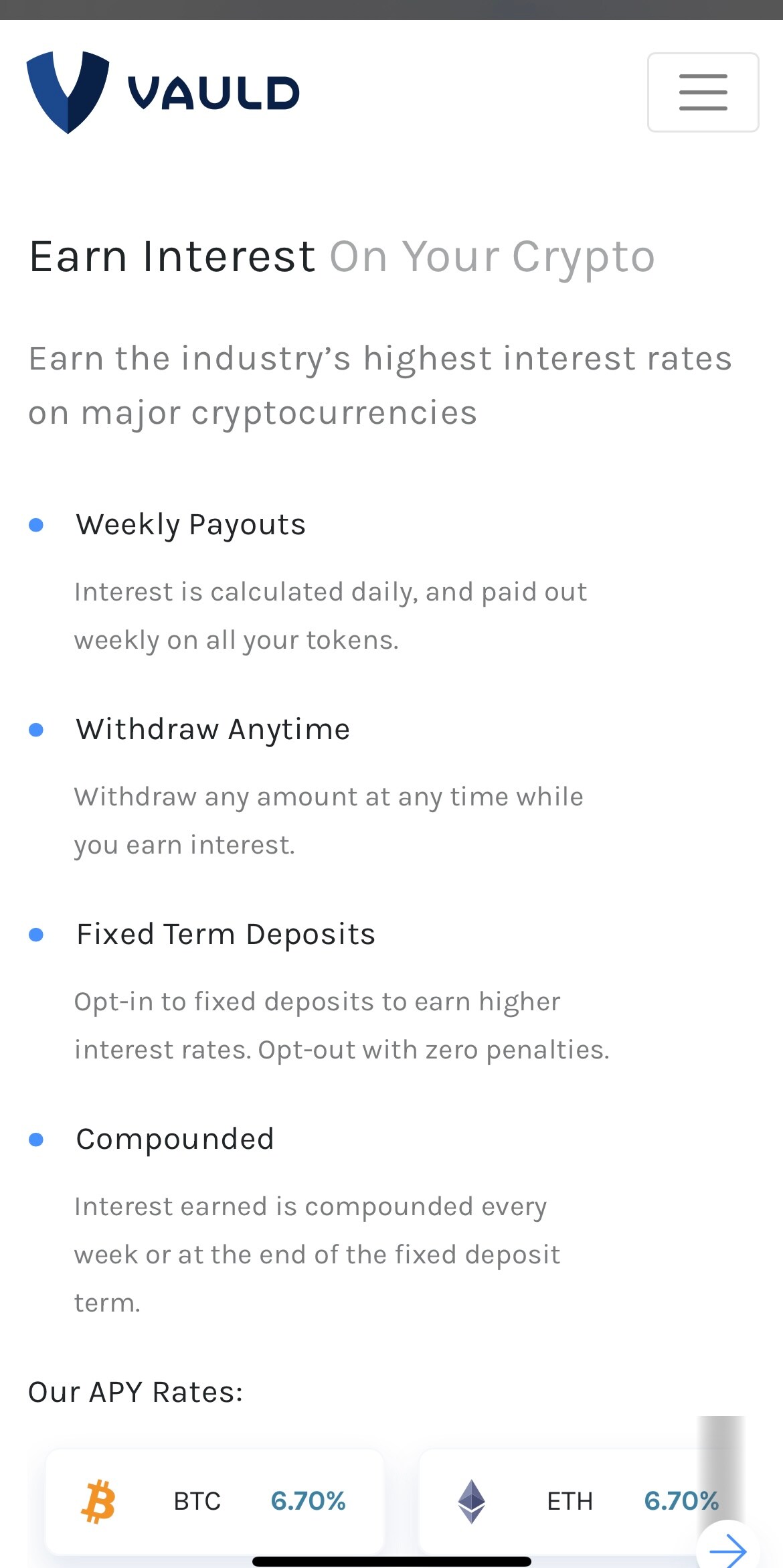
Another exchange called "Vauld" is offering something similar.
It allows you to place tokens in a fixed deposit for 30 days and says that it will offer you principal plus interest at the end of it. It goes to great lengths to explain how the product works.
Other exchanges that offer a similar product are a bit more nuanced in their messaging. For instance, ZebPay has a fixed-return product, as also one which allows lending and borrowing of tokens. It, however, doesn't term it as a fixed deposit.
WazirX calls it a deposit product. Those putting their crypto into these deposits can continue to trade the tokens but cannot make any withdrawals.
Understanding The Product
The first reaction to a crypto fixed deposit may be some level of justifiable alarm. The idea of fixed returns from a volatile asset class like cryptocurrencies may seem antithetical.
Before making that judgment, it may be worth understanding what the product is.
Gaurav Dahake, who heads Bitbns, explains that the product was an offshoot of an earlier option on the exchange where traders could borrow and lend their tokens. Those borrowing would pay a certain interest to those lending it based on expected returns they could generate.
That product has now been simplified into a "fixed deposit" product, Dahake said. As such, tokens collected via the fixed-income product are on-lent to those who may want to borrow them at a certain interest. That interest, after deductions for exchange's costs and fees, is what is used to pay out the fixed interest.
There are still unanswered questions.
How does the exchange ensure the interest to be paid out given the sharp volatility that cryptocurrencies tend to see? Dahake said there is a certain minimum collateral that borrowers of tokens have to maintain, which, for them, is 110%. If the collateral falls below that, the exchange liquidates it to ensure that the principal and interest is paid back.
Still, he acknowledges that anyone investing in this product should be aware that the value of the token, and hence the interest (which is also paid in the same token), may be subject to volatility in fiat price terms. So if Bitcoin prices fall in the 30 days that you have locked it in, you may get the principal and some interest back in Bitcoin but its value in fiat terms will be much lower.
The other concern is around the custody of tokens. How do you know the tokens you park with the exchange are safe? Could fly-by-night operators emerge and cheat customers out of their tokens?
According to Dahake, Bitbns is in talks with Fidelity Digital Assets to offer custodian services to the exchange in India. Fidelity offers such services in the U.S. but is yet to offer the option in India. That will help ease concerns about custody, Dahake said.
Darshan Bathija, co-founder of Vauld, sees this as a credit market product. Instead of keeping your tokens in a wallet, the equivalent of keeping currency under the mattress perhaps, you can put them in a yield-earning instrument.
The yield that you earn is purely based on the demand and supply for the tokens in the market. It will also differ from token to token. So the yield on Bitcoin may be lower than some highly in-demand token.
The product, according to Bathija, is not just a retail one but also sees participation from sophisticated funds who may want to use leverage for trading purposes.
The demand for lending and borrowing these tokens, however, is relatively short-term; which means that most of these offerings are limited to 30 days. The attention span in the crypto market is still short and three-to-six month products have not worked, he said.
Vauld works with a custodian called BitGo, which offers these services globally, to assure safe custody of the tokens, Bathija added.
The Problem With The Messaging
The product, part of a growing parallel financial system around cryptocurrencies or decentralised finance, may in itself be unexceptional having been built on concepts of traditional finance.
The problem, though, may lie in the messaging and the potential for it to mislead a young crypto user base.
Bitbns, for instance, was caught on the wrong foot with the advertising it did around its FD product. The ad, littered across screens during the cricket season, promised four times the return that bank FDs gave.
To compare returns on an unregulated product with those on a regulated product was seen as misleading. As BloombergQuint had written earlier, the U.K.'s advertising standards authority had asked for a crypto ad to be pulled out, partly on grounds that these products must be not compared to regulated financial products.
Dahake acknowledges that the messaging had faced pushback. The platform has pulled the ad for review, he said.
The ad isn't the only problem though. The product displays on the website have no mention of risk or details of custody arrangements. If there is a default on the tokens on-lent, there is no mention of redressal mechanisms either.
Bhatija says he sympathises with the concerns around the messaging. Perhaps, it should be seen as an “earn” product rather than a “fixed deposit”, he said.
Vauld, however, does call them FDs.
The product per se may not be an issue but the nomenclature is not right, said Sharat Chandra, blockchain and emerging tech evangelist. The messaging, he said, needs refinement along with greater disclosure on the returns being offered on different tokens.
Ira Dugal is Executive Editor at BloombergQuint.

-
Navigating Energy Crossroads: S Jaishankar's Call For Diversified Supply Chains At G20 Ministerial Meeting

As geopolitical fault lines continue to test maritime trade routes and commodity flows, Jaishankar's message remains pertinent: true economic resilience requires open markets, protected transit lines, and a genuine commitment to multilateral cooperation rather than coercion.
-
Indians Are Travelling, But Not Every Journey Is A Holiday | The Week In Whys
Pilgrims, patients and working women are the real travellers, and the system hasn't quite caught up with them.
-
Getting To Work Costs Women More | The Reason Why
It is not just about women paying more than men. It is about women paying much more in cities than in villages.
-
AI Bias In Investing Cannot Be Eliminated, But It Can Be Governed
Framing is a particularly important example as identical financial information presented in terms of gains rather than losses can lead an LLM to reach a different assessment.
-
Joining The Dots | Dark Skies, Steady Diya: Why Hope Holds This Diwali
With war, a weak rupee and foreign outflows weighing on sentiment, policymakers at the NDTV World Summit and market veterans at NDTV Profit Ignite: Diwali Edition offered the same advice: stay invested and filter out the noise.
-
The Curious Case of Equitas Small Finance Bank And A CEO Who Quit For Stock
PN Vasudevan believes persistent investor concerns over a perceived conflict of interest had become a governance overhang on Equitas Small Finance Bank's stock, even as the lender improved profitability and asset quality.
-
Talking Points This Week: AI Cash Burn, A Tiger Comeback And An India That Still Finds Its Own Path
India is not immune to higher oil or tighter global liquidity, yet its earnings base is broader, its domestic policy levers are still available.
-
Foreign Investors Own Half Of HDFC Bank and ICICI Bank. An LTCG Cut Could Matter Most Here
Foreign portfolio investors have US$115 billion parked in HDFC Bank, ICICI Bank. If the government cuts long-term capital gains tax, Jefferies says returning foreign money could land here first.
-
'Never Seen This Level Of Negativity': Sandeep Tandon Says The Next Rally May Be Closer Than You Think
Veteran investor Sandeep Tandon says foreign selling is easing, large-caps are due a comeback and mid-caps are crowded, while he turns positive on gold, power and pharma this Diwali.










