Crude Prices Jump Nearly 4% As Oil Producers Agree On A Small Output Cut
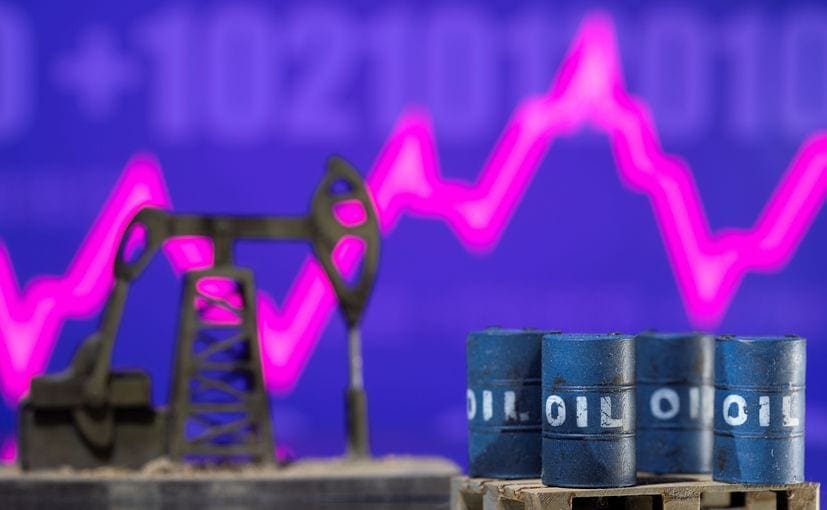
Oil prices rose about 4 per cent on Monday, extending gains as OPEC+ members agreed to a small production cut to bolster prices.
Brent crude futures for November delivery rose $3.53 to $96.55 a barrel, up 3.8 per cent. US West Texas Intermediate crude was up $3.08, or 3.6 per cent, at $89.98 after a 0.3% gain in the previous session. US markets are closed for a public holiday on Monday.
The Organization of the Petroleum Exporting Countries (OPEC) and its allies, a group known as OPEC+, will reduce output for October by 100,000 barrels per day (bpd), amounting to only 0.1 per cent of global demand, and also agreed they could meet any time to adjust production before the next scheduled meeting on October 5.
"It's the symbolic message the group wants to send to the markets more so than anything," said Oanda analyst Craig Erlam, adding that the 100,000 bpd raise last month by OPEC+ was not seen as a big deal.
"What we've probably seen from the markets was pricing in most of the worst-case scenario," Erlam added.
Top OPEC producer Saudi Arabia last month flagged the possibility of output cuts to address what it sees as exaggerated oil price declines.
Russia, the world's second-largest oil producer and a key OPEC+ member, does not support a production cut at this time and OPEC+ is likely to decide to keep output steady, the Wall Street Journal reported on Sunday, citing unnamed sources.
"The bigger picture is that OPEC+ is producing well below its output target and this looks unlikely to change given that Angola and Nigeria, in particular, appear unable to return to pre-pandemic levels of production," Caroline Bain, chief commodities economist at Capital Economics, said.
Oil prices have fallen in the past three months from multi-year highs hit in March, pressured by concerns that interest rate increases and COVID-19 curbs in parts of China could slow global economic growth and dent oil demand.
Lockdown measures in China's southern technology hub of Shenzhen eased on Monday as new infections showed signs of stabilizing though the city remains on high vigilance.
Meanwhile, talks to revive the West's 2015 nuclear deal with Iran, potentially providing a supply boost from Iranian crude's returning to the market, have hit a new snag. The White House on Friday rejected Iran's call for a deal to be linked with closure of investigations by the UN nuclear watchdog, a Western diplomat said.
Use of oil in power generation is also expected to pick up, analysts said, as Russia's state-controlled Gazprom on Friday said it would stop pumping gas via the Nord Stream 1 pipeline due to a fault.
The International Energy Agency last month raised its oil demand forecast for the year, partly because it expects gas-to-oil switching in some countries due to record natural gas and electricity prices.

-
Unhedged Position: Can India See An Indonesia-Style Time Correction?

The Nifty is trading below levels it first clocked in 2024. Is there, then, as I have suggested in the headline, potential that the current time correction drags on painfully for the next three-five, even ten years?
-
Navigating Friction And Energy Realities: An Analysis Of Marco Rubio's October Visit To India
Occurring at a critical juncture marked by stalled trade negotiations and escalating geopolitical pressures over global energy supplies, the visit offers a profound window into modern US-India relations.
-
India Exports Capital. Why Not Export Trusteeship?
The big question, then, is whether India can build an institution that global borrowers, investors, banks, and lawyers can trust, even without an Indian connection.
-
France's Economy & Politics Are In Crisis | The Reason Why
Let's look at how the French economy and politics evolved under Nicolas Sarkozy, Franois Hollande and Emmanuel Macron.
-
You May Inherit The Business. You Must Earn Its Credibility.
Succession tests the founder's ability to share authority as much as it tests the next generation's readiness to assume it.
-
Signing Deals Is One Thing; Making Them Work Is Another | The Week In Whys
Sometimes, things don't turn out as planned. Indian companies have lost some bids to rivals, some projects won't produce until 2030.
-
FOMC Wall, PERM Suspension, Hospital Stocks | Talking Points This Week
A PERM suspension would directly affect green-card sponsorship rather than H-1B visas, so the near-term earnings impact could remain relatively limited. The key question is whether this marks a new phase in US scrutiny of Indian IT.
-
Everything, Everywhere, All At Once: Dalal Street's Week To Forget | Joining The Dots
Visa curbs, a Starlink spat and cancer drug caps: what connects this week's shocks for Indian markets
-
India Is Going Abroad For Critical Minerals. But It May Take Years To Pay Off | The Reason Why
Although India's steps are in the right direction, they remain modest compared with India's growing dependence.
-
When Everyone Has AI, What Gives You An Edge?
India's young workforce is entering an uncertain world of work where powerful AI tools are becoming widely accessible. The advantage will belong to those who combine deep expertise with digital fluency, and the distinctly human capabilities that technology cannot manufacture.









