Crude Prices Fall Below $85 Per Barrel For First Time Since January
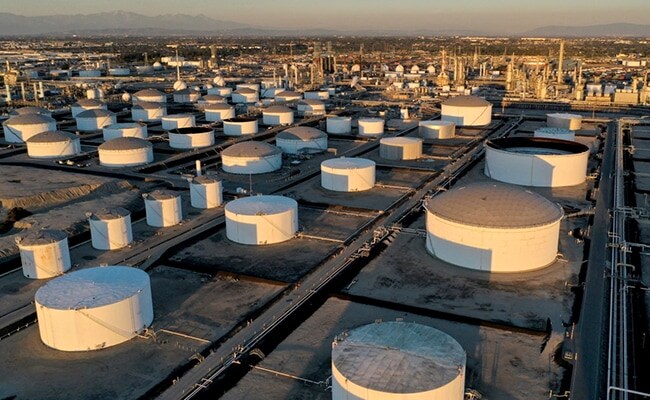
Oil prices fell for a second day on Monday on fears of lower fuel demand from an expected global recession sparked by rising worldwide interest rates and as a surging U.S. dollar limits the ability of non-dollar consumers to purchase crude.
Brent crude futures for November settlement slipped $1.35, or 1.57%, to $84.80 a barrel at 0640 GMT. The contract fell to as low at $84.51, the lowest since Jan. 14.
U.S. West Texas Intermediate (WTI) crude futures for November delivery dropped $1.15, or 1.46%, to $77.59 a barrel. WTI declined to as low as $77.21, the lowest since Jan. 6.
Both contracts slumped around 5% on Friday.
The dollar index that measures the greenback against a basket of major currencies climbed to a 20-year high on Monday.
A stronger greenback tends to curtail demand for dollar-denominated oil since buyers using other currencies must spend more to buy crude.
Central banks in numerous oil-consuming countries, including the United States, the world's biggest crude user, have raised interest rates to fight surging inflation which has led to concerns the tightening could trigger an economic slowdown.
"A backdrop of global monetary policy tightening by the key central banks to quell elevated inflation, and a splendid run-up in the greenback towards more than two-decade highs has raised concerns about an economic slowdown and is acting as a key headwind for crude prices," said Sugandha Sachdeva, vice president of commodity research at Religare Broking.
Sachdeva expects WTI prices could find a floor at $75 a barrel, while for Brent $80 will act as a cushion.
The disruptions in the oil market from the Russia-Ukraine war, with European Union sanctions banning Russian crude set to start in December, has lent some support to prices.
The chief executive officer of energy trader Vitol, Russell Hardy, said that fuel shipments are being affected with Russian oil products expected to flow to Asia and the Middle East while supplies from their go to Europe.
Additionally, Hardy told an oil conference in Singapore that more than a million barrels per day (bpd) of U.S. crude is expected to go to Europe to fill the gap in Russian supplies.
The head of Colombian state energy company Ecopetrol said at the same conference that it has been selling more oil to Europe, replacing Russian supplies, while it sees growing competition for market share in Asia.
Attention is turning to what the Organization of the Petroleum Exporting Countries (OPEC) and allies led by Russia, together called OPEC+, may do when they meet on Oct. 5, after agreeing to cut output modestly at their last meeting.
But, since OPEC+ is producing well below its targeted output, any announced cut may not have much impact on supply.
Data last week showed OPEC+ missed its target by 3.58 million bpd in August, a bigger shortfall than in July.
(Except for the headline, this story has not been edited by NDTV staff and is published from a syndicated feed.)

-
Medicine Pricing: Where Must Profit Stop?

India must confront excessive margins, hidden incentives and regulatory gaps that threaten the integrity of medicine.
-
Why Amazon And Flipkart Are Struggling To Beat Meesho In India's Smaller Cities
With 274 million users and lowest-cost logistics, Meesho is defending its value commerce crown against giants like Amazon and Flipkart.
-
High US Salaries, No Green Card Certainty: The Financial Calculation Facing Indian H-1B Families
The suspension of PERM processing at eight technology employers does not cancel existing H-1B visas. What it does is force a question many Indian families have been avoiding: is the US salary worth tying your career and family plans to one employer?
-
Swiggy vs Eternal: Food Delivery's Two Rivals Are No Longer In The Same Race
Eternal is building a private AI assistant, dark.ai. Swiggy is still working out how to make Instamart pay, with an operating loss of Rs 895 crore in the July-September quarter while Blinkit stayed profitable.
-
Where You Live Shapes How You Get To Work | The Reason Why
Two-wheelers are the most popular way to get to work in India, accounting for nearly 43% of workplace commutes.
-
Unhedged Position: Can India See An Indonesia-Style Time Correction?
The Nifty is trading below levels it first clocked in 2024. Is there, then, as I have suggested in the headline, potential that the current time correction drags on painfully for the next three-five, even ten years?
-
Navigating Friction And Energy Realities: An Analysis Of Marco Rubio's October Visit To India
Occurring at a critical juncture marked by stalled trade negotiations and escalating geopolitical pressures over global energy supplies, the visit offers a profound window into modern US-India relations.
-
India Exports Capital. Why Not Export Trusteeship?
The big question, then, is whether India can build an institution that global borrowers, investors, banks, and lawyers can trust, even without an Indian connection.
-
France's Economy & Politics Are In Crisis | The Reason Why
Let's look at how the French economy and politics evolved under Nicolas Sarkozy, Franois Hollande and Emmanuel Macron.
-
You May Inherit The Business. You Must Earn Its Credibility.
Succession tests the founder's ability to share authority as much as it tests the next generation's readiness to assume it.










