Crude Prices Climb Further To Near $132, After Russian Oil Ban
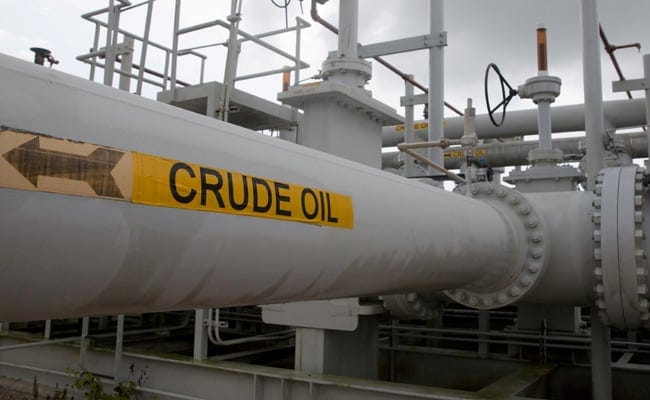
Crude oil prices climbed about 3 per cent early on Wednesday to near $132 per barrel, after rising around 4 per cent on Tuesday driven by the United States banning Russian oil and other energy imports over Moscow's invasion of Ukraine.
Global benchmark Brent was last trading at near $132 per barrel, up about 3 per cent on the day but still off a peak of $139.13 touched on Monday.
The oil shock by nature is an accruing one, not a one-off, and the potential for the market to hit $150 before returning to $100 is easier for investors to digest," Stephen Innes, managing partner at SPI Asset Management, told Reuters.
"Putting in force sanctions without first developing surrogate supply contingencies risks Brent crude (going) much higher," added Mr. Innes.
On Tuesday, Brent crude rose to an intra-day high of $131.27 a barrel before settling at $127.98 a barrel, 3.9 per cent higher, while US crude futures settled at $123.70 a barrel, a 3.6 per cent increase.
"Crude oil showed very high volatility on Tuesday after the US ban on Russian oil and gas imports. Russia exports 7-8 million barrels per day of crude and fuel to the global markets, and banning Russian oil and gas could create supply crunch in already tight supplied markets," said Rahul Kalantri, Vice President Commodities, Mehta Equities Ltd.
"We expect crude oil prices to remain volatile in today's session ahead of the US EIA weekly inventory report," he added.
Prices for Brent crude have surged more than 30 per cent since Russia invaded Ukraine on February 24, and the US and other countries imposed a raft of sanctions. Russian oil and gas exports were already being shunned before the ban as traders avoided running afoul of future sanctions.
The disruption could ripple through other energy markets, as Russian oil and products are used to refine into other goods and add more volatility in the markets, stoking fears of rising inflation.
"We are at the beginning of that shockwave in energy markets," Roger Diwan, vice president of financial services at S&P Global, told Reuters.
After the sanctions announcement, US Energy Secretary Jennifer Granholm said that allies were not under pressure to ban Russian oil.
Solita Marcelli, chief investment officer in the Americas for UBS's wealth management arm, told Reuters the increase in oil prices over the past week - the second-biggest jump in 30 years - is likely to stick, causing continued market volatility.
"The Russia-Ukraine war has driven oil prices up faster than we previously expected, but we continue to see a tight supply-demand balance for crude oil globally, even if the hostilities end and the geopolitical risk premium attached to crude declines," Ms Marcelli said.

-
Navigating Energy Crossroads: S Jaishankar's Call For Diversified Supply Chains At G20 Ministerial Meeting

As geopolitical fault lines continue to test maritime trade routes and commodity flows, Jaishankar's message remains pertinent: true economic resilience requires open markets, protected transit lines, and a genuine commitment to multilateral cooperation rather than coercion.
-
Indians Are Travelling, But Not Every Journey Is A Holiday | The Week In Whys
Pilgrims, patients and working women are the real travellers, and the system hasn't quite caught up with them.
-
Getting To Work Costs Women More | The Reason Why
It is not just about women paying more than men. It is about women paying much more in cities than in villages.
-
AI Bias In Investing Cannot Be Eliminated, But It Can Be Governed
Framing is a particularly important example as identical financial information presented in terms of gains rather than losses can lead an LLM to reach a different assessment.
-
Joining The Dots | Dark Skies, Steady Diya: Why Hope Holds This Diwali
With war, a weak rupee and foreign outflows weighing on sentiment, policymakers at the NDTV World Summit and market veterans at NDTV Profit Ignite: Diwali Edition offered the same advice: stay invested and filter out the noise.
-
The Curious Case of Equitas Small Finance Bank And A CEO Who Quit For Stock
PN Vasudevan believes persistent investor concerns over a perceived conflict of interest had become a governance overhang on Equitas Small Finance Bank's stock, even as the lender improved profitability and asset quality.
-
Talking Points This Week: AI Cash Burn, A Tiger Comeback And An India That Still Finds Its Own Path
India is not immune to higher oil or tighter global liquidity, yet its earnings base is broader, its domestic policy levers are still available.
-
Foreign Investors Own Half Of HDFC Bank and ICICI Bank. An LTCG Cut Could Matter Most Here
Foreign portfolio investors have US$115 billion parked in HDFC Bank, ICICI Bank. If the government cuts long-term capital gains tax, Jefferies says returning foreign money could land here first.
-
'Never Seen This Level Of Negativity': Sandeep Tandon Says The Next Rally May Be Closer Than You Think
Veteran investor Sandeep Tandon says foreign selling is easing, large-caps are due a comeback and mid-caps are crowded, while he turns positive on gold, power and pharma this Diwali.










