Oil Near 2019 Highs After US Ends Iran Sanction Exemptions
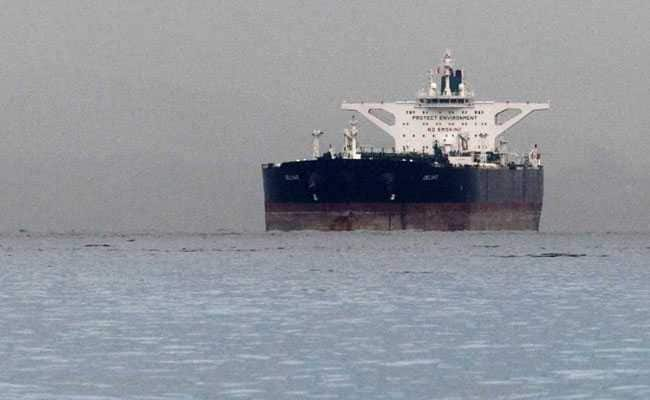
International crude oil prices were near 2019 highs on Tuesday after Washington announced all Iran sanction waivers would end by May, pressuring importers to stop buying from Tehran.
Brent crude futures were at $74.40 per barrel at 0239 GMT (8:09 am in India), up 0.5 per cent from their last close and not far off a 2019 peak of $74.52 reached on Monday.
US West Texas Intermediate (WTI) crude futures hit their highest level since October 2018 at $65.95 per barrel before edging back to $65.89 by 0239 GMT, which was still up 0.5 per cent from their last settlement.
The United States on Monday demanded that buyers of Iranian oil stop purchases by May 1 or face sanctions, ending six months of waivers which allowed Iran's eight biggest buyers, most of them in Asia, to continue importing limited volumes.
Before the reimposition of sanctions last year, Iran was the fourth-largest producer among the Organization of the Petroleum Exporting Countries (OPEC) at almost 3 million barrels per day (bpd), but April exports have shrunk well below 1 million bpd, according to ship tracking and analyst data in Refinitiv.
Barclay's bank said in a note following the announcement that the decision took many market participants by surprise and that the move would "lead to a significant tightening of oil markets".
The British bank added that Washington's target to cut Iran oil exports to zero posed a "material upside risk to our current $70 per barrel average price forecast for Brent this year, compared with the year-to-date average of $65 per barrel".
ANZ bank said in a note on Tuesday that "the decision is likely to worsen the ongoing supply woes being felt with Venezuelan sanctions, the OPEC supply cut, and intensifying conflict in Libya".
The move to tighten Iran sanctions comes amid other sanctions Washington has placed on Venezuela's oil exports and also as producer club OPEC has led supply cuts since the start of the year aimed at tightening global oil markets and propping up crude prices.
Ellen Wald, non-resident senior fellow at the Global Energy Center of the Atlantic Council, said the United States "seem to expect" Saudi Arabia and the United Arab Emirates to replace the Iranian oil, but she added "that this is not necessarily the way Saudi Arabia sees it".
Saudi Arabia is the world's biggest exporter of crude oil and OPEC's de-facto leader. The group is set to meet in June to discuss its output policy.
"Should OPEC decide to end their supply cut programme going into the second half of the year, this could limit oil's upside in the coming months," said Lukman Otunuga, analyst at futures brokerage FXTM.
Meanwhile, the Atlantic Council said the US move would hurt Iranian citizens.
"We're going to see their currency collapse more, more unemployment, more inflation," said Barbara Slavin, director for the Future of Iran Initiative at the Atlantic Council, adding that the US sanctions were "not going to bring Iran back to the (nuclear) negotiating table".

-
Talking Points This Week: Tech Nerves, FII Buying, And A Faraway Banking Shock

The global markets are not shining this Diwali. The exception in the large markets is, India.
-
Midterm Rally Lasted A Day. The Hard Reality Of A Divided US May Last Two Years | Opinion
Between a contested AI boom, a debt ceiling that arrives in 2027 and a president with every incentive to act alone, the next two years may prove more volatile than the first day's rally suggests.
-
Blue Wave Will Derail the AI Trade but Won't Dismantle the AI Era | Unhedged Position
The Democrats' sweep of the US Congress will see politics collide with economic forces both over the long and short term.
-
It's Time To Take The GST Council's Bet On Trust Global
Payment records can prove India's services exports, and clear, proportionate rules can bring foreign digital sellers into the tax net.
-
Opinion | India at 38: From Innovation Overperformer to Innovation Powerhouse
India now has 453 VC-backed deep science startups, 18 of them late-stage, after 117 percent growth since 2020. Laurus Labs, at USD 9.3 billion, is the most valuable deep science company in any middle-income economy outside China.
-
Navigating Energy Crossroads: S Jaishankar's Call For Diversified Supply Chains At G20 Ministerial Meeting
As geopolitical fault lines continue to test maritime trade routes and commodity flows, Jaishankar's message remains pertinent: true economic resilience requires open markets, protected transit lines, and a genuine commitment to multilateral cooperation rather than coercion.
-
Indians Are Travelling, But Not Every Journey Is A Holiday | The Week In Whys
Pilgrims, patients and working women are the real travellers, and the system hasn't quite caught up with them.
-
Getting To Work Costs Women More | The Reason Why
It is not just about women paying more than men. It is about women paying much more in cities than in villages.
-
AI Bias In Investing Cannot Be Eliminated, But It Can Be Governed
Framing is a particularly important example as identical financial information presented in terms of gains rather than losses can lead an LLM to reach a different assessment.









