Covid Shock To Consumption Severe, Demand Recovery Will Take Time: RBI
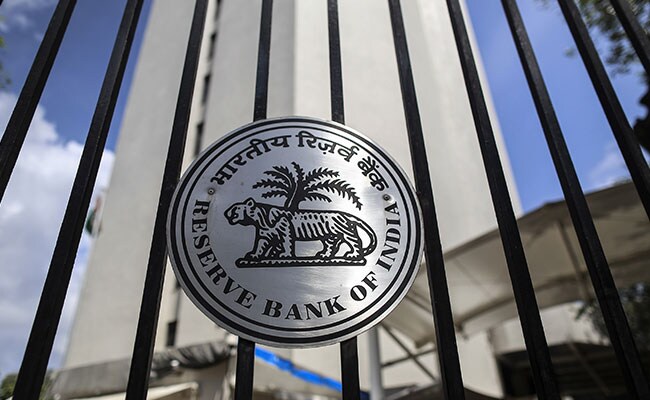
Reserve Bank of India said demand in the economy is likely to take more time to mend in the absence of greater fiscal support, even as the government is constrained in its ability to provide more stimulus. "An assessment of aggregate demand during the year so far suggests that the shock to consumption is severe," the Reserve Bank of India said in its annual report for the year ended June. "It will take quite some time to mend and regain the pre-Covid-19 momentum."
Private consumption has lost its discretionary elements across the board, the central bank said, while noting that transport services, hospitality, recreation and cultural activities were particularly affected in Asia's third-largest economy -- where consumption accounts for some 60 per cent of gross domestic product.
While India announced Rs 21 trillion ($282 billion) worth of measures to support the economy through the virus crisis, most of the steps were focused on providing credit support rather than budgetary assistance to boost demand in the near term.
Both the central government as well as the states have much "less fiscal space to deal with Covid-19 than during the" global financial crisis, according to the RBI. "The future path of fiscal policy is likely to be heavily conditioned by the large overhang of debt and contingent liabilities incurred during the pandemic," it added.
Economists in a Bloomberg survey expect the central government's budget gap to soar to 7.2 per cent of gross domestic product, more than double the target pegged by Finance Minister Nirmala Sitharaman in February. And along with states, the consolidated fiscal gap is likely to cross 10 per cent of GDP, according to economists.
Turning Positive
While the central bank refrained from giving out economic growth projections in the annual report as is usual, it cited the International Monetary Fund and OECD's forecasts. The IMF sees the Indian economy contracting 4.5 per cent in the fiscal year to March 2021, while the OECD forecast a 7.3 per cent decline in the event of a fresh wave of virus cases among the population.
The RBI said high-frequency indicators have so far pointed to a "retrenchment in activity that is unprecedented in history." Moreover, resumption of activity in May and June after the lockdown was eased in parts of the country appeared to have lost momentum in July and August, mainly due to re-imposition of stricter curbs by many states. That suggests that contraction in economic activity will prolong into the July to September quarter, the RBI said.
India's output gap may have widened to as much as -12 per cent of its potential in April when the economy ground to a halt under one of the world's tightest lockdowns to contain the virus, according to estimates by RBI staff. As a result, the April-June period is likely to see the economy shrinking at its fastest pace, before gradually recovering and turning positive in the January-to-March quarter.

-
High US Salaries, No Green Card Certainty: The Financial Calculation Facing Indian H-1B Families

The suspension of PERM processing at eight technology employers does not cancel existing H-1B visas. What it does is force a question many Indian families have been avoiding: is the US salary worth tying your career and family plans to one employer?
-
Unhedged Position: Can India See An Indonesia-Style Time Correction?
The Nifty is trading below levels it first clocked in 2024. Is there, then, as I have suggested in the headline, potential that the current time correction drags on painfully for the next three-five, even ten years?
-
Navigating Friction And Energy Realities: An Analysis Of Marco Rubio's October Visit To India
Occurring at a critical juncture marked by stalled trade negotiations and escalating geopolitical pressures over global energy supplies, the visit offers a profound window into modern US-India relations.
-
India Exports Capital. Why Not Export Trusteeship?
The big question, then, is whether India can build an institution that global borrowers, investors, banks, and lawyers can trust, even without an Indian connection.
-
France's Economy & Politics Are In Crisis | The Reason Why
Let's look at how the French economy and politics evolved under Nicolas Sarkozy, Franois Hollande and Emmanuel Macron.
-
You May Inherit The Business. You Must Earn Its Credibility.
Succession tests the founder's ability to share authority as much as it tests the next generation's readiness to assume it.
-
Signing Deals Is One Thing; Making Them Work Is Another | The Week In Whys
Sometimes, things don't turn out as planned. Indian companies have lost some bids to rivals, some projects won't produce until 2030.
-
FOMC Wall, PERM Suspension, Hospital Stocks | Talking Points This Week
A PERM suspension would directly affect green-card sponsorship rather than H-1B visas, so the near-term earnings impact could remain relatively limited. The key question is whether this marks a new phase in US scrutiny of Indian IT.
-
Everything, Everywhere, All At Once: Dalal Street's Week To Forget | Joining The Dots
Visa curbs, a Starlink spat and cancer drug caps: what connects this week's shocks for Indian markets
-
India Is Going Abroad For Critical Minerals. But It May Take Years To Pay Off | The Reason Why
Although India's steps are in the right direction, they remain modest compared with India's growing dependence.









