Covid Pandemic: Army Engineers Find WayTo Convert Oxygen Into Low Pressure Gas
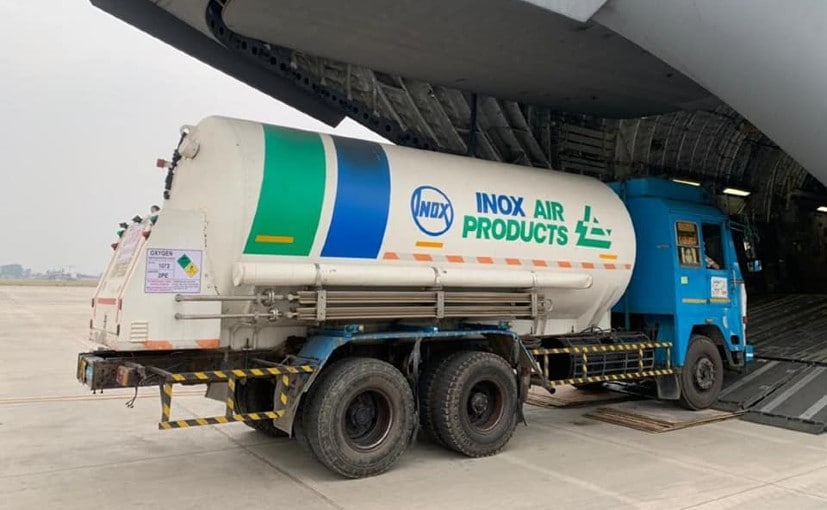
To resolve the issue of transporting liquid oxygen in huge cryogenic tanks, a team of Indian Army engineers have accomplished the task of converting it into low pressure oxygen gas and ensuring its availability at patients' beds, thus providing immediate relief to Covid affected people.
Under the guidance of Major General Sanjay Rihani, the engineers team put together for early execution of an innovation to ensure that oxygen is made available without the use of gas cylinders, thus obviating the need to refill them frequently, Defence Ministry sources said.
Over a period of seven days, the team in-direct consultation and material support from CSIR and DRDO, put together a working solution using vaporisers and liquid oxygen cylinders. In order to ensure continuous conversion of liquid oxygen into oxygen gas at the requisite pressure and temperature at the Covid bed, the team used a self pressuring liquid oxygen cylinder of small capacity (250 litres) and processed it through a specially designed vaporiser and directly usable outlet pressure with requisite leak proof pipeline and pressure valves.
A prototype with two liquid cylinders capable of feeding oxygen gas for 40 beds for a period of two to three days has been made functional at Base Hospital, in Delhi Cantonment. The team has also tested a mobile version to cater for typical shifting requirements in hospitals.
The system is economically viable and is safe to operate since it obviates high gas pressure in the cylinders and does not require any power supply to operate. The system is capable of replication in a quick time frame.

-
High US Salaries, No Green Card Certainty: The Financial Calculation Facing Indian H-1B Families

The suspension of PERM processing at eight technology employers does not cancel existing H-1B visas. What it does is force a question many Indian families have been avoiding: is the US salary worth tying your career and family plans to one employer?
-
Swiggy vs Eternal: Food Delivery's Two Rivals Are No Longer In The Same Race
Eternal is building a private AI assistant, dark.ai. Swiggy is still working out how to make Instamart pay, with an operating loss of Rs 895 crore in the July-September quarter while Blinkit stayed profitable.
-
Where You Live Shapes How You Get To Work | The Reason Why
Two-wheelers are the most popular way to get to work in India, accounting for nearly 43% of workplace commutes.
-
Unhedged Position: Can India See An Indonesia-Style Time Correction?
The Nifty is trading below levels it first clocked in 2024. Is there, then, as I have suggested in the headline, potential that the current time correction drags on painfully for the next three-five, even ten years?
-
Navigating Friction And Energy Realities: An Analysis Of Marco Rubio's October Visit To India
Occurring at a critical juncture marked by stalled trade negotiations and escalating geopolitical pressures over global energy supplies, the visit offers a profound window into modern US-India relations.
-
India Exports Capital. Why Not Export Trusteeship?
The big question, then, is whether India can build an institution that global borrowers, investors, banks, and lawyers can trust, even without an Indian connection.
-
France's Economy & Politics Are In Crisis | The Reason Why
Let's look at how the French economy and politics evolved under Nicolas Sarkozy, Franois Hollande and Emmanuel Macron.
-
You May Inherit The Business. You Must Earn Its Credibility.
Succession tests the founder's ability to share authority as much as it tests the next generation's readiness to assume it.
-
Signing Deals Is One Thing; Making Them Work Is Another | The Week In Whys
Sometimes, things don't turn out as planned. Indian companies have lost some bids to rivals, some projects won't produce until 2030.
-
FOMC Wall, PERM Suspension, Hospital Stocks | Talking Points This Week
A PERM suspension would directly affect green-card sponsorship rather than H-1B visas, so the near-term earnings impact could remain relatively limited. The key question is whether this marks a new phase in US scrutiny of Indian IT.









