Covid-19: Should Students Defer Their Plans To Study Abroad?
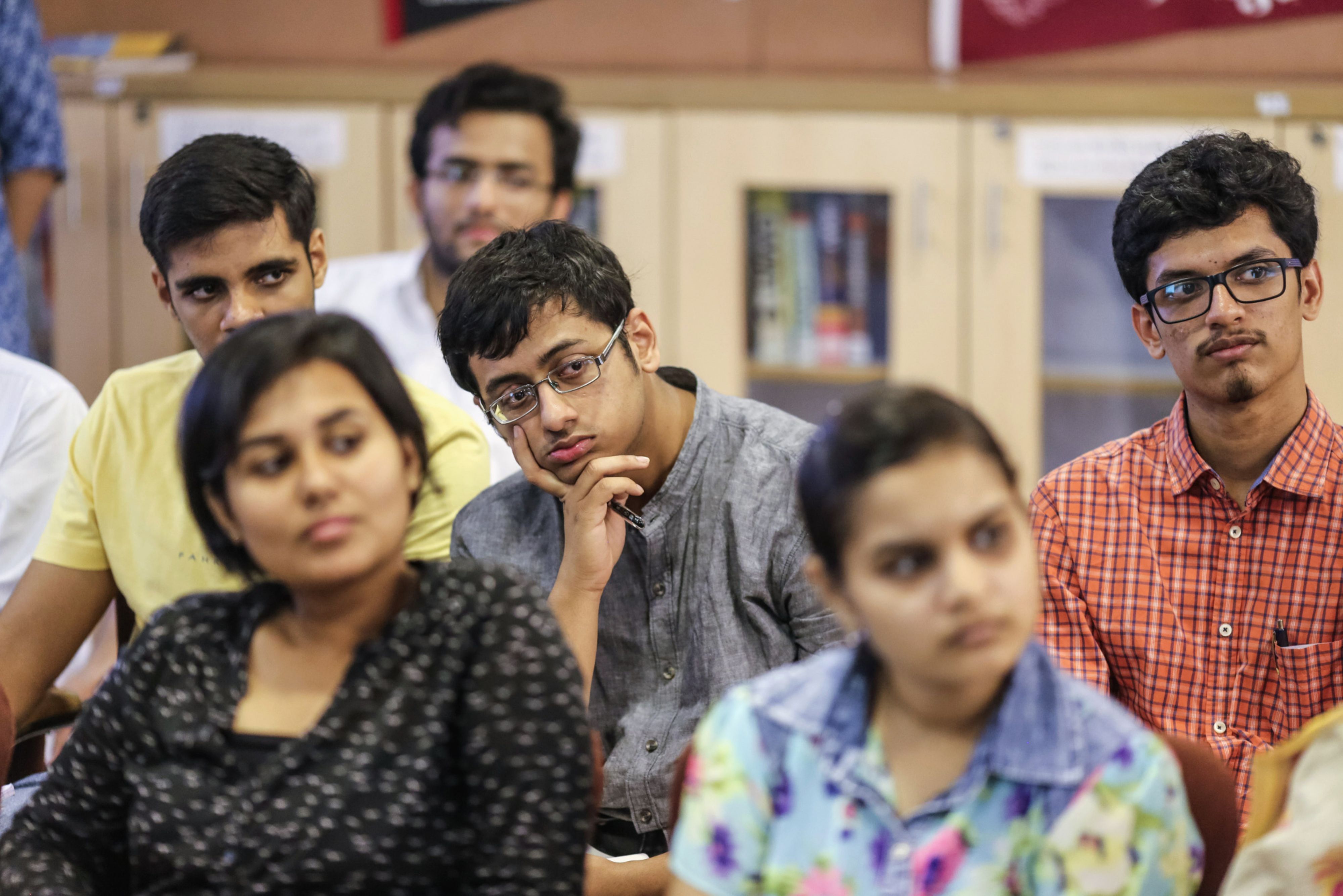
As of last year, there were nearly 8 lakh Indian students enrolled in foreign universities, according to data released by the Ministry of External Affairs. The popular destinations include the U.S., the U.K., Canada, Australia and U.A.E. But Covid-19 has interrupted ongoing academic sessions across the world, with students forced to vacate college campuses and take classes online.
As an outcome of that, more than 50 colleges in the U.S. are facing a class-action. Students are demanding a refund of their tuition fees, on grounds that universities are offering a limited online experience presented by Zoom, devoid of face-to-face faculty and peer interaction, separated from programme resources, and barred from facilities vital to study.
"Initially, Indian students at these universities who we interacted with were very angry as well," Vibha Kagzi, chief executive officer and founder of ReachIvy, told BloombergQuint. "But as we speak to students now, they understand this isn't a phenomenon universities have propagated, encouraged or are a party to," she said.
Universities are also taking the brunt of the situation, they are going to take huge financial losses. So students are now getting into a phase where they are saying—okay, of course this is unfair and of course this is not okay that I'm doing my classes online and I'm paying full tuition, but what's my next best alternative? Am I not going to get my Stanford undergraduate degree?Vibha Kagzi, CEO & Founder, ReachIvy
As students come to terms with the restricted experience, universities are doing their bit by refraining from annual tuition fee hikes, refunding balance housing fees, paying PhD students who were employed on campus, etc.
And yet, despite the grudging acceptance of an online experience, there are challenges.
The most obvious ones for Indian students include navigating different time zones as classes have moved online, missing out on the ‘campus experience' — of being with their cohort and participating in extra-curriculars, said Kavita Singh, chief executive officer of FutureWorks Consulting. “A lot of students have come to us with the question—I was supposed to do an internship over the summer, and ones in their fourth year of an undergraduate course are asking, how should we build our resumes for a job?”
We're working with students on these challenges—coaching them to do research work in fields they're hoping to get jobs in. If you want to pursue data analysis or policy, it would be a good idea to attach yourself to an organisation that is battling Covid-19—most of them will require volunteers.Kavita Singh, CEO, FutureWorks Consulting

Should Students Join This Year?
The pandemic has also derailed plans of those who were hoping to join in the fall semester.
MIT has announced an early start to the fall session—around Sept. 1, end any in-person instruction before Thanksgiving, and finish the term remotely. California State University has announced it will rely primarily on remote instruction in the semester starting August. Online will need to be viewed as the default teaching option for 2020-21, Stanford University has said. Cambridge and Oxford have decided to suspend all mass lectures for the next academic year, and restrict students to small groups for face-to-face teaching; and if government's guidance changes, classes will move online.
But most universities have refused to reduce tuition fees or allow deferrals. For instance, Oxford University has said “generic reference to the coronavirus pandemic will not be considered an acceptable ground for deferral”.

The reaction of universities has been dispersed based on their geographies, Singh said. The U.S. has the highest number of cases, and the highest uncertainty is also emerging from there, she said.
For instance, Kagzi said, "we have a student who has to start at Harvard this fall. Interestingly, they still have no clarity on whether they can go back to campus." They are also proposing a shortlist of sorts—like a lottery—of students with confirmed admission. Some will be picked and invited to come to campus but there's no clarity on the basis of that lottery and who they're going to select etc, she said.
The worst case scenario is that you basically take your classes online which again means paying a full tuition and staying at home. This means missing the entire experience of the first semester as a freshman—leaving home for the first time, meeting your cohort, the excitement of orientation, etc. Unfortunately, that may be the reality for most colleges in the U.S.Vibha Kagzi, CEO & Founder, ReachIvy
But on the other hand, Kagzi said, colleges in the U.K. like Oxford and Cambridge are telling students that they're expected to show up, go through a mandatory quarantine and start the academic year by following the public health guidelines. Singapore, too, is welcoming students on campus and they've put a lot of social-distancing norms in place—dividing residential areas in dormitories, restricting number of students in libraries.
If the situation changes, and universities are compelled to offer deferrals, the choice should be made based on the duration of course, Singh said.
If you're an undergraduate student and you're worried about going and the university is offering a one-semester deferral, it seems very prudent to take it. Such students, she explained, will then join in January. This may lead to a delay in graduation but at 18, students can afford it or even catch up by taking summer classes.
When it comes to two-year Masters' programmes, Singh said, some students who know will return to family businesses in India are looking at the present environment as a great opportunity. "They're saying 'we can use this downturn to step out, get that MBA and come back to add value to the family business'."
For one-year programmes, Kagzi said, deferral might be a prudent choice. In a one-year programme, if you're going to spend six months or maybe even the entire year from your home while paying full tuition, how much sense does that really make? So the math doesn't add up, she said.
For more on choice of favorable markets for higher education, promising courses, impact of visa policy changes, watch the full conversation here.

-
Opinion | India at 38: From Innovation Overperformer to Innovation Powerhouse

India now has 453 VC-backed deep science startups, 18 of them late-stage, after 117 percent growth since 2020. Laurus Labs, at USD 9.3 billion, is the most valuable deep science company in any middle-income economy outside China.
-
Navigating Energy Crossroads: S Jaishankar's Call For Diversified Supply Chains At G20 Ministerial Meeting
As geopolitical fault lines continue to test maritime trade routes and commodity flows, Jaishankar's message remains pertinent: true economic resilience requires open markets, protected transit lines, and a genuine commitment to multilateral cooperation rather than coercion.
-
Indians Are Travelling, But Not Every Journey Is A Holiday | The Week In Whys
Pilgrims, patients and working women are the real travellers, and the system hasn't quite caught up with them.
-
Getting To Work Costs Women More | The Reason Why
It is not just about women paying more than men. It is about women paying much more in cities than in villages.
-
AI Bias In Investing Cannot Be Eliminated, But It Can Be Governed
Framing is a particularly important example as identical financial information presented in terms of gains rather than losses can lead an LLM to reach a different assessment.
-
Joining The Dots | Dark Skies, Steady Diya: Why Hope Holds This Diwali
With war, a weak rupee and foreign outflows weighing on sentiment, policymakers at the NDTV World Summit and market veterans at NDTV Profit Ignite: Diwali Edition offered the same advice: stay invested and filter out the noise.
-
The Curious Case of Equitas Small Finance Bank And A CEO Who Quit For Stock
PN Vasudevan believes persistent investor concerns over a perceived conflict of interest had become a governance overhang on Equitas Small Finance Bank's stock, even as the lender improved profitability and asset quality.
-
Talking Points This Week: AI Cash Burn, A Tiger Comeback And An India That Still Finds Its Own Path
India is not immune to higher oil or tighter global liquidity, yet its earnings base is broader, its domestic policy levers are still available.
-
Foreign Investors Own Half Of HDFC Bank and ICICI Bank. An LTCG Cut Could Matter Most Here
Foreign portfolio investors have US$115 billion parked in HDFC Bank, ICICI Bank. If the government cuts long-term capital gains tax, Jefferies says returning foreign money could land here first.










