Covid-19 Could Be Biggest Tail Risk Event For Microfinance, Says RBI Paper
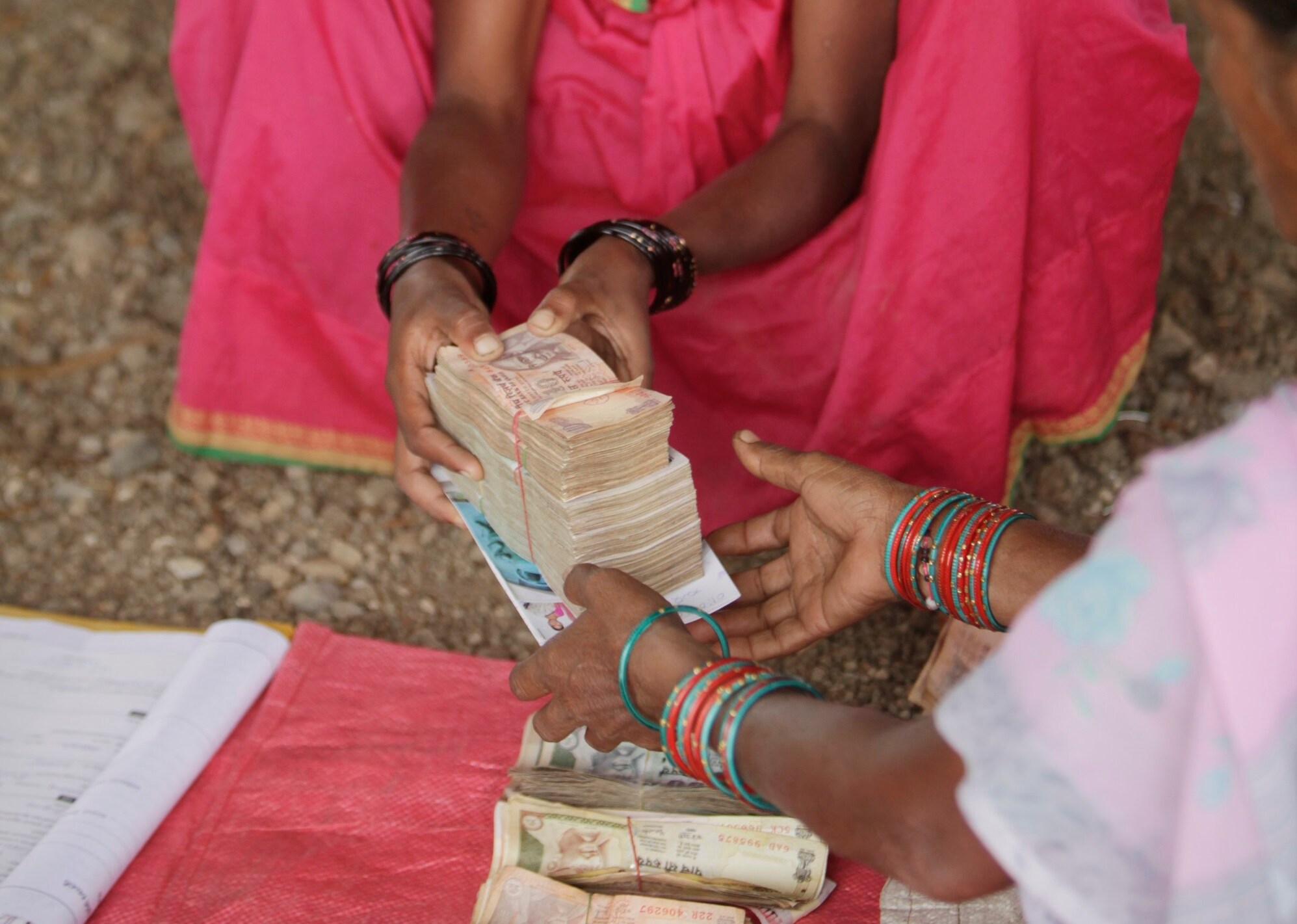
The coronavirus pandemic could prove to be “the biggest tail risk event for the microfinance sector in a long time”, cautioned an RBI paper released as part of the central bank's monthly bulletin.
Loan portfolios of non-banking micro finance institutions maybe particularly vulnerable to systemic risks posed by Covid-19, as these are largely unsecured in nature, said the paper titled “Microfinance: reaching out to the bottom of the pyramid,” authored by Snimardeep Singh of the RBI.
A large chunk of microfinance borrowers are made up of small traders, hawkers and daily wage labourers -- some of the worst hit employment categories amidst the pandemic. This category of employment accounted for about 32% of the total employment but it suffered 75% of the hit in April 2020, as per the paper.
Collection Efficiency
Disruptions caused by the pandemic have led to a steep drop in collection efficiencies, creating liquidity mismatches.
Collection efficiency is calculated as a sum of the prepayments, current and overdue collection divided by the current billing as per the pre-moratorium schedule
Collection efficiency of microfinance securitisation pools fell to 3% in April 2020. Thereon, it recovered to 21% in May 2020, and to 58% in June. It remained significantly lower than 83% recorded in March 2020.

Moreover, the pandemic is expected to create mismatches between inflows and outflows of these MFIs.
The paper considers two different stress scenarios: One assuming a 40% drop in loan collections; the second assuming a 80% drop in loan collections. In both cases, outflows are assumed to remain constant.
In the first scenario, the gap between inflows and outflows narrows but continues to remain positive across time periods. In the second scenario, the cumulative gap turns negative for upto 6-months and 1-year, indicating the need for additional funding at an aggregate level.

The structural liquidity profile of MFIs will be impacted due to several other reasons as well. These include problems in fund raising and rise in credit delinquencies due to Covid-19.
Smaller MFIs Worst Hit
While funding requirements would vary across individual NBFC-MFIs, depending their liquidity profile, they may find it tough to raise incremental funds for making fresh disbursements and meeting operational expenses, the paper said. Securitisation volumes are also expected to remain muted in the near term given the decreasing risk appetite of investors, it added.
Smaller NBFC-MFIs may bear the larger brunt of the liquidity challenges, as they largely depend on borrowings from other NBFCs. Further, they may find it tough to access market borrowings due to lower credit ratings, the paper said.
Recently announced government schemes may provide some relief as they are expected to benefit rural households, where a majority of NBFC-MFI loans are concentrated, according to the paper.
The central bank's liquidity measures and improved market financing conditions will also provide relief to NBFC-MFIs. Non-convertible debentures issues by NBFC-MFIs spiked to Rs 900 crore in June 2020, touching record highs.
Going forward, building capital buffers and managing liquidity would be crucial for MFIs in fortifying their balance sheets against Covid-19 led disruptions, the paper concluded.

-
High US Salaries, No Green Card Certainty: The Financial Calculation Facing Indian H-1B Families

The suspension of PERM processing at eight technology employers does not cancel existing H-1B visas. What it does is force a question many Indian families have been avoiding: is the US salary worth tying your career and family plans to one employer?
-
Unhedged Position: Can India See An Indonesia-Style Time Correction?
The Nifty is trading below levels it first clocked in 2024. Is there, then, as I have suggested in the headline, potential that the current time correction drags on painfully for the next three-five, even ten years?
-
Navigating Friction And Energy Realities: An Analysis Of Marco Rubio's October Visit To India
Occurring at a critical juncture marked by stalled trade negotiations and escalating geopolitical pressures over global energy supplies, the visit offers a profound window into modern US-India relations.
-
India Exports Capital. Why Not Export Trusteeship?
The big question, then, is whether India can build an institution that global borrowers, investors, banks, and lawyers can trust, even without an Indian connection.
-
France's Economy & Politics Are In Crisis | The Reason Why
Let's look at how the French economy and politics evolved under Nicolas Sarkozy, Franois Hollande and Emmanuel Macron.
-
You May Inherit The Business. You Must Earn Its Credibility.
Succession tests the founder's ability to share authority as much as it tests the next generation's readiness to assume it.
-
Signing Deals Is One Thing; Making Them Work Is Another | The Week In Whys
Sometimes, things don't turn out as planned. Indian companies have lost some bids to rivals, some projects won't produce until 2030.
-
FOMC Wall, PERM Suspension, Hospital Stocks | Talking Points This Week
A PERM suspension would directly affect green-card sponsorship rather than H-1B visas, so the near-term earnings impact could remain relatively limited. The key question is whether this marks a new phase in US scrutiny of Indian IT.
-
Everything, Everywhere, All At Once: Dalal Street's Week To Forget | Joining The Dots
Visa curbs, a Starlink spat and cancer drug caps: what connects this week's shocks for Indian markets
-
India Is Going Abroad For Critical Minerals. But It May Take Years To Pay Off | The Reason Why
Although India's steps are in the right direction, they remain modest compared with India's growing dependence.









