Court Vacations: Are They Justified?
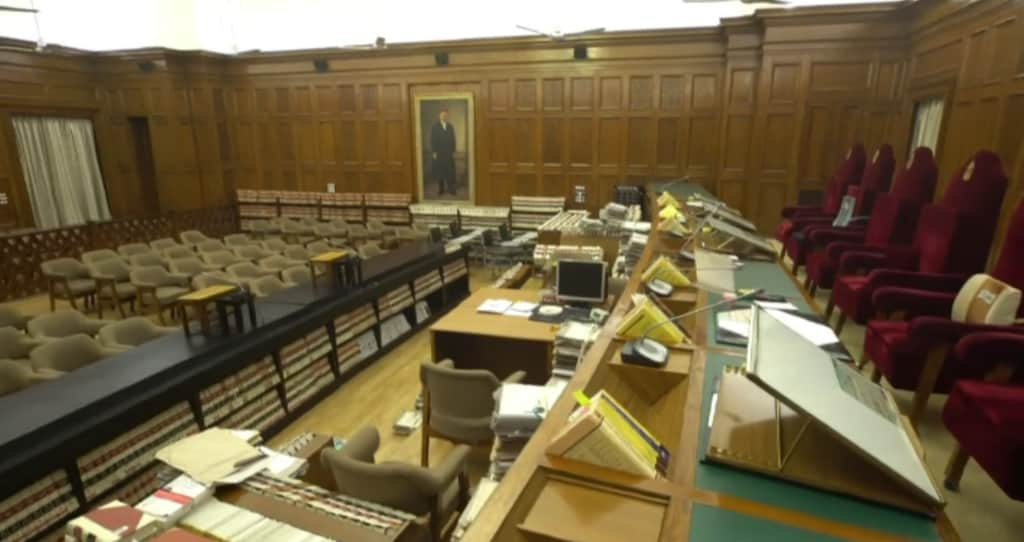
How much of a vacation do our judges need? This question comes up fairly frequently these days, particularly when there is a conversation about the delays in deciding cases and the pending 3 crore cases in our courts. There are many who believe that our courts take too many days off in a year, thereby contributing to the delays. In 2018, the Supreme Court is working on 193 days, the High Courts are working (on an average) for 210 days and the subordinate courts (on an average) for 245 days. Courts are closed for considerable periods during the summer, Christmas, Diwali, Holi, Dussehra, and Pongal (depending on the state they are located in). It is important to note however that the criminal courts in the subordinate judiciary are open on most working days in the year and do not take the same vacation as other courts.
As with any argument, there are many sides to this issue.
The Argument Against Long Breaks
Those who oppose the practice of long court vacations (particularly in the summer) believe that this is a colonial practice and should be stopped as we no longer have English judges who need to visit their homeland for a long period. They also point out that given the backlog of cases and the severe delays, courts should be working longer hours (and not lesser) to meet the needs of the country rather than continue with the practice of long breaks. This argument makes sense when we compare the courts with other institutions and professionals in society.

While the legislature does take long breaks, it does not have a daily transactional role like the judiciary. Further, no other working set of people, including doctors who can be compared to judges and lawyers professionally, take such a long break in our country. Even if we look at this issue from a strict systemic perspective, a large number of non-working days cannot be justified when litigants have to wait for years together to get relief from the courts. The judiciary cannot view their holidays as an entitlement when the system has become dysfunctional.
Why Some Favour The Vacations
Those in favour of continuing with the vacations argue that judges are overburdened on a daily basis and work extremely long hours. In the absence of sufficient breaks, judges will suffer a burnout. They further point out that many judges use the long breaks to write judgments that are pending and also catch up on research, which is essential for judges to maintain the quality of justice. There is no doubt that judges work long hours.
On an average, High Court and subordinate court judges have 60-70 cases listed before them each day. This is a large number by any yardstick.
The time they spend in court is generally only a subset of their working time. Judges spend evenings, nights, and weekends reading files, writing orders, reading other judgments, and laws. Further, subordinate court judges already work six days a week, unlike High Court and Supreme Court judges who work five days a week.
No Special Case For Long Break
In my view, there is really no overwhelming reason why the judiciary, particularly the High Courts and the Supreme Court should continue to take long vacations. Judges are no different from other professionals or working people when it comes to working hard. There is no special case to be made for a long break when compared to others in society who have an equally important role. Yes, the very nature of judicial work involves a lot of reading, research, writing, and rendering judgments. The system needs to ensure that judges have sufficient time to do their work in a proper fashion. Further, a judge who is responsible for deciding whether his fellow citizen goes to jail, cannot function under severe time and work pressure. She needs a clear and relaxed mind to make optimal decisions. Listing a large number of cases during work days and making judges work long hours is not the answer to this problem.
A better approach is to fix working conditions of the judge by determining their optimal workload each day and the total number of cases a judge can deal with at any given point of time so as to ensure that a judge is able to function properly and efficiently.
The answer is also not to shut down courts en masse for a couple of months a year. Taking these long breaks is clearly not helping the system in disposing cases. Whether it is helping judges' function better is an open question as we have no contrasting scenario to compare the present practice with.

As a society, we cannot have a dysfunctional judiciary. We need to do all we can to fix its working, including communicating with citizens that the institution cares for the interests of the citizens. Taking a long break when no other working institution does so does not give the message of an institution that is interested in reforming itself for the benefit of citizens. Rather, it indicates that the courts do not care for the citizens, but care for themselves.
We need to evolve a practice where the courts continue to function throughout the year, but individual judges get sufficient time off to ensure that they do not suffer a burnout. A likely solution is to ensure that vacations are taken in rotation so that a majority of judges are functioning at any given point during the year. This is also only possible if all the vacancies are filled regularly and promptly.
We need to ensure that the judiciary is not seen as an institution that is residing in an ivory tower divorced from the realities of the country.
The need of the hour is an efficient judiciary that is not only committed to meet the needs and interests of the citizens, but also communicates this commitment by modifying their practices to suit the needs of the country.
Harish Narasappa founding partner of the law firm, Samvad Partners, in Bengaluru, and the co-founder of Daksh Legal.
The views expressed here are those of the author and do not necessarily represent the views of Bloomberg Quint or its editorial team.

-
High US Salaries, No Green Card Certainty: The Financial Calculation Facing Indian H-1B Families

The suspension of PERM processing at eight technology employers does not cancel existing H-1B visas. What it does is force a question many Indian families have been avoiding: is the US salary worth tying your career and family plans to one employer?
-
Unhedged Position: Can India See An Indonesia-Style Time Correction?
The Nifty is trading below levels it first clocked in 2024. Is there, then, as I have suggested in the headline, potential that the current time correction drags on painfully for the next three-five, even ten years?
-
Navigating Friction And Energy Realities: An Analysis Of Marco Rubio's October Visit To India
Occurring at a critical juncture marked by stalled trade negotiations and escalating geopolitical pressures over global energy supplies, the visit offers a profound window into modern US-India relations.
-
India Exports Capital. Why Not Export Trusteeship?
The big question, then, is whether India can build an institution that global borrowers, investors, banks, and lawyers can trust, even without an Indian connection.
-
France's Economy & Politics Are In Crisis | The Reason Why
Let's look at how the French economy and politics evolved under Nicolas Sarkozy, Franois Hollande and Emmanuel Macron.
-
You May Inherit The Business. You Must Earn Its Credibility.
Succession tests the founder's ability to share authority as much as it tests the next generation's readiness to assume it.
-
Signing Deals Is One Thing; Making Them Work Is Another | The Week In Whys
Sometimes, things don't turn out as planned. Indian companies have lost some bids to rivals, some projects won't produce until 2030.
-
FOMC Wall, PERM Suspension, Hospital Stocks | Talking Points This Week
A PERM suspension would directly affect green-card sponsorship rather than H-1B visas, so the near-term earnings impact could remain relatively limited. The key question is whether this marks a new phase in US scrutiny of Indian IT.
-
Everything, Everywhere, All At Once: Dalal Street's Week To Forget | Joining The Dots
Visa curbs, a Starlink spat and cancer drug caps: what connects this week's shocks for Indian markets
-
India Is Going Abroad For Critical Minerals. But It May Take Years To Pay Off | The Reason Why
Although India's steps are in the right direction, they remain modest compared with India's growing dependence.









