Court Seeks Response Of RBI, Finance Ministry On Card Payment Surcharge
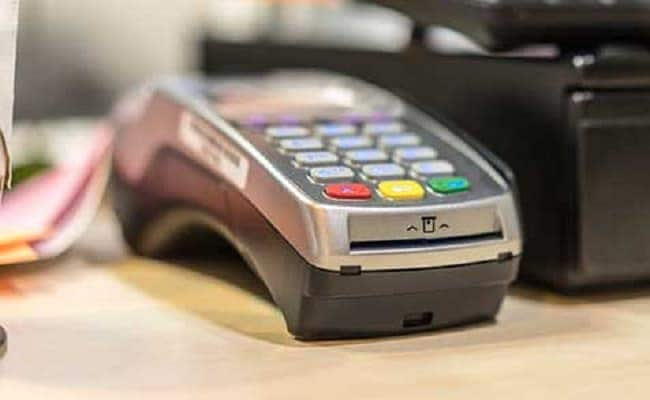
New Delhi: The Delhi High Court on Wednesday sought response of the Centre and the Reserve Bank of India (RBI) on a public interest litigation contending that the surcharge levied on credit and debit card transactions was "illegal" and "discriminatory".
A bench of Chief Justice G Rohini and Justice Sangita Dhingra Sehgal said that in August it had already directed the Ministry of Finance and Reserve Bank of India (RBI) to take a decision on the issue and inform the petitioner.
"The respondents (the ministry and the RBI) shall get instruction before the next date of hearing, January 4, 2017," the bench said.
The public interest litigation or PIL filed by Advocate Amit Sahni stated that Prime Minister Narendra Modi's decision to scrap currency notes with the denomination of Rs 500 and Rs 1,000 is "beneficiary while the stand of the government on the issue of waiving surcharge on all transactions made through credit/debit card is highly unfortunate".
"The issue raised in the present petition almost affects everyone, who operate bank accounts and the same is in the welfare of the nation at large as well," the plea said, adding, "Unlawful, unequal and arbitrary treatment is visible on the payment of petrol charges through credit and debit cards."
The petitioner said the ministry and the RBI are "responsible for making rules/guidelines and for monitoring banks across the country".
He urged the authorities to frame guidelines so as to prevent "unlawful" and "discriminatory" surcharge being levied on debit and credit card transactions.
The counsel mentioned in his PIL that levying surcharge is not only illegal and discriminatory but it also promotes circulation of black money in cash.
"The petitioner has noticed that illegal, unequal and arbitrary treatment is seen across the country on transactions being done through credit and debit cards by levying surcharge at the rate of 2.5 per cent or more, while such surcharge is not levied when the payment of such transaction is done by making cash payment in that regard...," the plea stated.
It further said India is one of the most cash-intensive economies in the world and there is an urgent need to incentivise credit or debit card transactions and dis-incentivise cash transactions.

-
Talking Points This Week: Tech Nerves, FII Buying, And A Faraway Banking Shock

The global markets are not shining this Diwali. The exception in the large markets is, India.
-
Blue Wave Will Derail the AI Trade but Won't Dismantle the AI Era | Unhedged Position
The Democrats' sweep of the US Congress will see politics collide with economic forces both over the long and short term.
-
It's Time To Take The GST Council's Bet On Trust Global
Payment records can prove India's services exports, and clear, proportionate rules can bring foreign digital sellers into the tax net.
-
Opinion | India at 38: From Innovation Overperformer to Innovation Powerhouse
India now has 453 VC-backed deep science startups, 18 of them late-stage, after 117 percent growth since 2020. Laurus Labs, at USD 9.3 billion, is the most valuable deep science company in any middle-income economy outside China.
-
Navigating Energy Crossroads: S Jaishankar's Call For Diversified Supply Chains At G20 Ministerial Meeting
As geopolitical fault lines continue to test maritime trade routes and commodity flows, Jaishankar's message remains pertinent: true economic resilience requires open markets, protected transit lines, and a genuine commitment to multilateral cooperation rather than coercion.
-
Indians Are Travelling, But Not Every Journey Is A Holiday | The Week In Whys
Pilgrims, patients and working women are the real travellers, and the system hasn't quite caught up with them.
-
Getting To Work Costs Women More | The Reason Why
It is not just about women paying more than men. It is about women paying much more in cities than in villages.
-
AI Bias In Investing Cannot Be Eliminated, But It Can Be Governed
Framing is a particularly important example as identical financial information presented in terms of gains rather than losses can lead an LLM to reach a different assessment.
-
Joining The Dots | Dark Skies, Steady Diya: Why Hope Holds This Diwali
With war, a weak rupee and foreign outflows weighing on sentiment, policymakers at the NDTV World Summit and market veterans at NDTV Profit Ignite: Diwali Edition offered the same advice: stay invested and filter out the noise.









