Richest States To Have Biggest Income Losses, Delhi Worst Hit, Says SBI
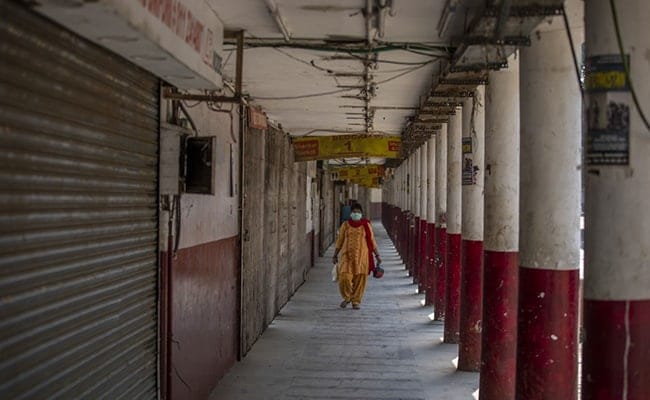
India's richest states will see the biggest declines in per capita income in the next year given that many of them are urbanized and were worst hit by the stringent lockdown conditions, according to research by the State Bank of India.
Eight of the wealthiest states and union territories will post double-digit contractions in income in the fiscal year through March 2021, with Delhi the hardest hit, Soumya Kanti Ghosh, an economist at SBI, wrote in a note. The states constitute almost half of India's gross domestic product.
| States | % Change in Per-Capita Income |
|---|---|
| Delhi | -15.4 |
| Chandigarh | -13.9 |
| Gujarat | -11.6 |
| Tamil Nadu | -11.4 |
| Telangana | -11.1 |
| West Bengal | -11.1 |
| Andaman & Nicobar Islands | -10.6 |
| Maharashtra | -10.3 |
| India | -5.4 |
| Source: SBI Research | |
For the country as a whole, per-capita income will probably decline 5.4% this fiscal year, bigger than the estimated 3.8% drop in nominal GDP, resulting in an increase in income inequality, SBI said.
India had the world's largest lockdown to contain the Covid-19 pandemic. Major cities quickly became virus hotspots, and businesses, markets and shopping malls were all closed for several weeks, resulting in job losses and sharp declines in income in those areas. Now, even as restrictions are slowly being eased across the country, customers are yet to return to stores.
Less well-off states like Madhya Pradesh, Uttar Pradesh, Bihar and Odisha will probably see per-capita income drop by less than 8%, according to SBI. This was mainly because of the larger number of green zones in those states -- where economic activity was allowed to resume -- prominence of agriculture, and existing low levels of income in these areas.
Ghosh said the government should provide a more aggressive policy response to cushion the blow from the pandemic, adding that in past global financial crises, countries that were fiscally conservative took longer to recover than others.

-
Ten Things I Learnt This Samvat

Patience can be a trap. Cheap stocks can stay cheap. Leverage can wipe you out. What did Samvat 2082 teach us? Niraj Shah writes on 10 lessons from the year gone by.
-
Talking Points This Week: Tech Nerves, FII Buying, And A Faraway Banking Shock
The global markets are not shining this Diwali. The exception in the large markets is, India.
-
Midterm Rally Lasted A Day. The Hard Reality Of A Divided US May Last Two Years | Opinion
Between a contested AI boom, a debt ceiling that arrives in 2027 and a president with every incentive to act alone, the next two years may prove more volatile than the first day's rally suggests.
-
Blue Wave Will Derail the AI Trade but Won't Dismantle the AI Era | Unhedged Position
The Democrats' sweep of the US Congress will see politics collide with economic forces both over the long and short term.
-
It's Time To Take The GST Council's Bet On Trust Global
Payment records can prove India's services exports, and clear, proportionate rules can bring foreign digital sellers into the tax net.
-
Opinion | India at 38: From Innovation Overperformer to Innovation Powerhouse
India now has 453 VC-backed deep science startups, 18 of them late-stage, after 117 percent growth since 2020. Laurus Labs, at USD 9.3 billion, is the most valuable deep science company in any middle-income economy outside China.
-
Navigating Energy Crossroads: S Jaishankar's Call For Diversified Supply Chains At G20 Ministerial Meeting
As geopolitical fault lines continue to test maritime trade routes and commodity flows, Jaishankar's message remains pertinent: true economic resilience requires open markets, protected transit lines, and a genuine commitment to multilateral cooperation rather than coercion.
-
Indians Are Travelling, But Not Every Journey Is A Holiday | The Week In Whys
Pilgrims, patients and working women are the real travellers, and the system hasn't quite caught up with them.
-
Getting To Work Costs Women More | The Reason Why
It is not just about women paying more than men. It is about women paying much more in cities than in villages.









