Coronavirus Fallout: Harvest Season Disruptions Feared Amid Country-Wide Lockdown
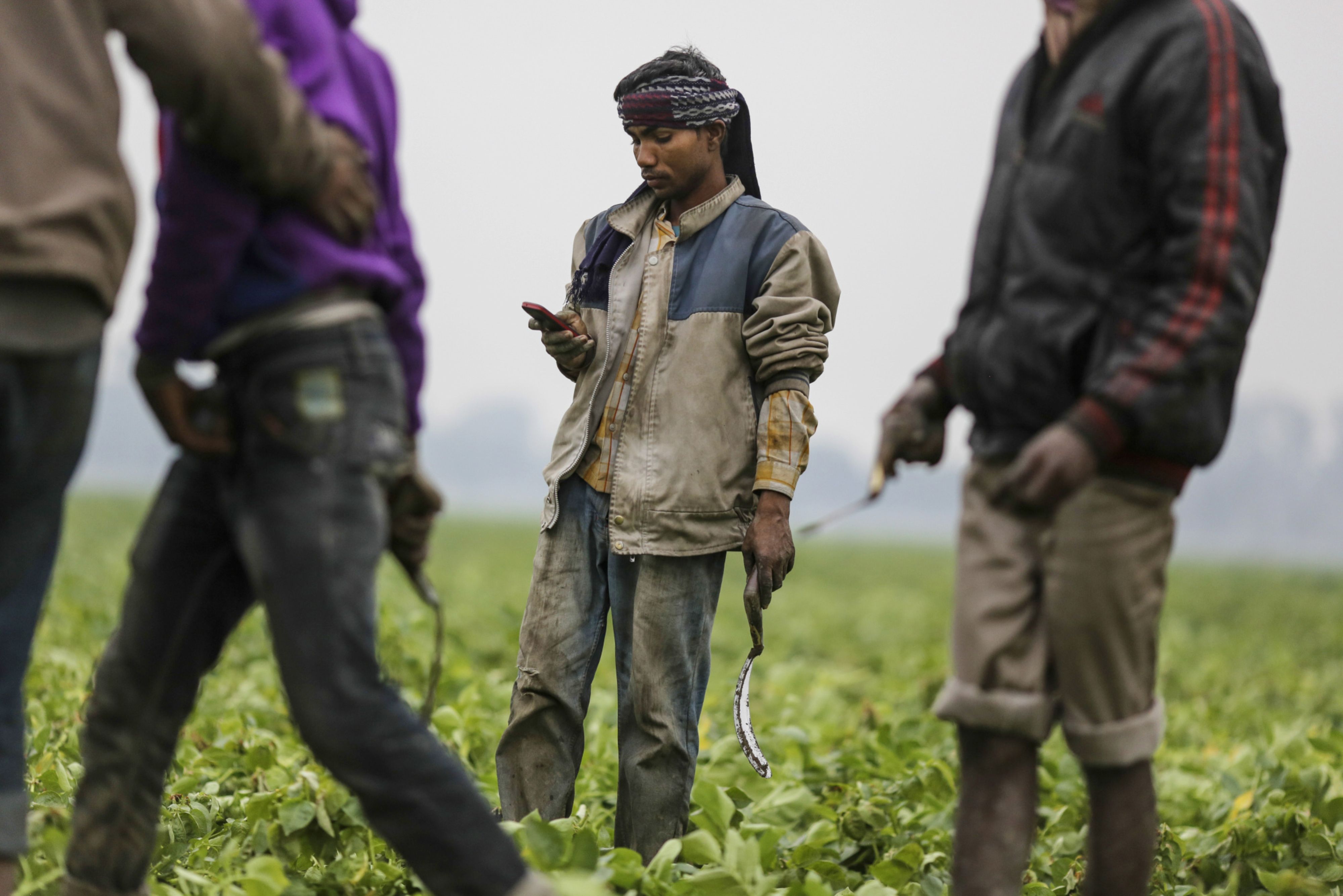
The Indian government's decision to impose a 21-day lockdown to restrict the spread of the novel coronavirus could disrupt the rabi harvesting season.
On Tuesday, Prime Minister Narendra Modi announced the country-wide lockdown amidst over 600 detected cases within the country. The lock-down, scheduled to last at least until April 14, 2020, coincides with the harvesting season for rabi crops in several states across the country.
The central government has issued no specific directive exempting farmers from harvesting rabi crops. However, some states are allowing farmers to go into the fields within the guidelines of social distancing.
For instance, according to a directive issued by the Madhya Pradesh state government, farmers using combine harvesters, straw reapers and threshers should operate in groups of not more than 2-5 people and intimate the gram panchayat on their movements. While cutting crops, along with the land owner, two more people are permitted as long as they maintain a distance of at least two metres, stated a copy of the directive issued. If anyone involved in harvesting is suffering from a cold, cough or a fever, they will be asked to go for a check up and will not be permitted to harvest the crops.
BloombergQuint has reviewed a copy of the directive.
A government official from Madhya Pradesh, who spoke to BloombergQuint on condition of anonymity, conceded despite the relaxations, the situation will be far from normal for farmers, considering the state is under a lockdown.
A government official from Rajasthan, who also spoke on condition of anonymity, told BloombergQuint that farmers are harvesting the crop in small groups of three-four people because of the lockdown and could be looking at some potential losses. A government official from Punjab said that harvesting in the state begins only by about April 14, when the lockdown is expected to be lifted. He, too, spoke on condition of anonymity.
Uttar Pradesh, Punjab, Haryana, Madhya Pradesh, Rajasthan and Bihar are among major wheat producing states.
Harvesting of wheat begins in March in Gujarat, Rajasthan and Madhya Pradesh. It then extends to Punjab and Haryana in April and then takes place in Uttar Pradesh and Bihar, later in the month, said Siraj Hussain, visiting senior fellow at ICRIER. In most of these states, mid-April is the crucial time. However, harvesting of crops such as chana (a variant of chickpeas) and mustard are already underway in states such as Andhra Pradesh and Rajasthan.
Abhijit Sen, ex- member of the Planning Commission, said that even if harvesting can begin on time by around mid-April, there will be a shortage of manpower. Labour migrates to rural areas for the harvesting season. This time, with this seasonal migration having come to a halt because of the nation-wide lockdown, availability of labour will be hurt, he explained.
After unseasonal rainfalls caused considerable damage to the kharif crops late last year, the rabi harvest was expected to be a bumper crop because of higher soil fertility and water reservoir levels. Production of wheat was forecast at 100.5 lakh tonnes according to early estimates by the ministry of agriculture, released on September 23, 2019.
Beyond harvesting, concerns will emerge on the storage and transport of agricultural produce.
So far, there have been supply chain disruptions across the country. Supply chains have been completely disrupted, said Jayati Ghosh, professor at JNU. It is not enough to just say that these activities are allowed, she said. “The government needs to ensure that the infrastructure required for food to be produced and to be brought to where it is consumed, which requires an entire ecosystem, is in place,” she said. The government needs to spent money to ensure that these supply chains are intact, she added.
Considering the recent supply chain disruptions, there's a possibility that farmers growing perishable fruits and vegetables will incur some losses in the next few days, said Hetal Gandhi, director at CRISIL Research. Gandhi expects some of the early disruptions to get ironed out, which will help harvested crops reach the markets at the right time. “Also farmers can usually hold crops for about a month after harvesting, as they wait to sell them at the right prices, she said.
This time, with bumper production, we were expecting mandi prices to move below MSP (minimum support price) for wheat. However, with the government's decision to provide 5 kilograms of free rice or wheat will keep prices at reasonable levels, said Gandhi.

-
High US Salaries, No Green Card Certainty: The Financial Calculation Facing Indian H-1B Families

The suspension of PERM processing at eight technology employers does not cancel existing H-1B visas. What it does is force a question many Indian families have been avoiding: is the US salary worth tying your career and family plans to one employer?
-
Unhedged Position: Can India See An Indonesia-Style Time Correction?
The Nifty is trading below levels it first clocked in 2024. Is there, then, as I have suggested in the headline, potential that the current time correction drags on painfully for the next three-five, even ten years?
-
Navigating Friction And Energy Realities: An Analysis Of Marco Rubio's October Visit To India
Occurring at a critical juncture marked by stalled trade negotiations and escalating geopolitical pressures over global energy supplies, the visit offers a profound window into modern US-India relations.
-
India Exports Capital. Why Not Export Trusteeship?
The big question, then, is whether India can build an institution that global borrowers, investors, banks, and lawyers can trust, even without an Indian connection.
-
France's Economy & Politics Are In Crisis | The Reason Why
Let's look at how the French economy and politics evolved under Nicolas Sarkozy, Franois Hollande and Emmanuel Macron.
-
You May Inherit The Business. You Must Earn Its Credibility.
Succession tests the founder's ability to share authority as much as it tests the next generation's readiness to assume it.
-
Signing Deals Is One Thing; Making Them Work Is Another | The Week In Whys
Sometimes, things don't turn out as planned. Indian companies have lost some bids to rivals, some projects won't produce until 2030.
-
FOMC Wall, PERM Suspension, Hospital Stocks | Talking Points This Week
A PERM suspension would directly affect green-card sponsorship rather than H-1B visas, so the near-term earnings impact could remain relatively limited. The key question is whether this marks a new phase in US scrutiny of Indian IT.
-
Everything, Everywhere, All At Once: Dalal Street's Week To Forget | Joining The Dots
Visa curbs, a Starlink spat and cancer drug caps: what connects this week's shocks for Indian markets
-
India Is Going Abroad For Critical Minerals. But It May Take Years To Pay Off | The Reason Why
Although India's steps are in the right direction, they remain modest compared with India's growing dependence.









