Coronavirus Crisis: World's Second Oldest Airline Driven To Bankruptcy
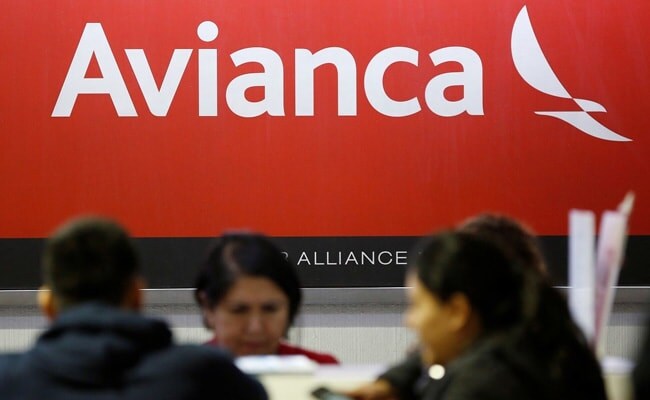
Avianca Holdings, Latin America's second largest airline, filed for bankruptcy on Sunday, after failing to meet a bond payment deadline, while its pleas for coronavirus aid from Colombia's government have so far been unsuccessful.
If it fails to come out of bankruptcy, Bogota-based Avianca would be one of the first major carriers worldwide to go under as a result of the pandemic, which has crippled world travel.
Avianca has not flown a regularly scheduled passenger flight since late March and most of its 20,000 employees have gone without pay through the crisis.
"Avianca is facing the most challenging crisis in our 100-year history," Avianca chief executive Anko van der Werff said in a news release.
While Avianca was already weak before the coronavirus outbreak, its bankruptcy filing highlights the challenges for airlines that cannot count on state rescues or on such rescues coming fast enough. Avianca is still hoping for a government bailout.
"This isn't a surprise at all," said Juan David Ballen, chief economist at Casa de Bolsa brokerage in Bogota. "The company was heavily indebted despite the fact it tried to restructure its debt last year."
Avianca, the second oldest continually operating airline in the world after KLM, had $7.3 billion in debts in 2019. The airline filed for Chapter 11 bankruptcy in New York and said it would continue operations while it restructured its debts.
The Colombian Association of Civil Aviators (ACDAC), a union representing many Avianca employees, said it supported the move.
Avianca already went through bankruptcy in the early 2000s, from which it was rescued by a Bolivian-born oil businessman, German Efromovich.
Mr Efromovich grew Avianca aggressively but also saddled the carrier with significant debt until he was ousted from the airline last year in a boardroom coup led by United Airlines Holdings Inc. He still owns a majority stake in the carrier.
United stands to lose up to $700 million in loans related to Avianca.
Mr Efromovich told news agency Reuters on Sunday that he disagreed with the decision to file for bankruptcy and that he was not involved in making it.
Lead-Up to Bankruptcy
The management that took over after Mr Efromovich's ousting was already focused on a cost-cutting reorganization dubbed "Avianca 2021" before this year's crisis.
Warnings about its fragile finances abounded. Roberto Kriete, president of Avianca's board, said last year in a meeting with employees that the airline was "broke."
Last month, Avianca's accounting firm, KPMG, said it had "substantial doubts" about the carrier's ability to exist a year from now.
Avianca's shares closed at 88 cents on Friday in New York, from a high of more than $18 in 2014.
Most pressingly, Avianca was facing a $65 million bond payment due on Sunday that analysts did not think the airline was in a position to meet. S&P downgraded the airline to "CCC-" status in the days leading up to that payment.
Airline executives confirmed in a press call on Sunday night that they had not made the payment.
Mr Van der Werff had mounted a public relations campaign in recent weeks to secure emergency aid from Colombia's government, but none had materialized as of Sunday.
Avianca has no certain date to resume operations, as its main hubs - Colombia, El Salvador and Peru - have all shut down air traffic to fight the coronavirus. The carrier faced backlash after it sold plane tickets for late May only to have to cancel them when Colombia extended its coronavirus lockdown.
Avianca will also shut down its operations in Peru, which represents 5% of the airline's revenue, and will lay off hundreds of employees within the next 10 days.
"In this time, we do not have liquidity to sustain a loss-making operation," Silvia Mosquera, Avianca's chief commercial officer, told reporters regarding Avianca Peru.
Colombia's Avianca is the third of Mr Efromovich's airlines to go through bankruptcy or out of business in recent years. Airlines Avianca Brasil and Avianca Argentina ceased to exist last year because of economic troubles in their markets.

-
Navigating Energy Crossroads: S Jaishankar's Call For Diversified Supply Chains At G20 Ministerial Meeting

As geopolitical fault lines continue to test maritime trade routes and commodity flows, Jaishankar's message remains pertinent: true economic resilience requires open markets, protected transit lines, and a genuine commitment to multilateral cooperation rather than coercion.
-
Indians Are Travelling, But Not Every Journey Is A Holiday | The Week In Whys
Pilgrims, patients and working women are the real travellers, and the system hasn't quite caught up with them.
-
Getting To Work Costs Women More | The Reason Why
It is not just about women paying more than men. It is about women paying much more in cities than in villages.
-
AI Bias In Investing Cannot Be Eliminated, But It Can Be Governed
Framing is a particularly important example as identical financial information presented in terms of gains rather than losses can lead an LLM to reach a different assessment.
-
Joining The Dots | Dark Skies, Steady Diya: Why Hope Holds This Diwali
With war, a weak rupee and foreign outflows weighing on sentiment, policymakers at the NDTV World Summit and market veterans at NDTV Profit Ignite: Diwali Edition offered the same advice: stay invested and filter out the noise.
-
The Curious Case of Equitas Small Finance Bank And A CEO Who Quit For Stock
PN Vasudevan believes persistent investor concerns over a perceived conflict of interest had become a governance overhang on Equitas Small Finance Bank's stock, even as the lender improved profitability and asset quality.
-
Talking Points This Week: AI Cash Burn, A Tiger Comeback And An India That Still Finds Its Own Path
India is not immune to higher oil or tighter global liquidity, yet its earnings base is broader, its domestic policy levers are still available.
-
Foreign Investors Own Half Of HDFC Bank and ICICI Bank. An LTCG Cut Could Matter Most Here
Foreign portfolio investors have US$115 billion parked in HDFC Bank, ICICI Bank. If the government cuts long-term capital gains tax, Jefferies says returning foreign money could land here first.
-
'Never Seen This Level Of Negativity': Sandeep Tandon Says The Next Rally May Be Closer Than You Think
Veteran investor Sandeep Tandon says foreign selling is easing, large-caps are due a comeback and mid-caps are crowded, while he turns positive on gold, power and pharma this Diwali.
-
Indians Stay With Family, Not In Hotels | The Reason Why
India still lacks enough clean, reliable and affordable hotels for budget-conscious travellers.










