Coronavirus Crisis: Garment Workers Cover Bosses' Lockdown Losses
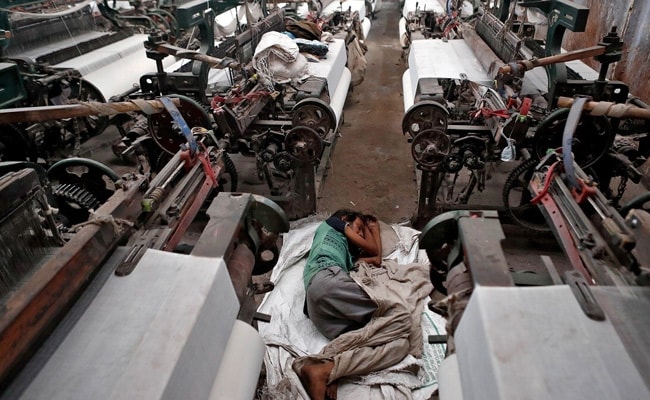
From unpaid overtime to wage cuts, the country's garment workers say they are being made to compensate their bosses for the food, shelter and salary provided in the coronavirus lockdown.
But it is a steep price for a workforce that was already juggling low pay and poor conditions before the pandemic shuttered their factories and choked orders.
Workers say they are being offered the choice of less money or working extra shifts for free to pay back their bosses, who dangle the threat of unemployment if employees refuse.
"Workers were absolutely not expecting these COVID cuts when they returned to work," said Mahesh Gajera, programme manager with labour rights charity Aajeevika Bureau.
"They thought their employers were providing humanitarian relief during the crisis and no one was told that they would have to compensate for every meal and the money given when factories were closed."
The "COVID cuts" have left tens of thousands of garment and textile workers across the country in deep debt, forcing many to pull children out of school, pawn jewellery and cut meals to survive, unions and labour right campaigners said.
The lockdown announced in March badly hit the manufacturing, services and retail sectors, squeezing millions out of jobs.
Despite state advisories asking employers to pay full wages in lockdown and an appeal from Prime Minister Narendra Modi to "be kind" to workers, unions said they have been flooded with complaints of non-payment.
Where wages were paid, salaries are now being docked.
"The worker will compensate for all the losses and that has been made very clear by companies," said Sebastian Devaraj, honorary president of the Karnataka Garment Workers' Union.
"Companies have calculated the number of extra hours a worker has to put in to compensate for lockdown wages. In one instance, it is 208 hours, of which a worker has to work 104 hours without paid overtime. They have no choice."
The labour ministry did not respond to repeated calls for comment.
Distress
The country's multi-million-dollar garment industry, which employs at least 12 million people, was hit when global brands cancelled orders or demanded steep discounts to cope with plunging sales.
K Selvaraju, secretary general of the Southern India Mills Association, which has more than 500 members, denied the allegations and said that manufacturers had gone the extra mile to take care of workers despite their own losses.
But workers in the garment hubs of Bengaluru in Karnataka told their union leaders that they were given a couple of options when factories reopened.
They could forgo half their April wages or work extra hours for free, Mr Devaraj said.
"This fear has been whipped up that if workers don't take pay cuts and work harder, running the factory would be difficult, it would be closed and they will lose their jobs," he told the Thomson Reuters Foundation.
"Employers are basically saying that they are sinking and workers should save them or they will also drown. It is a veiled threat and workers are scared to complain."
Lawyer Amrish Patel said that it was illegal for companies to deduct wages in retrospect and force people to do overtime.
"These are blatant violations of labour rights," said Mr Patel.
A worker in Tamil Nadu who requested anonymity said the salary cuts swallowed nearly 20 per cent of her take-home pay.
"It has become almost impossible to pay school fees or the installments for the loans we took during lockdown," she said.
Mr Gajera gets distress calls from workers in the garment hubs of Gujarat every day.
"They don't want to upset their employer but they are unable to put two square meals on their table," Mr Gajera said.
"Their distress is mounting and complaints will surge if they are not paid their dues by Diwali (festival) next month."

-
Ten Things I Learnt This Samvat

Patience can be a trap. Cheap stocks can stay cheap. Leverage can wipe you out. What did Samvat 2082 teach us? Niraj Shah writes on 10 lessons from the year gone by.
-
Talking Points This Week: Tech Nerves, FII Buying, And A Faraway Banking Shock
The global markets are not shining this Diwali. The exception in the large markets is, India.
-
Midterm Rally Lasted A Day. The Hard Reality Of A Divided US May Last Two Years | Opinion
Between a contested AI boom, a debt ceiling that arrives in 2027 and a president with every incentive to act alone, the next two years may prove more volatile than the first day's rally suggests.
-
Blue Wave Will Derail the AI Trade but Won't Dismantle the AI Era | Unhedged Position
The Democrats' sweep of the US Congress will see politics collide with economic forces both over the long and short term.
-
It's Time To Take The GST Council's Bet On Trust Global
Payment records can prove India's services exports, and clear, proportionate rules can bring foreign digital sellers into the tax net.
-
Opinion | India at 38: From Innovation Overperformer to Innovation Powerhouse
India now has 453 VC-backed deep science startups, 18 of them late-stage, after 117 percent growth since 2020. Laurus Labs, at USD 9.3 billion, is the most valuable deep science company in any middle-income economy outside China.
-
Navigating Energy Crossroads: S Jaishankar's Call For Diversified Supply Chains At G20 Ministerial Meeting
As geopolitical fault lines continue to test maritime trade routes and commodity flows, Jaishankar's message remains pertinent: true economic resilience requires open markets, protected transit lines, and a genuine commitment to multilateral cooperation rather than coercion.
-
Indians Are Travelling, But Not Every Journey Is A Holiday | The Week In Whys
Pilgrims, patients and working women are the real travellers, and the system hasn't quite caught up with them.
-
Getting To Work Costs Women More | The Reason Why
It is not just about women paying more than men. It is about women paying much more in cities than in villages.









