India Known To Reform In A Crisis, Writes Raghuram Rajan
A looming economic crisis triggered by the coronavirus pandemic is a chance for India to enact sweeping reforms to fix ailing sectors and attract more foreign investment to the country.
That's a call being made by a former central banker and an ex-government official, as well as financial market participants, who say India needs to liberalize and deepen its financial markets, and take policy steps to fix the banking and farm sectors. There are early signs of this already happening, with the central bank giving overseas investors greater access to its sovereign bonds, allowing local banks to tap offshore currency markets and companies a choice of more complex hedging tools.
India is facing its biggest crisis in decades, with a three-week lockdown in a nation of 1.3 billion people likely to result in economic recession, millions of job losses and possible starvation among the poor.
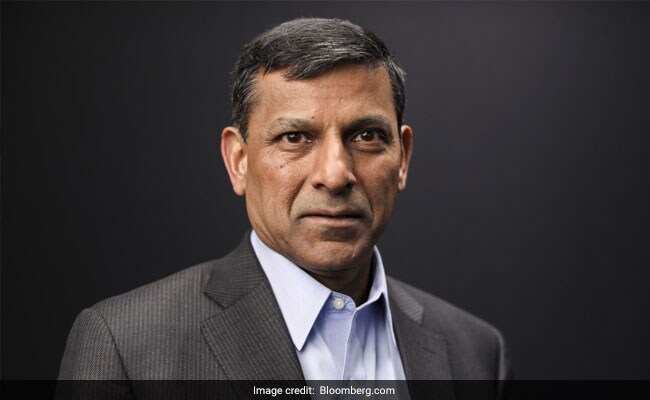
"It is said India reforms only in crisis," Raghuram Rajan, the former governor of the Reserve Bank of India, wrote in a LinkedIn post this week. "Hopefully, this otherwise unmitigated tragedy will help us see how weakened we have become as a society and will focus our politics on the critical economic and health care reforms we sorely need."
India has a history of taking reform steps during periods of crisis. For example, in 1991-92, it freed the private sector from a myriad of government controls, deregulated financial markets, reduced import tariffs and opened up the economy to more foreign investment to avoid a balance of payments crisis.
Time-line of Reforms Induced by Crisis
- 1991-92: With the economy on the brink of a balance-of-payments crisis, the then government cut import tariffs, abolished industrial licensing to foster competition. A stock market scam during that period led to formation of the capital market regulator -- the Securities and Exchange Board of India
- 1997-98: Economic sanctions post India's nuclear weapons tests, and the Asian financial crisis prompted large-scale divestment of state-run assets to garner revenues
- 2014: Post the Federal Reserve's taper tantrum, authorities started work on an inflation-targeting regime for the central bank and an asset quality review that made disclosure of India's bad loans more transparent
Prime Minister Narendra Modi has championed a number of reforms since first coming to power in 2014, including introducing a nationwide sales tax and an insolvency law, reducing corporate tax rates and kickstarting the biggest sale of state assets. At the same time, he's raised import duties and dithered on trade deals, setting back progress.
With public finances stretched and likely to worsen amid the lockdown, fiscal policies also need an overhaul, said Arvind Subramanian, a former chief economic adviser to the Finance Ministry. The government had projected a budget deficit of 3.5 per cent of gross domestic product in the year through March 2021, but some are estimating it could reach as high as 6.2 per cent.
"The focus on unattainable targets, the fact that Fiscal Responsibility and Budget Management Act has been honored only in the breach and the consequences in terms of budgetary integrity and transparency need serious review, even overhaul, in our view," he wrote in a local newspaper along with Devesh Kapoor.
For many analysts, the latest moves to open up India's bond market and allow banks to trade currencies abroad were unthinkable a few years back given the country's deep distrust of debt capital and its failure to acknowledge even the existence of an offshore currency market trading the rupee.
But more needs to be done to attract long-term foreign capital to plug the domestic saving-investment gap, according to Sonal Varma, head of Asia economics ex-Japan at Nomura Holdings Inc.
"In the current context, the biggest challenge facing India is the dearth of growth capital," she said. "India has historically bitten the bullet during times of crises."

-
High US Salaries, No Green Card Certainty: The Financial Calculation Facing Indian H-1B Families

The suspension of PERM processing at eight technology employers does not cancel existing H-1B visas. What it does is force a question many Indian families have been avoiding: is the US salary worth tying your career and family plans to one employer?
-
Swiggy vs Eternal: Food Delivery's Two Rivals Are No Longer In The Same Race
Eternal is building a private AI assistant, dark.ai. Swiggy is still working out how to make Instamart pay, with an operating loss of Rs 895 crore in the July-September quarter while Blinkit stayed profitable.
-
Where You Live Shapes How You Get To Work | The Reason Why
Two-wheelers are the most popular way to get to work in India, accounting for nearly 43% of workplace commutes.
-
Unhedged Position: Can India See An Indonesia-Style Time Correction?
The Nifty is trading below levels it first clocked in 2024. Is there, then, as I have suggested in the headline, potential that the current time correction drags on painfully for the next three-five, even ten years?
-
Navigating Friction And Energy Realities: An Analysis Of Marco Rubio's October Visit To India
Occurring at a critical juncture marked by stalled trade negotiations and escalating geopolitical pressures over global energy supplies, the visit offers a profound window into modern US-India relations.
-
India Exports Capital. Why Not Export Trusteeship?
The big question, then, is whether India can build an institution that global borrowers, investors, banks, and lawyers can trust, even without an Indian connection.
-
France's Economy & Politics Are In Crisis | The Reason Why
Let's look at how the French economy and politics evolved under Nicolas Sarkozy, Franois Hollande and Emmanuel Macron.
-
You May Inherit The Business. You Must Earn Its Credibility.
Succession tests the founder's ability to share authority as much as it tests the next generation's readiness to assume it.
-
Signing Deals Is One Thing; Making Them Work Is Another | The Week In Whys
Sometimes, things don't turn out as planned. Indian companies have lost some bids to rivals, some projects won't produce until 2030.
-
FOMC Wall, PERM Suspension, Hospital Stocks | Talking Points This Week
A PERM suspension would directly affect green-card sponsorship rather than H-1B visas, so the near-term earnings impact could remain relatively limited. The key question is whether this marks a new phase in US scrutiny of Indian IT.









