Asian Stocks Plunge On Coronavirus Fears; Free-Fall In Oil Prices
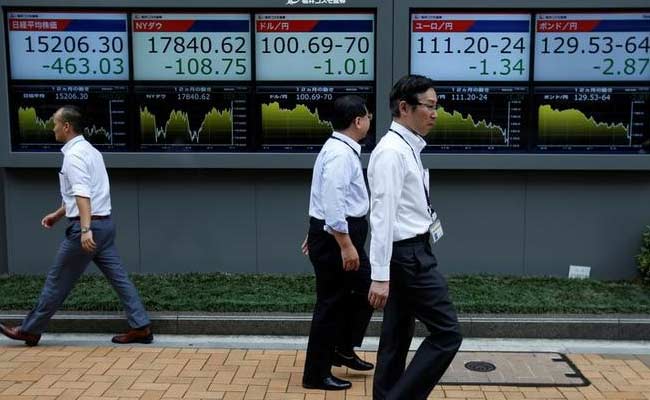
Stock markets plunged around Asia on Monday, as panic selling set in with traders fretting over the economic impact of the new coronavirus and digesting a free-fall in the oil price.
By mid-morning, the benchmark Nikkei 225 index had dropped 5.10 percent or 1,058.06 points to 19,691.69, while the broader Topix index was off 5.01 percent or 73.69 points to 1,397.77.
Other markets in the region were also suffering with Hong Kong stocks down 3.8 percent at the open, Australia off more than five percent and equities in New Zealand and South Korea both down by just under three percent.
In China, the benchmark Shanghai Composite Index dived 1.56 percent while the benchmark Philippine stock exchange index opened down nearly four percent.
Driving the declines was a ferocious sell-off in the oil markets sparked by top exporter Saudi Arabia slashing prices -- in some cases to unprecedented levels -- after a bust-up with Russia over oil production.
The two main oil contracts were both down about 20 percent in morning Asian trade, with West Texas Intermediate sliding to around $32 a barrel and Brent crude to $36 a barrel.
The foreign exchange markets were also extremely volatile, with traders snapping up the yen -- seen as a hedge against global instability -- and selling off the dollar amid uncertainty over coronavirus in the United States.
Marito Ueda, senior trader at FX Prime, told AFP: "Fears over the virus's impact on the global economy and a plummet in US yields had investors seeking the safe-haven yen."
"It is essentially flight from the dollar," he added.
"Thick with fear"
A stronger yen tends to push down Japanese stocks, and exporters from the world's third-top economy were especially hard-hit, with Nissan and Sony down more than five percent and Toyota down 3.60 percent.
Banks also plunged, with Sumitomo Mitsui Financial trading down nearly four percent and Mitsubishi UFJ Financial off by almost five percent.
Stephen Innes, chief market strategist at AxiCo, said the markets were suffering from a perfect storm of factors.
"The yen surged... at the market open this week as investors dove into safe havens on accelerating COVID-19 cases in Europe, and as Saudi Arabia triggers a price war for oil, adding another level of unwanted panic to a market already thick with fear," he said.
The dollar fetched 104.15 yen in early Tokyo time, after dipping to around 103.83 yen in Sydney time, the lowest level since November 2016. That compares with 105.40 yen in New York late Friday.
Markets were not helped by data showing that the Japanese economy had declined more than initially thought -- even before the outbreak of the coronavirus.
The country's gross domestic product during the October-December quarter was revised down to a contraction of 1.8 percent, compared to an earlier estimate of 1.6 percent.
"Unfortunately, any recovery in Q1 has been nipped in the bud by the global spread of the coronavirus," said Tom Learnmouth, Japan economist at Capital Economics.

-
Ten Things I Learnt This Samvat

Patience can be a trap. Cheap stocks can stay cheap. Leverage can wipe you out. What did Samvat 2082 teach us? Niraj Shah writes on 10 lessons from the year gone by.
-
Talking Points This Week: Tech Nerves, FII Buying, And A Faraway Banking Shock
The global markets are not shining this Diwali. The exception in the large markets is, India.
-
Midterm Rally Lasted A Day. The Hard Reality Of A Divided US May Last Two Years | Opinion
Between a contested AI boom, a debt ceiling that arrives in 2027 and a president with every incentive to act alone, the next two years may prove more volatile than the first day's rally suggests.
-
Blue Wave Will Derail the AI Trade but Won't Dismantle the AI Era | Unhedged Position
The Democrats' sweep of the US Congress will see politics collide with economic forces both over the long and short term.
-
It's Time To Take The GST Council's Bet On Trust Global
Payment records can prove India's services exports, and clear, proportionate rules can bring foreign digital sellers into the tax net.
-
Opinion | India at 38: From Innovation Overperformer to Innovation Powerhouse
India now has 453 VC-backed deep science startups, 18 of them late-stage, after 117 percent growth since 2020. Laurus Labs, at USD 9.3 billion, is the most valuable deep science company in any middle-income economy outside China.
-
Navigating Energy Crossroads: S Jaishankar's Call For Diversified Supply Chains At G20 Ministerial Meeting
As geopolitical fault lines continue to test maritime trade routes and commodity flows, Jaishankar's message remains pertinent: true economic resilience requires open markets, protected transit lines, and a genuine commitment to multilateral cooperation rather than coercion.
-
Indians Are Travelling, But Not Every Journey Is A Holiday | The Week In Whys
Pilgrims, patients and working women are the real travellers, and the system hasn't quite caught up with them.
-
Getting To Work Costs Women More | The Reason Why
It is not just about women paying more than men. It is about women paying much more in cities than in villages.









