Consumer Groups Voice Concerns Over ‘Perverse’ Bank Cash Transaction Charges
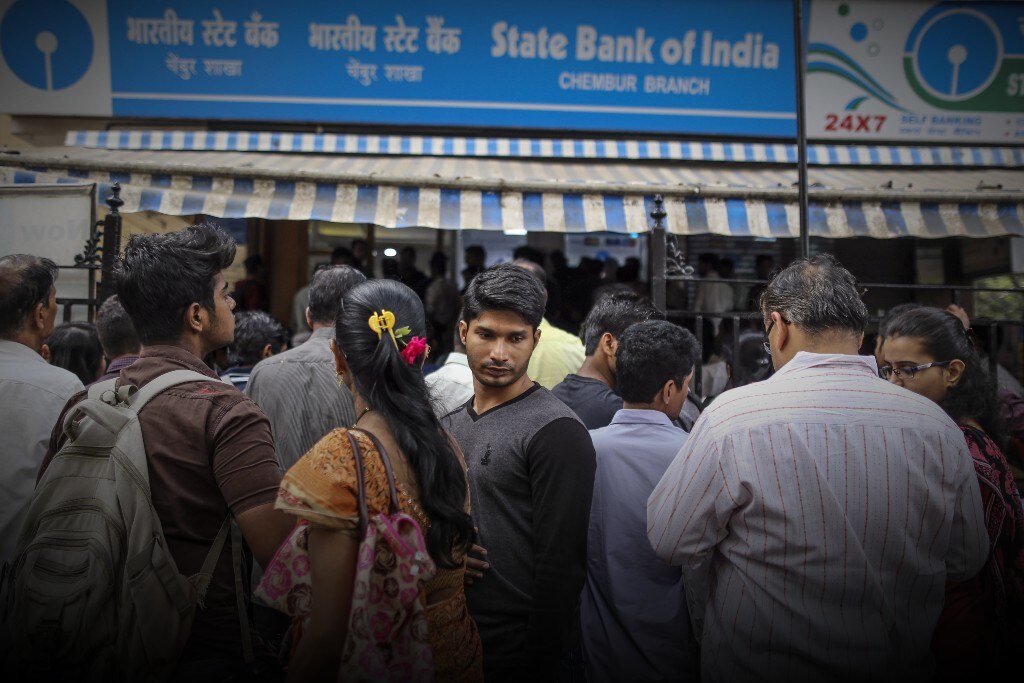
Consumer rights groups have raised concerns after the country's largest lender, State Bank of India (SBI), decided to reduce the number of free cash deposits and reintroduce a minimum balance requirement for all savings accounts.
Representatives of three such groups will meet next week to consider seeking the finance ministry's intervention and, if needed, file a public interest litigation to curb the transaction charges, said Shirish Deshpande, chairman of consumer rights group Mumbai Grahak Panchayat in an interview to BloombergQuint.
Deshpande said they were still exploring the legal grounds to file a public interest litigation.
We think this is a perverse policy. They (the government) should incentivise digital payments rather than penalising cash transactions. If this is to be a carrot and stick approach, then the stick is being used excessively. If we can establish that this (higher transaction charges) leads to detriment of a large number of depositors, we will take action.Shirish Deshpande, Chairman, Mumbai Grahak Panchayat
Mumbai Grahak Panchayat, Moneylife Foundation and All India Bank Depositors' Association worry that other public sector and co-operative banks will follow SBI's lead to increase similar charges.
Charges Linked To Rising Costs, Says SBI
Earlier this month, SBI, through a notification on its website, had announced a new fee structure starting April 1. After five years, the bank has reintroduced the minimum balance required to maintain a savings account. It starts at Rs 1,000 for accounts in rural branches and goes up to Rs 5,000 in metros. The penalty for not maintaining the balance ranges from Rs 20-100 depending on the location of the branch.
Rajnish Kumar, managing director in charge of retail banking at SBI, said the decision “was taken keeping in mind the costs associated with maintaining savings bank accounts”.
SBI has 32 crore savings bank accounts. There are many cases where individuals have multiple accounts. With this measure, the superfluous accounts will get closed.Rajnish Kumar, Managing Director, SBI

SBI has also reduced the number of free cash deposits at its branches to three from five a month. Every subsequent cash deposit will attract a charge of Rs 50, the bank said.
This change, consumer groups feel, will hurt efforts towards financial inclusion. The charges will prove to be a deterrent to those whose livelihood depends on cash, such as taxi drivers, small store owners and daily wage earners, they said.
People who deposit their earnings in their bank accounts on a regular basis will be impacted, said Ashok Rawat, a member of the All India Bank Depositors' Association, in an interview to BloombergQuint.
As an illustration, a person who deposits cash in his or her SBI account 10 times a month will have to pay Rs 350, excluding service tax, starting April 1. The same number of deposits result in a total charge of Rs 250 now.
HDFC Bank too had raised charges on cash transactions at its branches from March 1. The bank now charges Rs 150, excluding taxes and cess, on every deposit or withdrawal after the first four transactions. Earlier, it charged Rs 100 per transaction after five free transactions.
At the time of the announcement, a spokesperson of HDFC Bank had told BloombergQuint that the higher charges were to discourage cash transactions and promote digital payments.
Other large private sector banks, ICICI Bank and Axis Bank, also charge Rs 150 per transaction after the first four in a month.
Ajay Shah, economist and professor at the National Institute for Public Finance and Policy (NIPFP), said there is a sound case for what the banks are doing. “Cash induces substantial processing costs. If this is not charged back to the user of cash, it is unfair cross-subsidisation,” he added.
A senior government official, however, had told reporters in New Delhi on Monday that both public and private banks should “reassess” transaction charges, which are being levied in a “seemingly vague manner”.
Should RBI Step In?
Transaction charges are not regulated by the Reserve Bank of India. Moneylife has made multiple representations to the RBI to regulate charges on both cash and non-cash transactions, but these have not yet been acted on, said Yogesh Sapkale, its deputy editor.
According to Rawat, banks have misused the freedom given to them by the RBI after 1998. Till then, charges were regulated by the central bank through master circulars, he said.
“Banks are unable to earn enough through lending, and are looking for other avenues. These include fees and charges, treasury, and by selling non-banking products like insurance,” he said.
Rawat feels that RBI's attempt to bring in a level-playing field by allowing free pricing of fees and charges by banks comes at the cost of the customers' interest.

-
Navigating Energy Crossroads: S Jaishankar's Call For Diversified Supply Chains At G20 Ministerial Meeting

As geopolitical fault lines continue to test maritime trade routes and commodity flows, Jaishankar's message remains pertinent: true economic resilience requires open markets, protected transit lines, and a genuine commitment to multilateral cooperation rather than coercion.
-
Indians Are Travelling, But Not Every Journey Is A Holiday | The Week In Whys
Pilgrims, patients and working women are the real travellers, and the system hasn't quite caught up with them.
-
Getting To Work Costs Women More | The Reason Why
It is not just about women paying more than men. It is about women paying much more in cities than in villages.
-
AI Bias In Investing Cannot Be Eliminated, But It Can Be Governed
Framing is a particularly important example as identical financial information presented in terms of gains rather than losses can lead an LLM to reach a different assessment.
-
Joining The Dots | Dark Skies, Steady Diya: Why Hope Holds This Diwali
With war, a weak rupee and foreign outflows weighing on sentiment, policymakers at the NDTV World Summit and market veterans at NDTV Profit Ignite: Diwali Edition offered the same advice: stay invested and filter out the noise.
-
The Curious Case of Equitas Small Finance Bank And A CEO Who Quit For Stock
PN Vasudevan believes persistent investor concerns over a perceived conflict of interest had become a governance overhang on Equitas Small Finance Bank's stock, even as the lender improved profitability and asset quality.
-
Talking Points This Week: AI Cash Burn, A Tiger Comeback And An India That Still Finds Its Own Path
India is not immune to higher oil or tighter global liquidity, yet its earnings base is broader, its domestic policy levers are still available.
-
Foreign Investors Own Half Of HDFC Bank and ICICI Bank. An LTCG Cut Could Matter Most Here
Foreign portfolio investors have US$115 billion parked in HDFC Bank, ICICI Bank. If the government cuts long-term capital gains tax, Jefferies says returning foreign money could land here first.
-
'Never Seen This Level Of Negativity': Sandeep Tandon Says The Next Rally May Be Closer Than You Think
Veteran investor Sandeep Tandon says foreign selling is easing, large-caps are due a comeback and mid-caps are crowded, while he turns positive on gold, power and pharma this Diwali.










