Consumer Electronics Makers Seek Customs Duty Hike On Finished Products
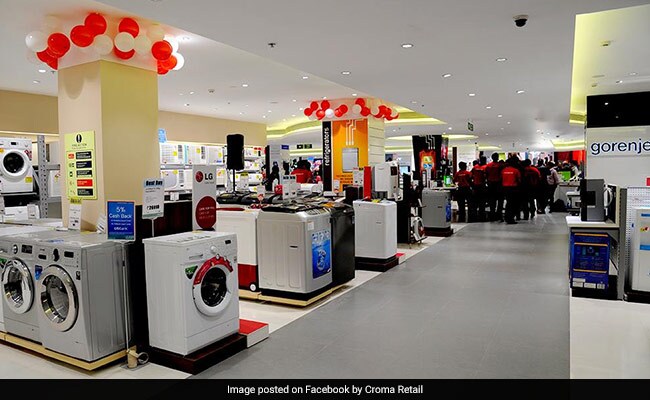
The domestic appliances and consumer electronics industry expects an increase in customs duty on finished goods to discourage imports and facilitate import substitution, along with incentives for specific R&D and localisation projects under the productivity linked incentive (PLI) scheme, in the upcoming budget.
The nearly Rs 75,000-crore industry is expecting "certain enablers" that will encourage domestic manufacturing, said the Consumer Electronics and Appliances Manufacturers Association (CEAMA).
"To further encourage local manufacturers, there should be a differential duty of five per cent between the parts and finished goods. This will provide the much-needed incentive to the manufacturers and help in building manufacturing base in India," CEAMA President Eric Braganza.
It has also asked for a road map of duty structure for the LED industry for the coming five years towards proper planning of investments and policy interventions.
"Two hundred per cent weighted deduction for R&D (research and development) spends is critical for keeping up the technological advancement for the Indian manufacturer. Additionally, incentives can be given for specific R&D and localisation projects in the field of electronics under the PLI scheme," he said.
The industry also expects the government to lower the GST on air conditioners to an 18 per cent tax slab and also a similar reduction for TV (above 105 cm screen size), Mr Braganza added.
Besides, some makers also expect the government to lower the GST slab for energy-efficient products further to 12 per cent, a move that will not just help to drive demand but also increase the adoption of sustainable appliances — in line with India's commitment to climate goals.
The Budget session is set to begin on January 31 and Finance Minister Nirmala Sitharaman will present the annual Budget on February 1.
Godrej Appliances Business Head and Executive Vice-President Kamal Nandi said the industry has been grappling with unprecedented commodity prices, shortage of components and subdued volume growth especially in high volume segments on the demand side.
Consumer durables like air conditioners, refrigerators and washing machines have become essential household items.
"We are expecting this Budget to rationalise GST for these products. Air conditioners are still in the highest tax slab of 28 per cent, which we expect to be brought down to 18 per cent. Appliances continue to languish when it comes to penetration levels, and lower tax slabs will help correct this. Increased penetration and volume will help give a thrust to manufacturing as well in these sectors," he added.
Panasonic CEO (India and South Asia) Manish Sharma said the industry can expect an increase in import tariffs on completely built-up (CBU) audio products.
"Audio technology is an emerging segment and with new players making forays into the business, the demand and possibilities to meet them are at an all-time high. We expect some tariff barriers on audio to encourage domestic manufacturing," said Mr Sharma.
Similarly, TV screens above 105 cm are considered to be in the premium category and have become the most sought-after model now.

-
High US Salaries, No Green Card Certainty: The Financial Calculation Facing Indian H-1B Families

The suspension of PERM processing at eight technology employers does not cancel existing H-1B visas. What it does is force a question many Indian families have been avoiding: is the US salary worth tying your career and family plans to one employer?
-
Unhedged Position: Can India See An Indonesia-Style Time Correction?
The Nifty is trading below levels it first clocked in 2024. Is there, then, as I have suggested in the headline, potential that the current time correction drags on painfully for the next three-five, even ten years?
-
Navigating Friction And Energy Realities: An Analysis Of Marco Rubio's October Visit To India
Occurring at a critical juncture marked by stalled trade negotiations and escalating geopolitical pressures over global energy supplies, the visit offers a profound window into modern US-India relations.
-
India Exports Capital. Why Not Export Trusteeship?
The big question, then, is whether India can build an institution that global borrowers, investors, banks, and lawyers can trust, even without an Indian connection.
-
France's Economy & Politics Are In Crisis | The Reason Why
Let's look at how the French economy and politics evolved under Nicolas Sarkozy, Franois Hollande and Emmanuel Macron.
-
You May Inherit The Business. You Must Earn Its Credibility.
Succession tests the founder's ability to share authority as much as it tests the next generation's readiness to assume it.
-
Signing Deals Is One Thing; Making Them Work Is Another | The Week In Whys
Sometimes, things don't turn out as planned. Indian companies have lost some bids to rivals, some projects won't produce until 2030.
-
FOMC Wall, PERM Suspension, Hospital Stocks | Talking Points This Week
A PERM suspension would directly affect green-card sponsorship rather than H-1B visas, so the near-term earnings impact could remain relatively limited. The key question is whether this marks a new phase in US scrutiny of Indian IT.
-
Everything, Everywhere, All At Once: Dalal Street's Week To Forget | Joining The Dots
Visa curbs, a Starlink spat and cancer drug caps: what connects this week's shocks for Indian markets
-
India Is Going Abroad For Critical Minerals. But It May Take Years To Pay Off | The Reason Why
Although India's steps are in the right direction, they remain modest compared with India's growing dependence.









